




How the Iran War is Tearing Austria's Economy Between Crisis and Opportunity?
While drones and missiles fly in the Persian Gulf, calculators are working overtime in Vienna. The geopolitical escalation in the Middle East has Austria's economy firmly in its grip. Between rapidly rising fuel prices, stubborn inflation, and hopes for an “economic miracle after regime change,” the small European country faces an uncertain but highly exciting economic future.
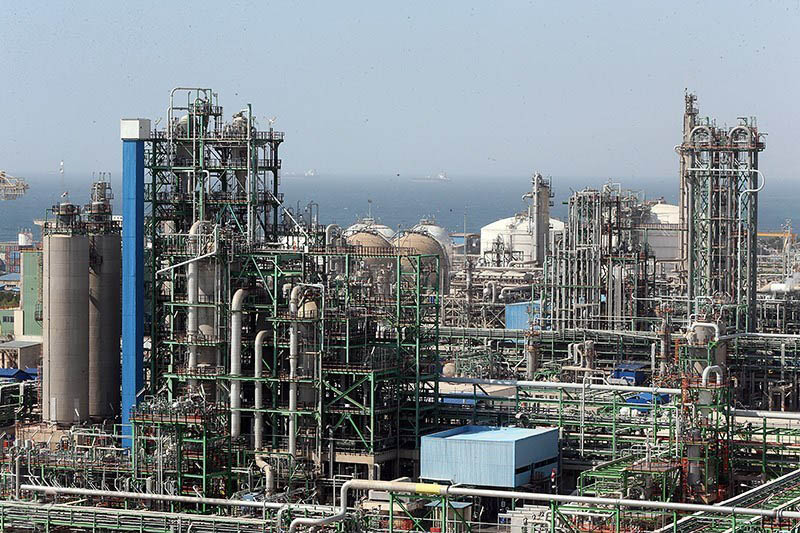 A petrochemical complex in Asaluyeh, Iran, contributes to the country’s industrial capacity, with Iran manufacturing 60–70% of its equipment locally, including turbines, pumps, catalysts, tankers, and various oil and exploration infrastructure. / Picture: © Wikimedia Commons / Tasnim News Agency, Majmood Hosseini / CC BY 4.0 (https://creativecommons.org/licenses/by/4.0/deed.en)
Iran has closed the Strait of Hormuz to shipping. A senior representative of the Iranian Revolutionary Guard announced the closure of the strait after Israel and the US launched attacks on Iranian targets. Around one-fifth of the world's oil transport passes through this bottleneck every day. The markets reacted quickly, with Brent crude oil rising 2.9% to $80.34 and WTI light oil rising 2.8% to $73.25. Experts are already warning of an “extreme scenario” in which prices could climb to as high as $150.
Despite the burning tankers – such as the Honduran-flagged “Athe Nova” – OMV has given the all-clear for domestic supplies for the time being. “Alternative sources can replace the affected quantities,” the statement said.
The “gas pump shock” and relentless inflation
For Austrian motorists, global politics became painfully real on Monday afternoon. Within a few hours, gas station operators raised prices for premium gasoline and diesel by up to 15 cents per liter. This development torpedoes the price stability that had just been achieved.
According to a recent flash estimate by Statistics Austria, inflation climbed to 2.2% in February – a slight increase compared to January (2.0%). The main culprit is energy prices, which are no longer dampening general price inflation as strongly as before. Food, tobacco, and alcohol also saw above-average price increases of 3.0%.
“We take the situation seriously,” emphasizes Economics Minister Wolfgang Hattmannsdorfer. He announced the establishment of a “supply security task force” to identify market distortions at an early stage.
Export hope: The WKO expects a trend reversal
Amidst the gloomy news from the East, however, there is a ray of hope for domestic industry. The Austrian Federal Economic Chamber (WKO) forecasts a moderate trend reversal in exports for 2026. After export volume is expected to fall by 1.2% to EUR 189 billion in 2025 – mainly due to a massive slump in U.S. business (-21.4%) – it is expected to rise again to around EUR 192 billion this year.
Interestingly, European neighbors are currently acting as lifelines, with Italy posting export growth of +7.0%, the UK +7.2%, and the Netherlands +8.8%. The official balance sheet for the difficult year 2025 is expected in early March.
The vision: €2.5 billion thanks to a free Iran?
As paradoxical as it may sound, the current war could pave the way for an unprecedented economic boom in the long term. A new study by Wifo and wiiw (Vienna Institute for International Economic Studies) shows that political upheaval in Iran could mean enormous gains in prosperity for Austria.
Should the sanctions regime fall and Iran modernize its economy, economists led by Gabriel Felbermayr and Mahdi Ghodsi calculate the following potential GDP growth for Austria: +0.5% (approx. €2.51 billion annually), GDP growth for the EU: +0.3% (over €54 billion) and for sectors such as Domestic mechanical engineering, environmental technology, and medical technology in particular would benefit massively. “Moral clarity and economic prudence are not mutually exclusive,” says Felbermayr. An Iran that approaches countries such as Türkiye or South Korea in terms of productivity could increase its own GDP by up to 390%.
Infrastructure, medicine, and environmental technology from Austria
If Iran were to end its economic isolation, the country would face a huge investment backlog. According to the Wifo-wiiw study, the Iranian industry has remained at the level of the 1990s in many areas. This is where the greatest opportunity lies for Austrian mechanical and plant engineering.
A massive demand for Western know-how is expected, particularly in transport infrastructure and the construction industry. As Austrian companies already enjoyed an excellent reputation as reliable partners before the sanctions were tightened, they could play a leading role in the renewal of factory facilities and the expansion of the rail network. Mahdi Ghodsi (wiiw) emphasizes that the complexity of Austrian special-purpose machinery is precisely what the country needs for a rapid boost in productivity.
Even under the current sanctions regime, Austria was one of Iran's most important suppliers of medicines and medical technology, as these goods often benefited from humanitarian exemptions. However, a complete opening of the market would catapult this sector into new spheres. The need for modernization in Iranian hospitals is enormous – from high-precision diagnostic equipment to state-of-the-art laboratory technology. Austrian pharmaceutical giants and SMEs in the field of medical technology could act here not only as exporters but also as partners in establishing local, quality-assured production. The goal would be to approach the level of care provided in countries such as South Korea, which, according to economists, promises the most stable growth rates in the long term.
An often overlooked but critical area is water treatment and environmental technology. Iran suffers from massive water shortages and outdated disposal systems. Austria is considered the global market leader in Alpine water technology and efficient sewage treatment systems.
The study emphasizes that “green tech” from Austria would have a double effect: on the one hand, it would secure the Iranian standard of living, and on the other, it would offer domestic companies a huge field for pilot projects in the area of renewable energies and resource efficiency. If Iran reduces its dependence on oil internally in order to be able to export more raw materials, efficient energy technology is the key to this.
Austria is at an economic crossroads. In the short term, the blockade of the Strait of Hormuz threatens higher energy costs and unstable inflation. However, the resilience of domestic exporters and the long-term opportunities offered by a regional realignment in the Middle East give cause for cautious optimism. The task force at the ministry will have its hands full in the coming weeks trying to cushion the waves made in the Persian Gulf on the Danube.