




“Threat to cohesion”: IGGÖ President Vural Warns Government Against Rhetorical Escalation
In an open letter to the federal government, Ümit Vural, president of the Islamic Religious Community in Austria (IGGÖ), expresses serious concerns about the current political discourse. This was triggered by recent publications on the integration barometer and a controversial post by the ÖVP. Vural sees the sense of security among Muslims as being under threat.
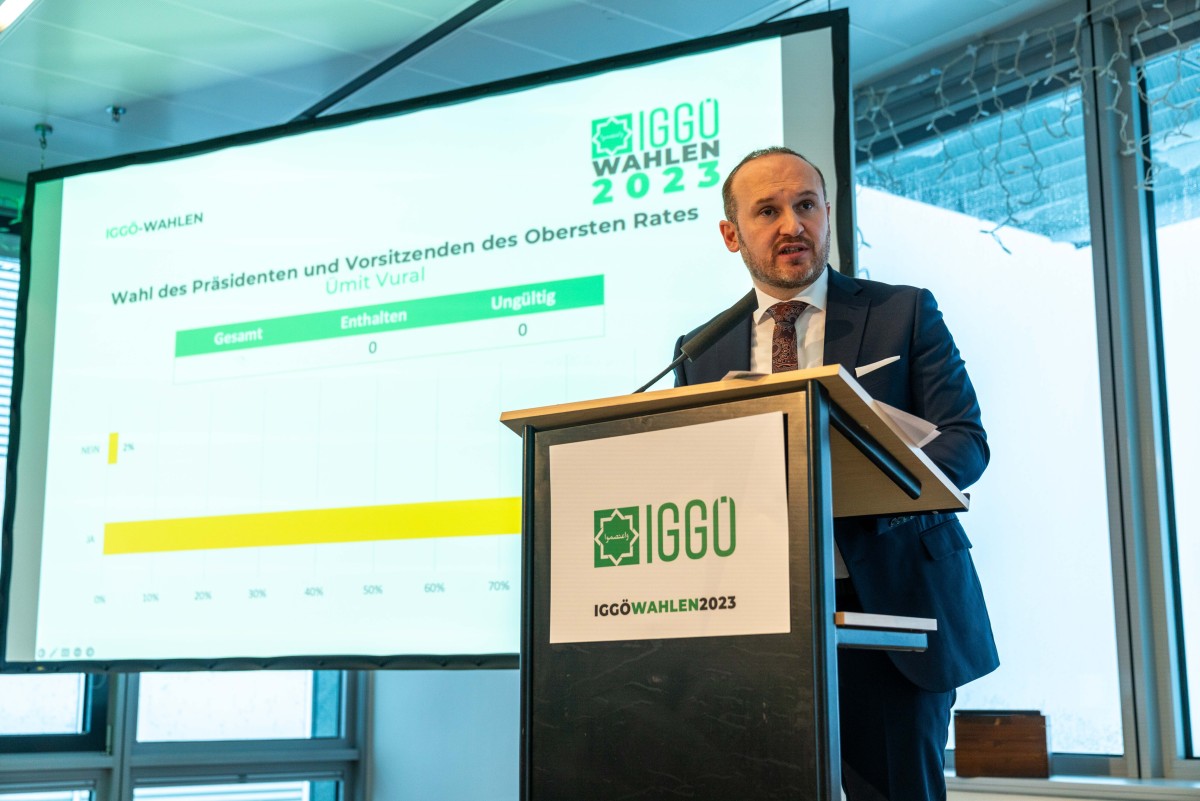 The president of the Islamic Religious Community (IGGÖ), Ümit Vural, has sent an open letter to the government, likely in reaction to the ÖVP's recent social media post regarding the integration barometer results. / Picture: © IGGÖ / Taha Babadostu
The Austrian integration debate is growing more heated, raising concerns among affected communities. Ümit Vural, head of the IGGÖ, has issued an urgent appeal to political decision-makers, warning that generalizations and inflammatory political language threaten social peace in the country and undermine trust.
Criticism of the interpretation of the integration barometer
The background to the letter includes the results of the “Integration Barometer 2024.” The study by the Austrian Integration Fund (ÖIF) states that the majority population views coexistence with Muslims much more negatively than with other groups. Around 53 percent of those surveyed said that coexistence with Muslims works “rather poorly” or “very poorly.”
Vural criticizes that this data is often used for political gain without the necessary differentiation. While the barometer merely captures “subjective moods” and perceptions, it is often presented in politics as if it were objective facts about people's integration performance. “Anyone who uses moods as a basis for sweeping judgments about entire religious groups undermines trust in democratic institutions,” emphasizes the IGGÖ president.
Controversy: The ÖVP post and the headscarf ban
A recent social media post by the ÖVP highlighting the negative values of the barometer caused particular discontent. Critics accuse the chancellor's party of fueling prejudice rather than reducing it. In addition, the debate about a headscarf ban for schoolgirls up to the age of 14 is causing deep divisions. While supporters speak of a necessary measure to protect children, the IGGÖ sees it as a massive encroachment on religious freedom and a signal of exclusion.
Real consequences: an increase in threats and hatred
According to Vural, the sharp rhetoric is not without consequences in everyday life. Studies and observations by the Documentation Center for Anti-Muslim Racism (Dokustelle) show that media and political escalations often correlate with an increase in insults, threats, and even attacks on religious institutions. In 2023, the Dokustelle recorded a massive increase in reported incidents.
The open letter stresses that political rhetoric shapes the Muslim community's sense of security and their sense of belonging in Austria, with exclusionary language discouraging social participation.
Call for objective dialogue
The IGGÖ calls on the federal government to return to “objective, differentiated, and fair” communication. Integration requires responsibility and should not be exploited for election campaigns or poll ratings. Muslims are a “natural part of Austrian society” and make valuable contributions every day.
“Respectful dialogue is a prerequisite for sustainable solutions,” Vural concluded. The religious community is always available for this dialogue, but expects politicians to consistently respect fundamental rights and religious freedom.