




Austrians Call for a Tougher Stance and Clear Rules for Immigrants
The latest "Integration Barometer" published by the Austrian Integration Fund (ÖIF) indicates that skepticism regarding the arrival of refugees is increasing, along with more frequent calls for adaptation to "Austrian culture" and measures for individuals perceived as unwilling to integrate. Integration Minister Claudia Plakolm (ÖVP) has now announced a tightening of measures.
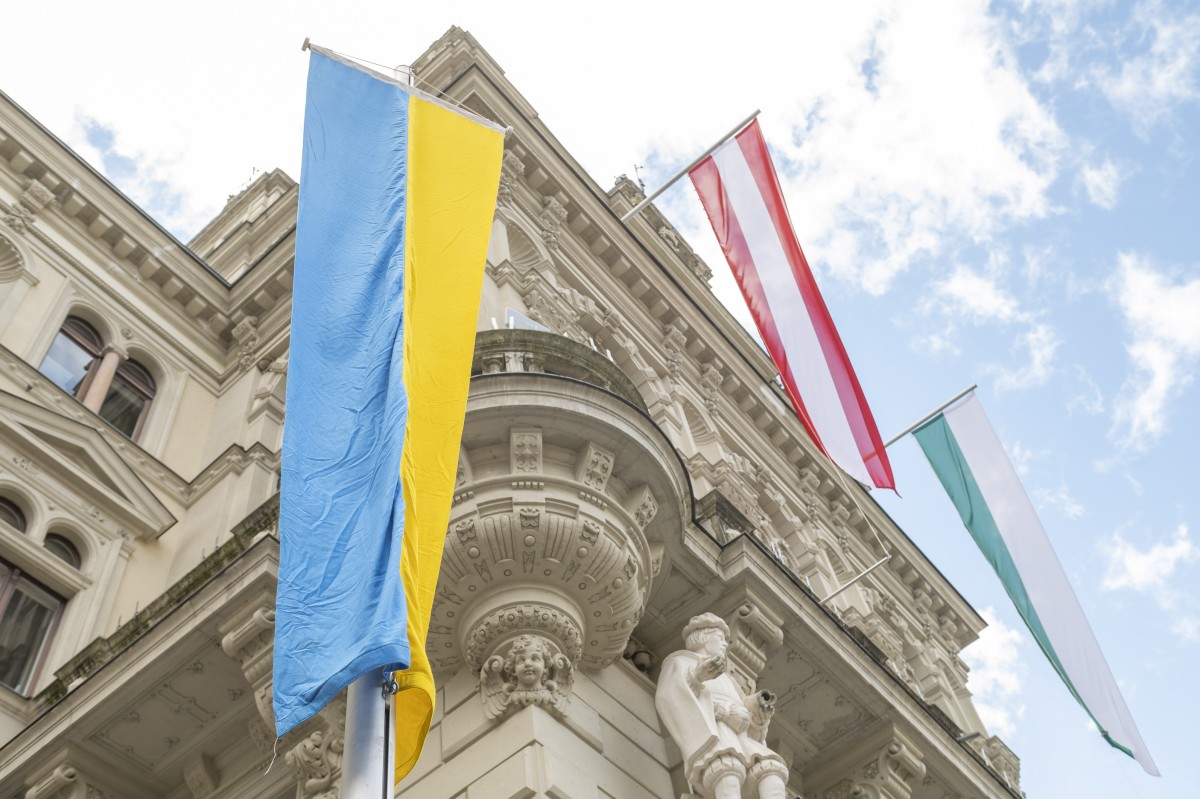 Austrians continue to view coexistence with Ukrainian displaced persons more positively than that with the group of “refugees.” / Picture: © Stadt Graz/Foto Fischer
The figures collected by Peter Hajek's opinion research institute on behalf of the ÖIF are clear: around 89 percent of Austrians believe that immigrants must adapt to the local culture. However, there is a clear difference in perception: while 55 percent view coexistence with Ukrainian refugees positively, 62 percent view coexistence with refugees in general negatively. The relationship with Muslims is viewed particularly critically, with 66 percent rating coexistence negatively.
Integration is not a “one-way street.”
Integration Minister Claudia Plakolm responded to the presentation of the data with a clear statement. Integration is “not an offer, but an obligation.” Anyone who wants to live in Austria must fulfill the three pillars of the new integration program: German, work, and prioritization of self-sufficiency and values for compliance with local rules and laws. Mastery of the national language is considered a basic requirement.
“Anyone who refuses to do so must expect consequences and is not welcome in Austria,” Plakolm made clear. Particular focus is placed on linking social benefits to willingness to integrate. Anyone who drops out of compulsory German courses or values courses without excuse will be subject to sanctions – a measure supported by 86 percent of the population, according to the barometer.
Concerns about security and political Islam
In addition to integration, Austrians are particularly concerned about inflation (75%) and the state of the healthcare system (70%). But fear of radicalization is also present: 60 percent of those surveyed express concern about the spread of political Islam.
To counteract this development, Austria is increasingly focusing on international cooperation. At the recent Vienna Forum on Countering Segregation and Extremism, the introduction of a European register of hate preachers was discussed as a means of curbing online radicalization.
The European context
Austria's push for a stricter course is also finding support at the European level. Close coordination with Germany plays a particularly important role in this regard. Under German Chancellor Friedrich Merz, who has been in office since May 2025, the focus on migration policy has also become noticeably more intense, increasing the pressure for a common European solution.
The figures at a glance
| Topic | Value |
|---|---|
| Cultural adaptation required | 89% |
| Support for sanctions | 86% |
| Concerns over influx management | 68% |
| Lower sense of security | 47% |
In summary, it can be said that the mood in the country remains tense. The government plans to complete the content of the mandatory integration program by the first half of 2026 in order to further advance social welfare reform.