




Austria's Historical Responsibility: 30 Years of the National Fund and the Promise of “Never Forget”
On the occasion of the 30th anniversary of the National Fund of the Republic of Austria for Victims of National Socialism, Federal President Alexander Van der Bellen reaffirmed the country's ongoing responsibility for Nazi crimes. The federal government and the Jewish Community of Vienna (IKG) are also intensifying their joint fight against anti-Semitism in view of the alarmingly high number of incidents.
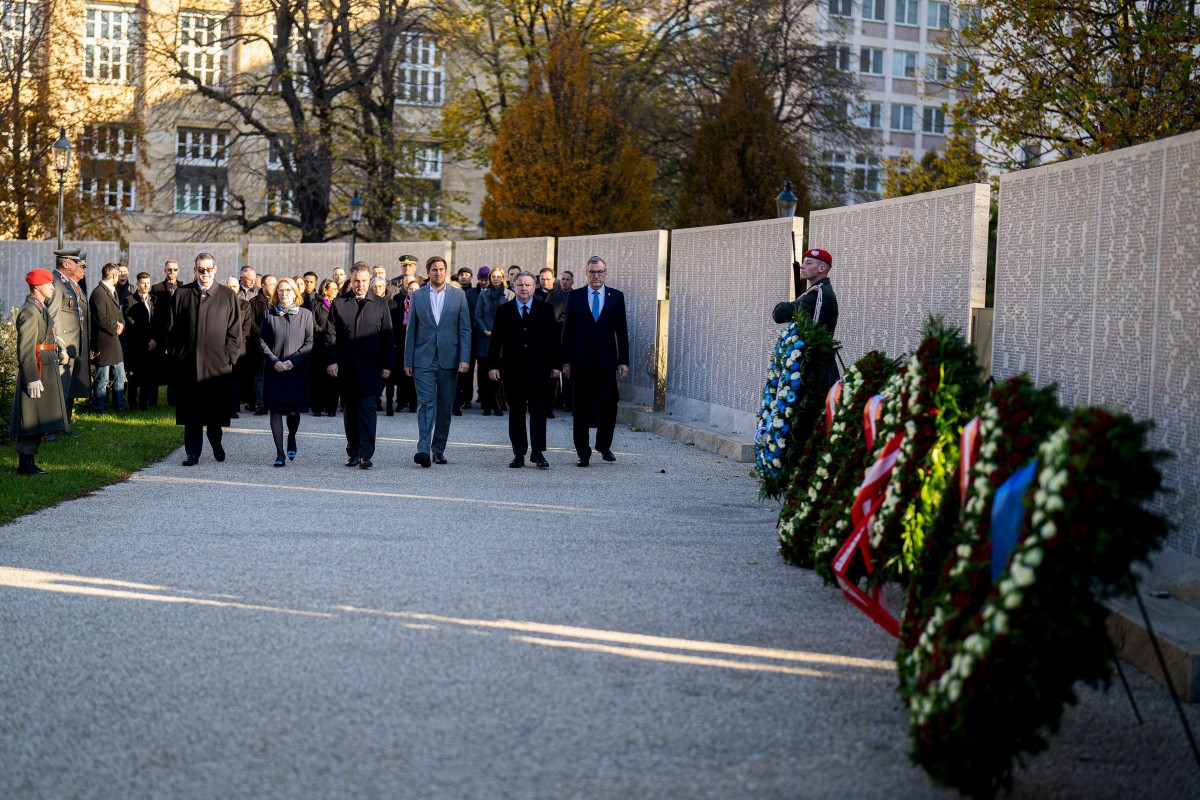 The Jewish Community of Vienna and government officials commemorated the anniversary of the November pogroms of 1938 with a wreath-laying ceremony at the Shoah Memorial Wall in Ostarrichipark. / Picture: © Bundeskanzleramt (BKA) / Florian Schrötter
In his speech at the ceremony marking the 30th anniversary of the National Fund, Federal President Alexander Van der Bellen recalled that it was not until 1991, with the speech by then-Chancellor Franz Vranitzky, that Austria acknowledged its shared responsibility for the atrocities committed by the Nazis. The establishment of the National Fund in 1995 was a “clear and lasting sign” of this responsibility.
Mit seinen engagierten Mitarbeiterinnen und Mitarbeitern hat der @nationalfonds im Laufe der vergangenen 30 Jahre viele Menschen erreicht und wertvolle Beiträge geleistet, um unser Land zum Besseren hin zu verändern.
— Alexander Van der Bellen (@vanderbellen) November 10, 2025
Since then, the Fund has made an important contribution to the recognition and support of all Austrian victims of National Socialism, including Jews, Roma and Sinti, politically persecuted persons, and Carinthian Slovenes. Van der Bellen emphasized that recognition of the suffering is essential for alleviating the trauma and that the National Fund has contributed significantly to survivors being able to feel part of Austria again.
In addition to individual payments to victims (partly from proceeds from “disinherited” looted art), the National Fund's central tasks include promoting remembrance projects and providing support in the restitution of art and the acquisition of Austrian citizenship for victims and their descendants.
An important visible sign of this culture of remembrance is the Shoah Memorial Wall in Vienna's Ostarrichi Park. After many years of planning, it was officially opened on November 9, 2021, the anniversary of the November pogroms. The memorial consists of 160 granite slabs bearing the names of 64,440 Jewish Austrians murdered during the Shoah.
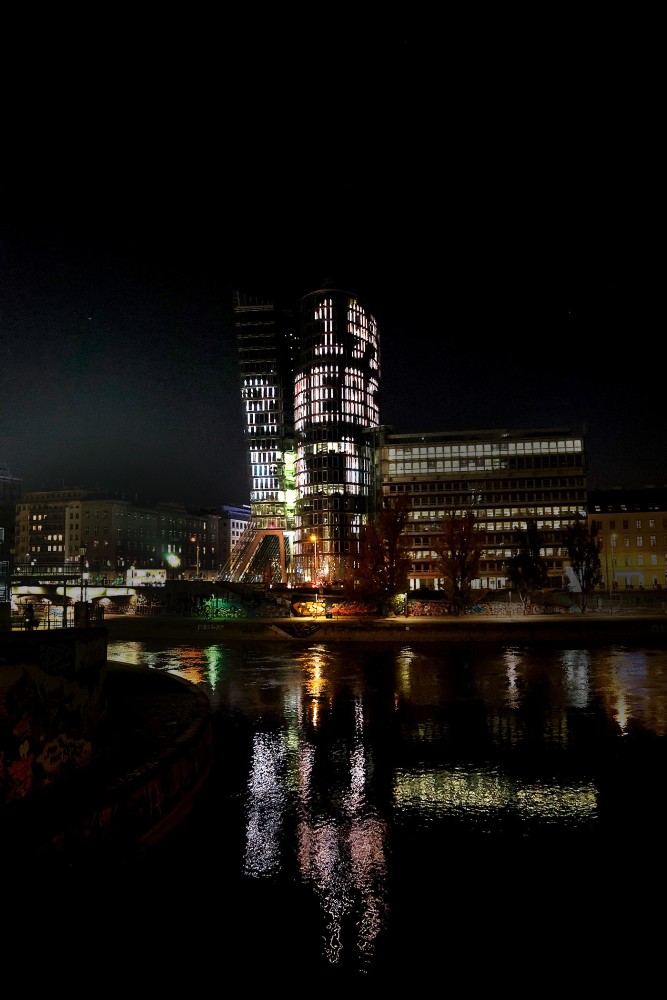
Illuminated remembrance on the Danube Canal
Parallel to political and institutional efforts, civil society is sending a visible signal with initiatives such as the “Namensturm” (Wall of Names). To commemorate the anniversary of the November pogroms of 1938, the UNIQA Group, in cooperation with the Documentation Center of the Austrian Resistance (DÖW), is illuminating the names of Holocaust victims on the LED facade of its tower.
These are 68 Jews who lived in the immediate vicinity of today's UNIQA Tower in Vienna's Leopoldstadt district and were murdered in the Holocaust. The light installation has been in operation since 2018. The names appear annually around November 9 and 10 in an endless loop, symbolically beginning at 7:38 p.m.
IKG Remembrance and Youth Initiatives
The Jewish Community of Vienna (IKG) organizes annual central commemorative events that underscore the breadth of its social commitment. On November 7, a wreath-laying ceremony was held at the Shoah Memorial Wall in Ostarrichipark to mark the anniversary of the November pogroms. The ceremony, which ended with the prayer for the dead “El male rachamim” by Chief Cantor Shmuel Barzilai, brought together high-ranking representatives from politics and society, including members of the federal government, the National Council, and the City of Vienna, to commemorate the victims of the Shoah.
The Youth Commission of the IKG Vienna organized the “Light of Hope” memorial march on November 10 at 6:00 p.m. to commemorate the November pogroms. The march led from Karmeliterplatz to the final rally in front of the psychosocial facility ESRA (Tempelgasse 5). The event emphasizes the active role of the younger generation in ensuring that the past is not forgotten and serves as a strong sign of solidarity in the fight against anti-Semitism and hatred. The Youth Commission emphasizes that remembrance is a task and responsibility for civil society as a whole.
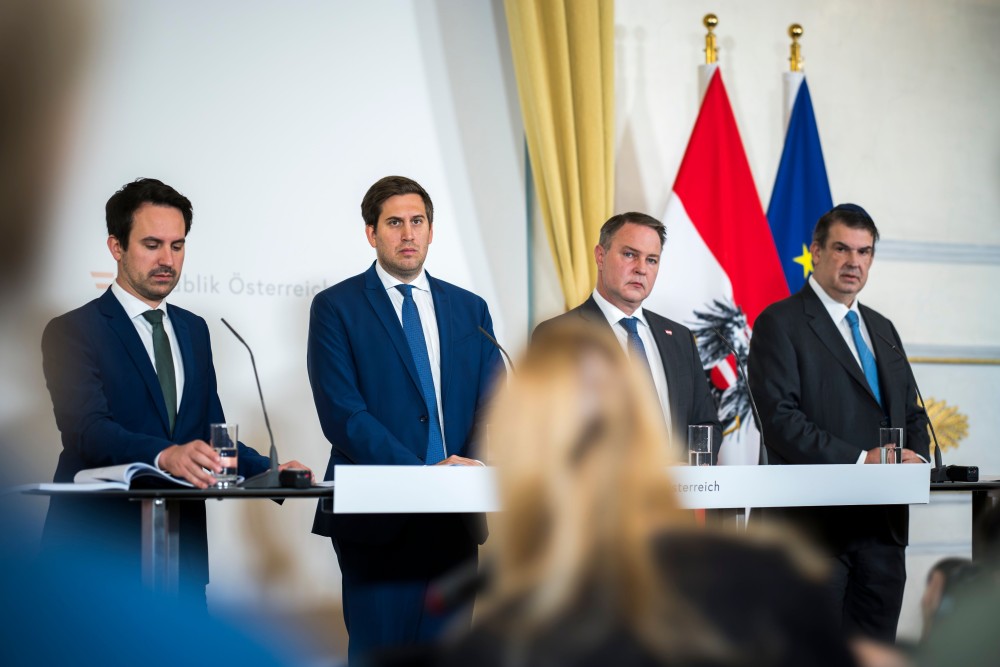
Strategy against anti-Semitism 2.0 as an urgent response In light of current developments and what has been described as an “alarming” number of anti-Semitic incidents—at least four per day in the first half of 2025, according to IRG President Oskar Deutsch—the federal government presented the “National Strategy Against Anti-Semitism 2.0” (NAS 2.0) for the period 2025–2030 on November 10. State Secretary Alexander Pröll emphasized: “Since the terrorist attacks by Hamas on October 7, 2023, we have been experiencing a new wave of anti-Semitism in Europe – and also in Austria: more open, more aggressive, unleashed digitally.” The strategy bundles 49 concrete, interdepartmental measures in eight fields of action:
| Field of action |
Focus of the measures |
|---|---|
| Security & law enforcement | Protection of Jewish institutions, consistent punishment of anti-Semitic crimes |
| Education & Resilience | Mandatory prevention modules in schools and teacher training |
| Digital & Media | Fight against online hate, promotion of AI-supported solutions |
| Integration & Dialogue | Teaching values in integration courses, involvement of civil society partners |
| Remembrance & Culture | Expansion of memorial initiatives |
| Research & Documentation | New data collection, scientific analyses |
| EU & International | Austria's active role in the EU and IHRA |
| Society & Sport | Measures against discrimination in clubs and organizations |
Three “flagship measures” were defined:
- A “Declaration against Anti-Semitism” in integration courses.
- The promotion of automated systems against hate speech on the internet.
- A review process for an “Austrian Holocaust Museum.”
NAS 2.0, supported by all governing parties, is intended to send a clear signal: anti-Semitism has no place in Austria—neither in words, nor in deeds, nor in silence. NAS 2.0, supported by all governing parties, is intended to send a clear signal: anti-Semitism has no place in Austria—neither in words, nor in deeds, nor in silence.