




U.S.-Austrian Strategic Dialogue: Strong Economic Alliances and Close Security Cooperation
The United States and Austria are sending a clear signal of their commitment to a deeper partnership. At the U.S.-Austria Strategic Dialogue, which took place in Washington, D.C., high-level government officials from both nations reaffirmed their intention to further strengthen bilateral relations in the areas of economy, technology, and security.
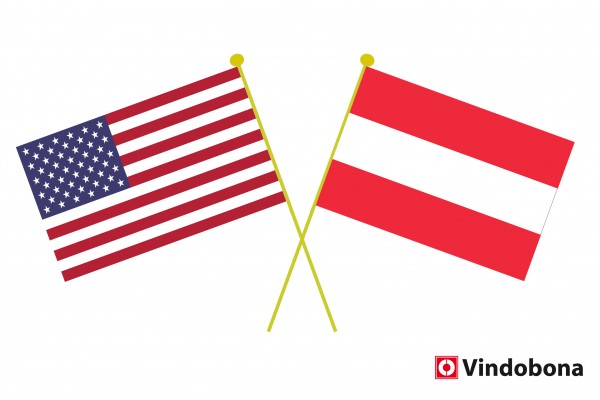 Both nations are looking back on what they have achieved and plan to build on this progress at the next U.S.-Austria Strategic Dialogue in Vienna. / Picture: © American and Austrian crossed flags by Vindobona
The United States and Austria are sending a clear signal of their commitment to a deeper partnership. At the U.S.-Austria Strategic Dialogue, which took place in Washington, D.C., high-level government officials from both nations reaffirmed their intention to further expand bilateral relations in the areas of economics, technology, and security.
A central focus of the discussions was economic cooperation, which, according to the joint statement, has reached an all-time high. In 2025, the volume of trade between the U.S. and Austria reached nearly $23 billion. Cumulative foreign direct investment (FDI) currently stands at $31 billion.
Both countries plan to further intensify the exchange of goods and services within the framework of a balanced and reciprocal trade relationship.
Protection of Critical Technologies and Research Security
Another key element of the joint agenda concerns the protection of sensitive technologies. The United States and Austria consider the protection of key and future technologies—particularly those with both civilian and military applications (dual-use technologies)—to be essential for national and economic security. In the future, cooperation is to be expanded primarily in the fields of semiconductor and quantum technology, as well as in research security and other cutting-edge technologies.
Geopolitical Responsibility: UN Security Council and Migration
Geopolitical issues were also at the center of the discussions. The United States congratulated Austria on its election as a non-permanent member of the UN Security Council for the 2027–2028 term and recognized Vienna’s role as an important UN headquarters. In the UN Security Council, both nations aim to coordinate closely to advance lasting peace in Ukraine and promote stability in the Middle East. The parties are taking stock of what has been achieved and plan to further build on this progress at the next U.S.-Austria Strategic Dialogue in Vienna.
Washington also praised Austria’s commitment to combating illegal migration, protecting external borders, and contributing to stability in the Western Balkans.