




State Secretary Pröll Hosted a Rosh Hashanah Reception
On the occasion of the Jewish New Year 5787, Alexander Pröll, the State Secretary responsible for combating antisemitism, welcomed representatives of the Jewish community as well as high-ranking guests from the worlds of politics, religion, diplomacy, and civil society to the Federal Chancellery. The traditional reception underscored the shared commitment to a pluralistic society in which Jewish life is not only protected but also actively promoted and lived out openly.
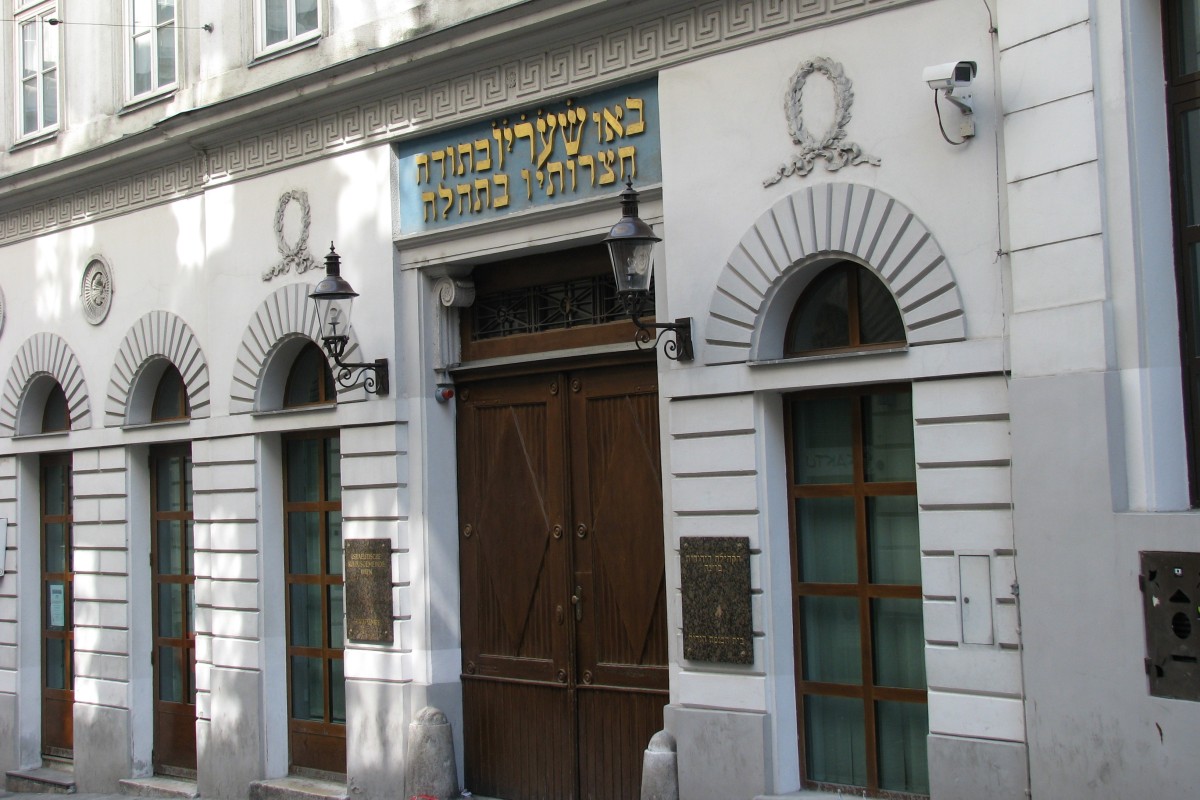 The year 5787 had begun with a significant milestone: the reopening of the 200-year-old Vienna City Temple. / Picture: © Wikimedia Commons; Bella47, CC BY-SA 3.0 (https://creativecommons.org/licenses/by-sa/3.0/deed.en)
“Rosh Hashanah symbolizes a new beginning, optimism, and looking ahead to the coming year,” State Secretary Pröll emphasized in his opening remarks. He extended his best wishes to all Jews in Austria for a happy, peaceful, and sweet New Year. “Jewish life is, of course, an integral part of Austria. People should be able to live it here safely, visibly, and with confidence. The state bears responsibility for this—and we must stand up for it every day,” said Pröll. The reception at the Chancellery has become a steadfast symbol of solidarity in recent years.
A Positive Start Despite Turbulent Times
Oskar Deutsch, President of the Jewish Community of Vienna (IKG), emphasized that despite major challenges, the year 5787 had begun with a significant milestone: the reopening of the 200-year-old Vienna City Temple. The renovation of the historic synagogue on Seitenstettengasse was made possible thanks to equal funding from the federal government, the City of Vienna, and private fundraising. “Thank you very much for that,” said Deutsch, emphasizing the symbolic significance of the restoration.
At the same time, the IKG president used the occasion to issue a warning. Rosh Hashanah, he said, is an invitation to repentance that applies to society as a whole. When Israel is demonized, he noted, this has a direct impact on everyday life in Austria—for example, in schools, on the streets, online, or outside Jewish institutions. Deutsch also called on political parties to engage honestly with their history: Repentance begins with a sincere engagement with one’s own history and responsibility, not with the defamation of the Jewish community.
National Strategy 2.0 Aims to Safeguard Jewish Life
In light of a persistently high level of antisemitic incidents, officials pointed to the updated “National Strategy Against Antisemitism 2.0.” This comprehensive package of measures includes 49 concrete initiatives to be implemented by 2030. It covers preventive educational programs, the protection of institutions, and targeted steps against hate speech and antisemitism in the digital sphere.
State Secretary Pröll concluded by making it clear that protection alone is not enough: “Our goal must not be limited to protecting Jewish life from antisemitism. We want an Austria in which Jews can live their religion, culture, and traditions openly and as a matter of course. A reception like this is therefore also a sign of what we want to preserve and strengthen: a vibrant Jewish community at the heart of our society.”