




“More Beautiful Than Ever”: Ceremony Marking the Reopening of the Renovated Vienna Stadttempel
Austria’s largest synagogue shines in new splendor to mark its 200th anniversary. On Wednesday evening, representatives from the worlds of politics, religion, and society celebrated the successful completion of the renovation of the Wiener Stadttempel in downtown Vienna with a ceremony attended by high-ranking officials. For members of the Jewish Community of Vienna (IKG), the doors to the spiritual center on Seitenstettengasse have been open since last week.
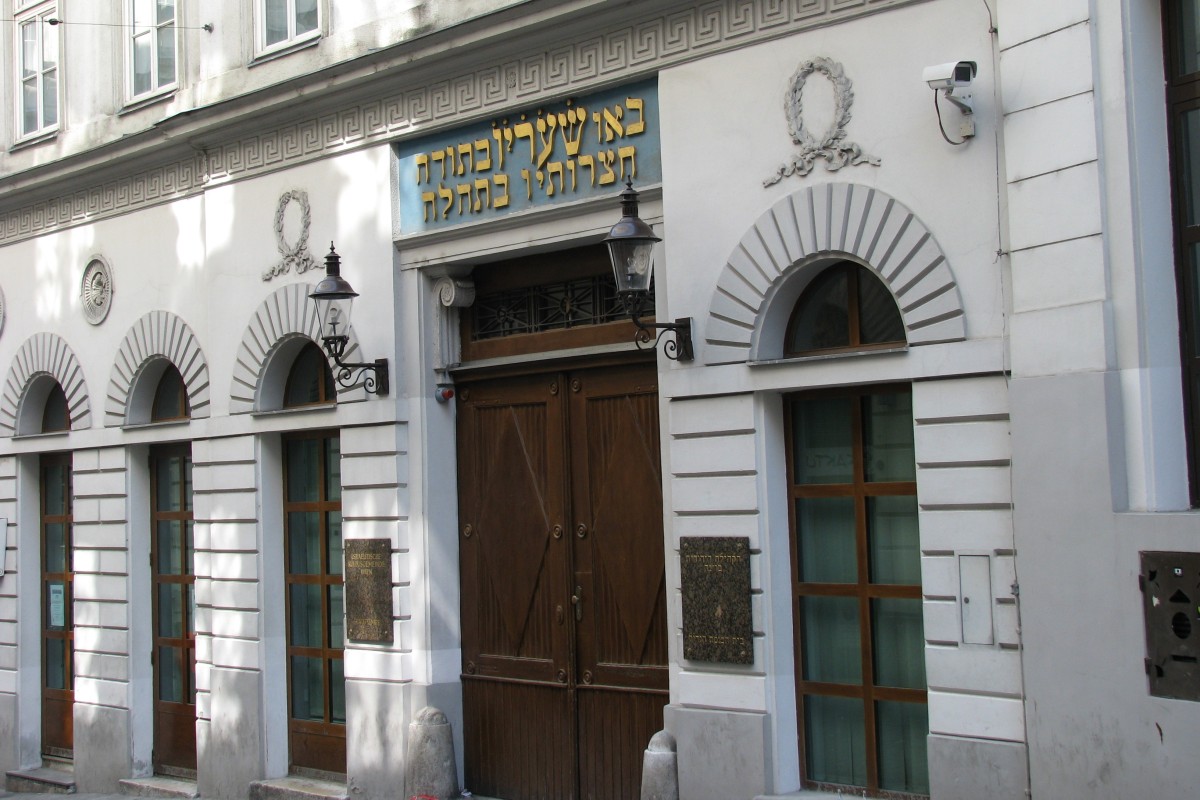 Austria's largest synagogue is also celebrating its 200th anniversary this year. / Picture: © Wikimedia Commons; Bella47, CC BY-SA 3.0 (https://creativecommons.org/licenses/by-sa/3.0/deed.en)
Among those attending the ceremonial reopening were Federal President Alexander Van der Bellen, Federal Chancellor Christian Stocker, and Vienna Mayor Michael Ludwig. Van der Bellen symbolically cut the ribbon to mark the occasion. Other political figures in attendance included Second National Council President Peter Haubner, Third National Council President Doris Bures, Green Party Federal Spokesperson Leonore Gewessler, and NEOS Caucus Leader Yannick Shetty. National Council President Walter Rosenkranz and other representatives of the FPÖ were absent—the IKG officially refuses to have contact with the party due to its far-right tendencies.
Ecumenism and interfaith dialogue were also strongly represented: In addition to Linz Bishop Manfred Scheuer, Secretary General Peter Schipka, and Cathedral Pastor Toni Faber, Evangelical Lutheran Bishop Cornelia Richter and Ümit Vural, Chairman of the Islamic Religious Community, also honored the City Temple with their presence. Among the guests was also the artist Gottfried Helnwein, who supported the renovation project and presented portraits of ten Jewish children inside the synagogue.
Investment in the Future and a Look Back at History
“This building is more beautiful than ever before. It is the most beautiful synagogue in the world,” said IKG President Oskar Deutsch, praising the result of the work, and added: “Judaism belongs to Austria just as much as milk belongs in a melange.” Federal Chancellor Stocker emphasized that renewal means creating the future from the past and highlighted the state’s duty to ensure a safe and visible Jewish daily life.
At the same time, the dark chapters of history were recalled. Paradoxically, the fact that the Vienna City Temple was the only one of Vienna’s once-numerous synagogues to survive the November pogroms of 1938 is due to historical building regulations from the Biedermeier era: According to the regulations at the time, the house of worship was not allowed to stand directly on the street but had to be integrated into a residential facade like an ordinary apartment building. As a result, surrounding buildings were spared during the arson attack in 1938, which prevented the destruction of the interior. In light of current developments, both Oskar Deutsch and Chief Rabbi Jaron Engelmayer pointed to the resurgence of anti-Semitism, which must be resolutely countered.
Modernization Based on Plans by a Historic Architect
The restoration and renovation work, which lasted ten and a half months, cost a total of 10.5 million euros, two-thirds of which was funded by public authorities (the federal government and the City of Vienna) and one-third by private donations.
As part of the renovation, fire safety, building services, acoustics, and accessibility were brought up to current standards, and the pews were made more comfortable. At the same time, a team of architects, in consultation with the Federal Monuments Office, uncovered historic structural elements—including the original floor beneath the bimah, made of Budapest marble. The design closely followed the plans of the Biedermeier architect Joseph Kornhäusel, who had built the structure in the 1820s. Starting in the winter of 2026, guided tours for tourists are also scheduled to resume in the newly designed entrance area.