




No More “Island of Spies”: Austria Is Drastically Tightening Its Criminal Law
For decades, Austria’s capital had a reputation for being a relatively risk-free “Eldorado” for foreign intelligence services. As long as intelligence activities were not directed specifically against the Republic of Austria, they often went unpunished under criminal law. This situation is now set to come to an end.
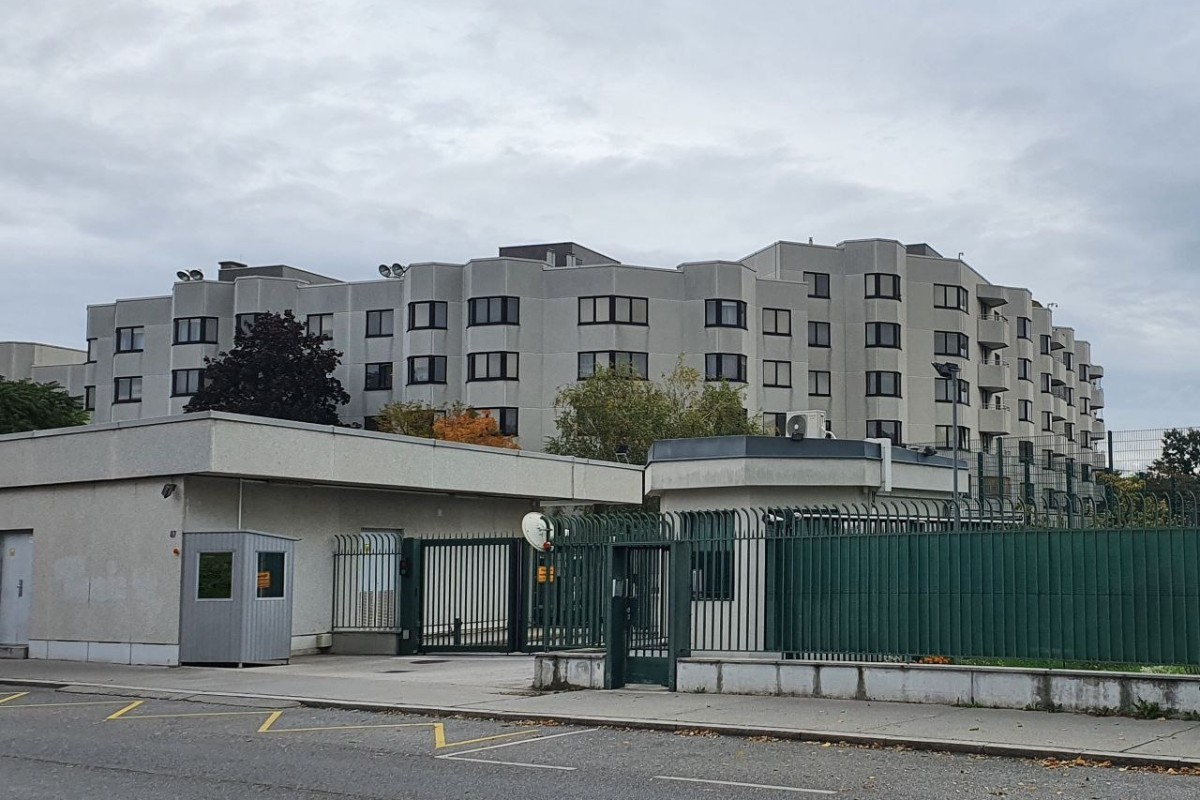 The so-called “Russian City” in Donaustadt is in fact considered one of the hubs of Russian intelligence activities in Europe. / Picture: © Wikimedia Commons / Aleksandrs Čaičics / CC BY-SA 4.0 (https://creativecommons.org/licenses/by-sa/4.0/deed.en)
The three-party coalition of the ÖVP, SPÖ, and NEOS in the Council of Ministers has initiated a comprehensive tightening of espionage legislation. In the future, offenders could face up to ten years in prison; international organizations will receive specific criminal law protection; and the recruitment of so-called “disposable agents” will become a separate criminal offense.
Doubling of Maximum Sentences and Protection for the UN and EU
In light of an escalating geopolitical threat and increasingly aggressive foreign intelligence services, the government is putting together a broad legislative package led by Justice Minister Anna Sporrer (SPÖ). At the heart of the reform is a significant increase in the penalty range under the Penal Code (StGB): For espionage to the detriment of the Republic of Austria, the maximum penalty is doubled from the previous five years to up to ten years’ imprisonment.
At the same time, the amendment closes a widely criticized legal loophole that made Vienna—as the seat of the United Nations (UN), the Organization for Security and Co-operation in Europe (OSCE), the International Atomic Energy Agency (IAEA), and numerous EU institutions—particularly vulnerable. Until now, espionage to the detriment of these international organizations based in Austria was not a separate criminal offense unless direct harm to Austria could be proven. In the future, spying on these institutions will be punishable by up to five years in prison.
“Espionage is a real threat to our security and to our reputation as the capital of dialogue, as the seat of the UN and of over 40 international organizations,” emphasized Foreign Minister Beate Meinl-Reisinger (NEOS) before the Council of Ministers. NEOS Justice Spokesperson Sophie Wotschke also stressed, according to "DiePresse", that Vienna had been an attractive location for foreign intelligence services—particularly those from Russia—for far too long and that the country is now living up to its international responsibilities.
Fighting “Disposable Agents” and Hybrid Sabotage
Another focus of the legislative amendment targets modern methods of hybrid warfare. Interior Minister Gerhard Karner (ÖVP) and State Secretary for National Security Jörg Leichtfried (SPÖ) pointed out that traditional espionage has long been supplemented by cyberattacks, disinformation, and sabotage.
To dismantle these networks, both the recruitment of agents and allowing oneself to be recruited will be criminalized in the future. In this context, Leichtfried spoke of so-called “disposable agents” (also known as low-level agents): These are often private citizens recruited via social media to carry out seemingly harmless tasks—such as photographing critical infrastructure—for small sums of money—about 100 euros for a drone photo—often without even knowing exactly who they are working for.
In addition, penalties for acts of sabotage carried out on behalf of foreign powers will be significantly increased. Anyone who, while working for foreign intelligence services, damages data, cripples IT systems, or sabotages critical infrastructure will face penalties up to one and a half times higher in the future. Likewise, the persecution of dissidents and exiles on behalf of foreign states (transnational repression) is explicitly covered. SPÖ security spokesperson Maximilian Köllner summarized the government’s stance: “Espionage is not a trivial offense; it is treason against the homeland. Spies must face the full force of our constitutional state.”
Stricter Diplomatic Policy and Moscow’s Threats
The criminal law reform is accompanied by a tougher diplomatic stance. Foreign Minister Meinl-Reisinger stated that diplomatic status must no longer be “abused as a cover for espionage activities on our soil.” Since the three-party coalition took office, entry visas have been denied in 63 cases; furthermore, the number of Russian diplomats accredited in Austria has decreased by a total of 23 percent since 2022. Even on the roof of the Russian Embassy in Vienna, the notorious “forest of antennas” has thinned out—three antennas have already been dismantled.
Just recently, Vienna declared four Russian representatives—three embassy diplomats and a member of the Russian OSCE delegation—personae non gratae and expelled them from the country. Moscow responded promptly with sharp threats: Russian Deputy Foreign Minister Dmitry Lyubinsky announced to the state news agency TASS, as reported by Vindobona.org, that countermeasures would be taken that would be proportionate but “inevitably painful” for Vienna.
Praise from Experts, Concerns About Judicial Resources, and Criticism from the FPÖ
As reported by ORF, the legislative package has received a mixed reception from experts and the opposition. Meri Disoski, the Greens’ spokesperson on foreign and European policy, described the protection of international organizations as “long overdue” and noted that her party had already introduced a corresponding parliamentary motion in the spring. However, she called for a comprehensive, interagency strategy to combat disinformation and hybrid threats.
Intelligence historian Thomas Riegler described the move as a “milestone in security policy,” but tempered expectations that it alone would automatically lead to a decline in espionage. Security expert Martin Kreutner expressed significantly more skepticism according to Heute.at: Since not only Russia but “almost every embassy” operates eavesdropping devices, he said, Austria is entering a “diplomatic and political minefield” by criminalizing espionage against all international organizations.
Both Kreutner and Anna-Maria Wukovits, vice president of the Association of Public Prosecutors, warned of a massive increase in workload that would be nearly impossible to manage with current staffing levels. State Secretary Leichtfried disputed this on ORF Radio: More clearly defined criminal offenses would, on the contrary, make the work of the Directorate for State Security and Intelligence (DSN) and the public prosecutors’ offices “less complicated.” Minister of Justice Sporrer nevertheless announced an evaluation of personnel resources.
The Freedom Party (FPÖ) expressed strong opposition. FPÖ Secretary-General Michael Schnedlitz and constitutional affairs spokesperson Michael Schilchegger warned that the fight against espionage could be used as a pretext to criminalize investigative journalism, opposition activities, or legitimate criticism of abuses. They also criticized the fact that the specific draft bill was not yet available at the time of the presentation.
Set to Take Effect in February—Military Powers Act Remains Unresolved
The draft bill will now undergo parliamentary review and is scheduled to take effect in mid-February 2027. However, the planned reform of the Military Powers Act—through which the ÖVP seeks to grant military intelligence services broader powers—remains unresolved within the coalition. In this regard, parts of the government are apparently waiting for a ruling from the Constitutional Court (VfGH) on whether the surveillance of messaging apps by civilian constitutional protection agencies complies with fundamental rights before finalizing the negotiations.