




Russian Foreign Minister Sharply Criticizes Austria for its Political Path
At a book presentation in Moscow, the former Russian ambassador to Vienna, Dmitry Lyubinsky, had strong words for Austria's current political leadership. He accused Austria of losing its foreign policy independence and of blatant “double standards” in its diplomatic dealings.
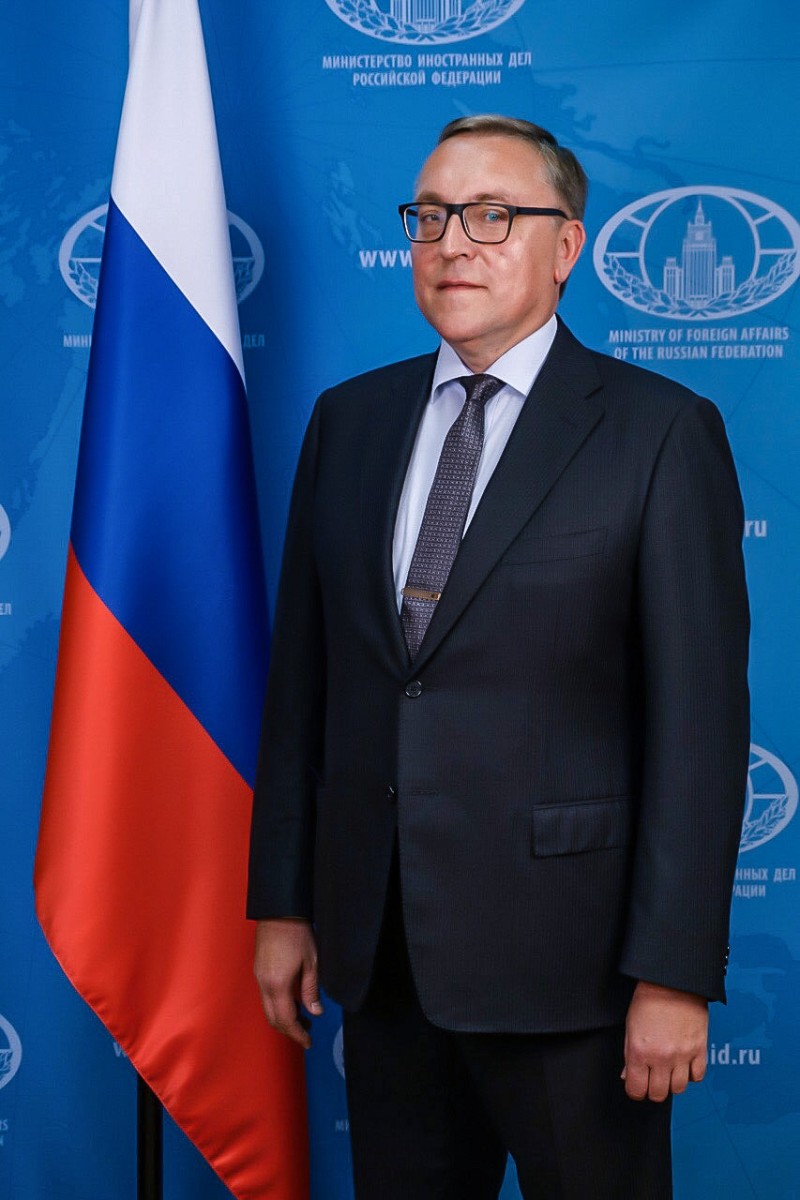 Lyubinsky's statements make it clear that Moscow has given up hope of Austria playing a special role as a “bridge builder” for the time being. / Picture: © Wikimedia Commons / www.rusemb.at, CC BY 3.0
The harsh criticism was prompted by the presentation of the new edition of the book “From Stalingrad to Vienna. The Battle Path of the 4th Guards Army.” The work documents the liberation of the Austrian capital by Soviet troops 80 years ago. Ljubinskij, who now serves as Deputy Foreign Minister of the Russian Federation, used the forum of the Russian State University for the Humanities to warn against a “rewriting of history” in Europe.
He expressed particular concern about the desecration of military monuments and attempts to relativize the role of the Red Army in defeating Nazism. These developments, he said, were part of a political instrumentalization of the 1945 victory.
The accusation of “double standards”
Ljubinskij looks back on ten years as ambassador in Vienna. His assessment is sobering. He reported a profound discrepancy between the public appearances and private statements of Austrian decision-makers: “In confidential conversations, many Austrian politicians would express completely different positions than those they express publicly—in front of cameras and under political pressure.”
According to Ljubinskij, this “human and political double standard” is symptomatic of the current climate in bilateral relations. While behind closed doors, there is often still a signal of understanding or realpolitik, officially, the course set by external pressure (e.g., from Brussels or Washington) is followed.
Erosion of neutrality?
A central point of criticism concerns Austrian neutrality. Austria used to be a partner of particular interest to Russia because, as a neutral country within the EU, it often spoke with its “own voice.” However, this courage to be independent has declined massively. Ljubinskij stated that Vienna's political course in international affairs has noticeably weakened.
The diplomat believes that responsibility for the country's future direction lies with its citizens: how the situation develops will ultimately depend on Austrian voters.
Context of double standards?
These statements come at a time when relations between Vienna and Moscow have reached a historic low. The accusation of double standards directly targets the credibility of Austrian diplomacy at a time when the country is trying to redefine its neutral identity. Since the beginning of the war in Ukraine, Austria has remained militarily neutral but has clearly sided with the EU sanctions politically.
The role of the “Sochi Dialogue” because the event was co-organized by the Russian-Austrian public forum “Sochinski Dialog” (Sochi Dialogue). This forum was launched in 2019 to strengthen civil society relations, but has been largely paralyzed since 2022. Naturally, there is an interest here in criticizing Austria.
The Russian news agency TASS reported extensively on Ljubinskij's statements, emphasizing the Russian view of the dwindling sovereignty of European states. Meanwhile, the Austrian Foreign Ministry (BMEIA) regularly emphasizes that neutrality should not be confused with “indifference” to violations of international law.