




Swiss Mission for Peace: OSCE Leaders on Historic Visit to Moscow
In a diplomatic offensive to end the war in Ukraine, the acting OSCE Chairperson, Federal Councilor Ignazio Cassis, and Secretary General Feridun Sinirlioğlu traveled to Moscow. It was the first visit of its kind since the Russian invasion began in February 2022.
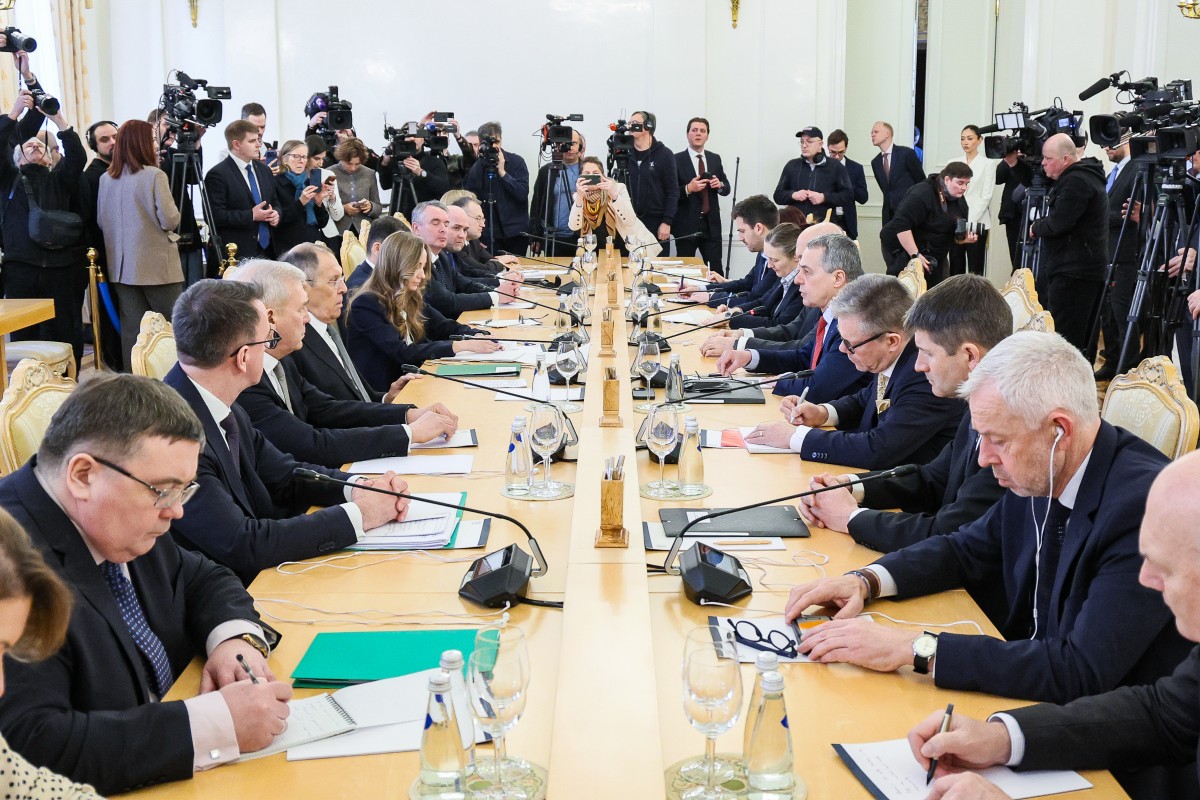 Swiss Foreign Minister and OSCE Chairman Cassis and OSCE SG Sinirlioğlu met with Russian Foreign Minister Sergei Lavrov in Moscow. / Picture: © EDA/DFAE
The trip marked a turning point in OSCE diplomacy: it was the first visit by an OSCE leader to the Russian capital since February 24, 2022. The mission followed immediately after talks with President Volodymyr Zelenskyy in Kyiv. In doing so, Switzerland underscored its role as a neutral bridge builder during its year as OSCE Chair. It is an attempt to save an organization from clinical death. Since 2022, the OSCE has been largely paralyzed: budgets have been blocked, leadership positions have remained vacant for months, and Russia has systematically used its veto power to limit the organization's ability to act.
“We are here to listen, but also to make it clear that the doors of the OSCE are open,” Cassis said after the four-hour meeting. The Swiss politician's strategy is risky. Critics in the West accuse him of providing the Kremlin with a platform for propaganda, while diplomats in Bern speak of “necessary realism.” Others say you cannot extinguish a fire if you refuse to talk to the arsonist.
Cassis emphasized in Moscow that the OSCE remains indispensable as the only platform that brings all actors from Vancouver to Vladivostok together at one table. “Without dialogue, there is no trust,” was his core message. The goal, he said, was not to present immediate solutions, but to bring the “tools of the OSCE” back into play.
Lavrov's warning of “self-destruction”
The Russian side received the delegation with sharp rhetoric. In his opening remarks, Foreign Minister Lavrov criticized the “destructive actions of Western states” that had disregarded the principles of the Helsinki Final Act. He said the organization was in a “profound crisis” and on the brink of self-destruction. Nevertheless, Moscow acknowledged Switzerland's interest in substantive diplomatic talks.
Particularly controversial: Lavrov called for a correction of Russia's “underrepresentation in terms of personnel” in the OSCE. For Moscow, the organization is currently only of value if it cements the status quo or serves as a stage for its own victim narrative.
Ukraine and political prisoners
Behind closed doors, two key issues were negotiated, including prospects for peace and imprisoned employees. Cassis offered the OSCE's expertise for a future monitoring and verification mission should a ceasefire be reached. He recalled the enormous human suffering and attacks on civilian infrastructure. A particularly emotional topic was the fate of the three Ukrainian OSCE employees Vadym Golda, Maksym Petrov, and Dmytro Shabanov. They were arrested in 2022 on charges of espionage. Secretary General Sinirlioğlu called for their immediate release and indicated that there had been “some progress” on this issue.
The role of Switzerland in 2026
Switzerland has defined five priorities for its chairmanship, which were put to the test in Moscow: defending the Helsinki principles, inclusive diplomacy, managing technological risks, protecting human rights, and the OSCE's institutional capacity to act.
Critics accuse Switzerland of failing to deliver concrete results from the visit. Supporters, on the other hand, see the mere fact that the four-hour talks took place as a success for “quiet diplomacy.” It is better to “end a war at the negotiating table than on the battlefield,” as Swiss foreign policy experts commented in the run-up to the talk, as SRF News reported.
A long road to peace
Although Lavrov and Cassis did not hold a joint press conference, the message remains clear: the OSCE is back on the diplomatic stage. In the coming months, Switzerland's chairmanship will be judged on whether Moscow's “open doors” are followed by action, particularly with regard to humanitarian relief in Ukraine and the release of detained staff.
In practical terms, the trip has had little immediate impact on the front lines in Ukraine. But in diplomacy, visibility is often the only currency that counts. While the U.S. is recalibrating its strategy toward Russia under a new administration (the Trump administration), Switzerland is occupying a niche (its traditional niche as a neutral consolidator) with the OSCE that no one else can fill.