




Espionage Alert in Vienna: Austrian Armed Forces Warn Soldiers About 21 Suspected Kremlin Agents
An unprecedented move by the Austrian Ministry of Defense is causing political upheaval: All members of the Austrian Armed Forces—including the militia—were warned via email about suspected Russian espionage. Using the names and photos of 21 suspects, the Defense Intelligence Service is investigating possible contacts with the troops. The disclosure has sparked a heated debate about Vienna’s role as a European intelligence hub.
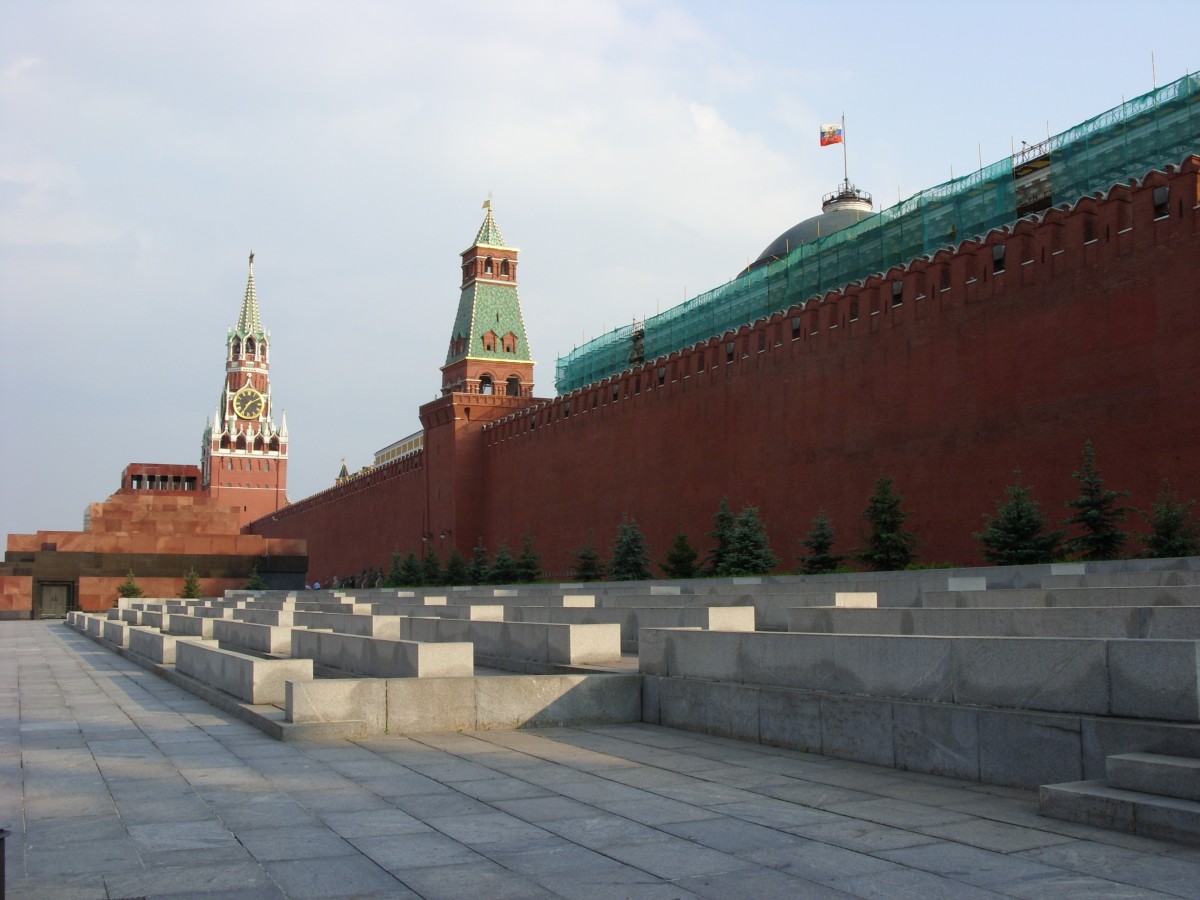 In an email, the Austrian Armed Forces warned all soldiers, including those in the reserve, about Russian espionage activities. / Picture: © Wikimedia Commons / Naotokurihara / CC BY-SA 4.0

In a major internal operation, the Austrian Armed Forces have warned all soldiers and approximately 23,000 members of the militia against targeted attempts by Russian intelligence services to make contact with them. The letter, which includes photos and personal information, names 21 individuals who are reportedly operating in Vienna under diplomatic cover.
The goal of the operation is clearly stated: If members of the armed forces have had contact with these individuals or have been approached by them, they should immediately report this to the Defense Intelligence Agency’s reporting office.
Defense Minister Klaudia Tanner (ÖVP) explained the rationale for this approach on the Ö1 Mittagsjournal, citing specific security concerns: fears of direct espionage and attempts at targeted contact. She stated that Russian intelligence services are seeking to destabilize Western democracies and spread their own narratives.
Database Based on Investigative Reporting
The wanted and awareness list that was distributed is based on revelations from the Russian exile and opposition media outlet Proekt (formerly Agentstvo). By analyzing leaked Russian registration and tax databases, the journalists uncovered links between numerous diplomats accredited in Austria and the Russian intelligence services SWR (foreign intelligence), GRU (Military Intelligence), and FSB (Domestic Intelligence). Austrian security authorities consider this information to be highly credible.
The 21 suspects in question are distributed among various diplomatic missions in Vienna. Among the staff of the Russian Embassy are individuals such as advisor Yevgeny Ambrosij, attachés Alexander Solobov, Alexander Palojan, and Dmitri Fedorov, as well as military attaché Alexei Fokin, who have been proven to have links to the SWR, GRU, or FSB (such as previous work at the “Atlas” research center).
Among the diplomats at the Organization for Security and Cooperation in Europe (OSCE), Anton Momatiuk, Vitali Koslov, Sergei Kildyashov, and Sergei Ryshkov, among others, are linked to addresses associated with the Russian General Staff or military academies. At the International Atomic Energy Agency, staff members such as Igor Kholodnikov and Grigory Krivenko have also been identified; their associates have been registered at GRU headquarters or nuclear facilities. Individuals such as Artem Ratzko and Alexander Zayarny are listed in connection with international UN missions.
According to intelligence experts, the public disclosure of such names renders those affected largely unusable for operational purposes, forcing Moscow to withdraw them as a rule.
First reports received by the Defense Counterintelligence Office
This unusual measure is already having an effect: shortly after the emails were sent, the first reports from soldiers began arriving at the Army Counterintelligence Office. The Ministry of Defense is currently reviewing which of these reports are of concrete relevance. Civilians who may have observed anything are asked to contact the Directorate for State Security and Intelligence (DSN) at the Ministry of the Interior.
Political Reactions: Heated Debate Over Consequences
The incident has sparked a political controversy over counterintelligence and diplomatic status in Austria. Green Party lawmakers David Stögmüller (defense spokesperson) and Meri Disoski (foreign policy) once again described Vienna as a “hub for Putin’s intelligence services.” They called on the Foreign Ministry to immediately review the accreditations of the individuals in question and to expel suspected spies without delay. International organizations such as the UN, OSCE, and IAEA should not serve as a shield for covert operations.
ÖVP defense spokesperson Friedrich Ofenauer rejected the Greens’ criticism and emphasized that Defense Minister Tanner is taking decisive action rather than merely distributing flyers. The Defense Intelligence Service is doing an excellent job. Ofenauer also used the occasion to renew his call for an expansion of the legal powers of the Austrian intelligence services.
The Foreign Ministry pointed out that since spring 2022, as part of security vetting by the DSN, approximately 70 Russian diplomats have been denied entry or accreditation, and several have been declared persona non grata.