




Four Years After the Start of the War: Ukrainian Aid Organizations in Vienna Face Closure
Four years after the outbreak of Russia's war of aggression, support for Ukrainian refugees in the Austrian capital is facing a turning point. While Caritas is sending a message of solidarity with 1,000 candles on Stephansplatz, important institutions such as the Train of Hope Community Center are fighting for their very survival. The reason for this is a massive cut in funding by the City of Vienna.
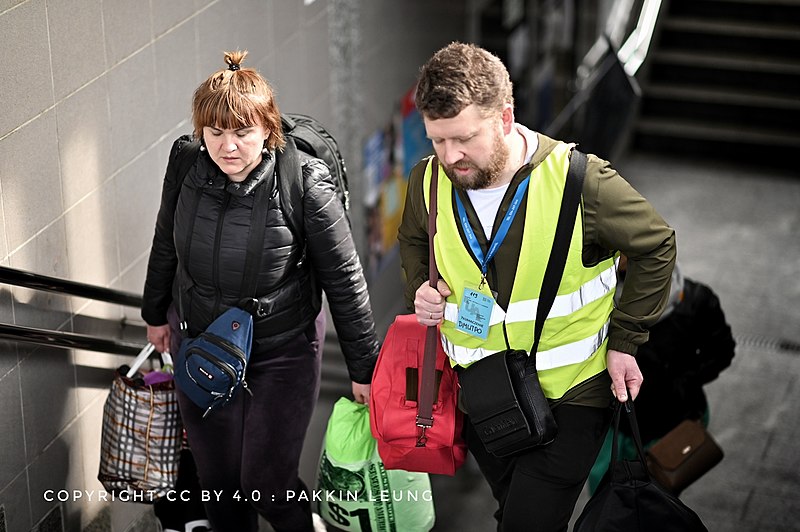 Without private sponsors, Vienna's social landscape for the Ukrainian community will look significantly poorer in a few weeks. / Picture: © Wikimedia Commons; Pakkin Leung, CC BY 4.0
It is a bitter blow for the approximately 42,500 Ukrainians living in Vienna, as reported by “DeStandard”: The Community Center in the 15th district, a central anchor point for up to 400 people every day, is expected to close at the end of March 2026. Nina Andresen from the Train of Hope association is sounding the alarm: “Unfortunately, we have not received any funding from the city for 2026 – allegedly for budgetary reasons.”
Specifically, this involves around €600,000 per year from the Vienna Social Fund (FSW), which accounts for about 60 percent of the total budget, as reported by ORF. These funds were used to finance not only 3.5 full-time positions, but also around 90,000 hot meals per year, over 1,300 workshops and courses (ranging from German and yoga to job application training), a free clothing distribution service, and a coffee house-style meeting place.
The FSW justifies the cut by saying that it is an “additional service” and not a statutory obligation. It also points to declining customer numbers in the area of basic services.
Integration vs. bureaucracy: “Special status” under threat
Despite the threat of closures, the willingness of displaced persons to integrate remains high, according to a study by the Austrian Integration Fund (ÖIF). Last year alone, 25,000 consultations were carried out. Around a quarter of Ukrainians in Vienna are already in employment, mainly in the catering and retail sectors.
But a dark date looms over everything: March 4, 2027. That is when the current temporary protection status expires. Aid organizations such as Volkshilfe Wien warn that the hurdles for permanent residence (such as the Red-White-Red Card Plus) are too high for many.
Creating prospects: The “Perspektivo” counseling center
While the large centers are closing, targeted counseling remains essential. The Perspektivo counseling center of Volkshilfe offers support for displaced persons aged 14 and older. The services include education: clarification of the school system, kindergarten, and the accreditation of university degrees; career: creation of résumés in German and preparation for the job market; and social services: dialogue cafés and language groups with native speakers.
The aim is to provide long-term support to those who have already learned German and now want to enter the job market.
An appeal to politicians
The mood is tense. Not only is the community center in jeopardy, but the arrival center at Schlossberg is also set to close as soon as the last 50 residents have been relocated. While Caritas and Archbishop Josef Grünwidl urge people to “never get used to war,” social organizations are calling for a clear political perspective beyond 2027.