




Foreign Trade 2025: Upper Austria Remains the Export Champion Despite Noticeable Headwinds
Statistics Austria has released the preliminary foreign trade balance for the federal states for the year 2025. The results paint a mixed picture: While imports rose in most regions, exports stalled in five of the nine federal states. Leading the way, however, Upper Austria defended its dominant position in Austrian foreign trade despite slight losses.
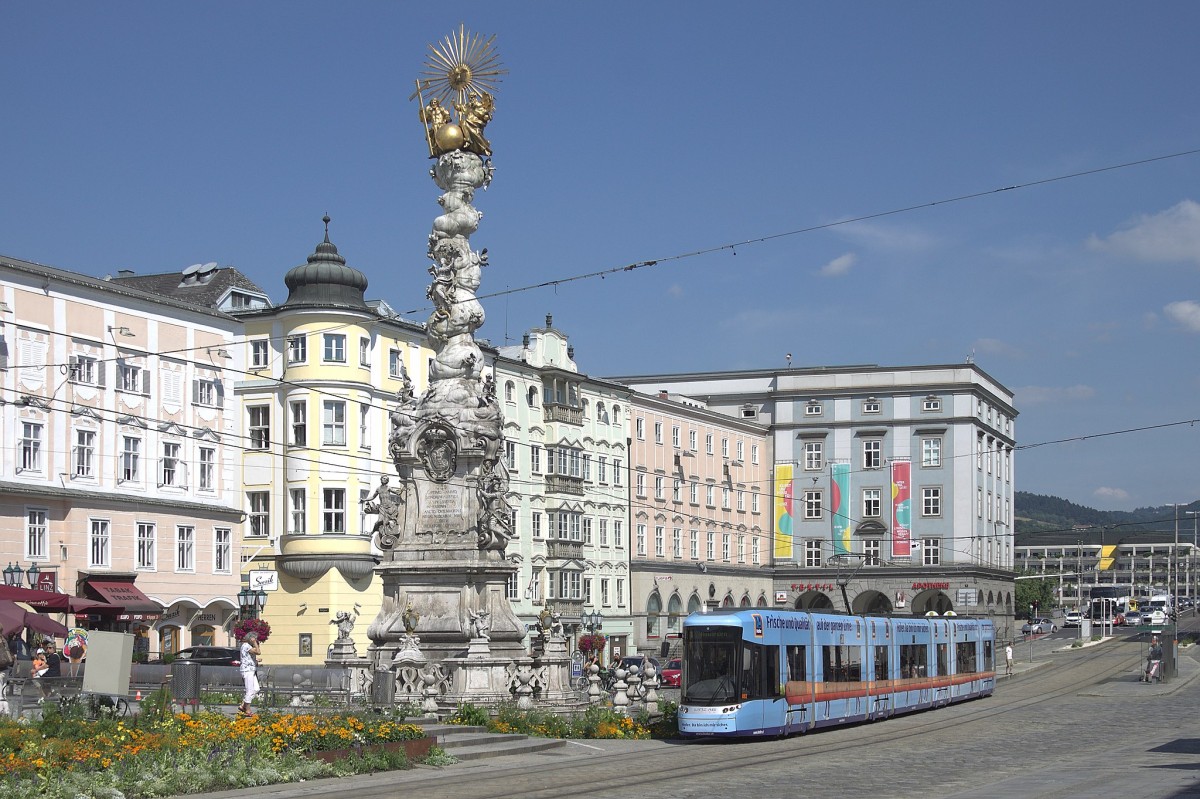 Upper Austria was the top exporter, whereas Burgenland faced the most significant decline in exports. / Picture: © Wikimedia Commons / Tokfo / CC BY-SA 3.0 AT (https://creativecommons.org/licenses/by-sa/3.0/at/deed.en)
The difficult economic situation in 2025 has left a clear mark on Austria’s regional foreign trade. As the latest figures from Statistics Austria show, the past year was characterized by stagnant to slightly declining export momentum. “In five federal states, exports fell below the previous year’s level, including export-strong regions such as Upper Austria and Styria,” explains Manuela Lenk, Director General for Specialized Statistics at Statistics Austria. Nevertheless, one thing remains constant: Upper Austria remains the undisputed powerhouse of domestic exports.
Upper Austria Dominates the Trade Balance
In 2025, just under a quarter of all Austrian goods exports (47.27 billion euros, or 24.9 percent) were accounted for by Upper Austria. Although the state experienced a slight decline in exports of 2.1 percent (−1.00 billion euros), it once again achieved by far the highest trade surplus of all federal states at 10.97 billion euros. It is followed by Styria (7.36 billion euros) and Vorarlberg (4.00 billion euros).
For Upper Austrian policymakers, the data is proof of the resilience of local businesses as reported by ORF: Governor Thomas Stelzer and State Minister for Economic Affairs Markus Achleitner (both ÖVP) emphasized that products from Upper Austria continue to hold their own successfully on the international stage despite the challenging global economic situation.
A Look at the Regions: Winners and Losers
The decline in exports affected the federal states to varying degrees: Burgenland experienced the sharpest percentage decline, down 6.7 percent, followed by Vienna (−3.4 percent) and Upper Austria. On the winning side in terms of exports were Tyrol (+5.7 percent or +0.94 billion euros), Carinthia (+5.1 percent), Salzburg (+1.9 percent), and Vorarlberg (+0.7 percent), all of which saw growth in both directions of trade.
On the import side, seven of the nine federal states recorded growth. Imports rose particularly sharply in Tyrol (+14.7 percent). Vienna recorded the strongest increase in value terms, with a rise of 9.2 percent (+4.33 billion euros). Although the federal capital thus holds the second-highest export value (29.75 billion euros), it also recorded the largest trade deficit (−21.75 billion euros) due to its enormous imports (51.50 billion euros).
Pharmaceuticals, Gold, and Copper: What Drives Trade
Traditionally, machinery, boilers, and mechanical equipment have dominated the flow of goods in most regions. However, aside from these, there were massive shifts in individual product groups. In Vienna, exports of pearls, gemstones, and precious metals boomed with a 56.2 percent increase, while pharmaceuticals played the most important role there on both the import and export sides.
In Tyrol, too, the pharmaceutical industry proved extremely dynamic: there were massive jumps in imports of organic chemical products (+59.2 percent) and pharmaceutical products (+62.0 percent). Lower Austria, on the other hand, primarily imported mineral fuels (accounting for 15.8 percent of total imports).
Germany Remains the Undisputed Number One
A look at the world map reveals no surprises: Germany remains the most important trading partner for every single federal state, followed by the U.S. and Italy. However, there were regional nuances here as well. While Vienna (+19.0 percent) imported significantly more goods from its neighboring country, imports from Germany declined in Burgenland and Styria.
There was also an interesting shift in the west: In 2025, Tyrolean companies purchased so much from Switzerland that the Swiss rose to become the state’s second-most-important import partner. (Note: Since the search function was disabled for this prompt due to technical requirements, the article is based exclusively on official press releases and data from Statistics Austria from the year 2026).