




Bloody Advent: 50 Years after the OPEC Raid in Vienna
It was the day the “Island of the Blessed” lost its innocence. Exactly five decades ago today, a heavily armed terrorist commando stormed the OPEC headquarters on Vienna's Ringstrasse. Three people died, the world held its breath, and Austria's security policy changed forever.
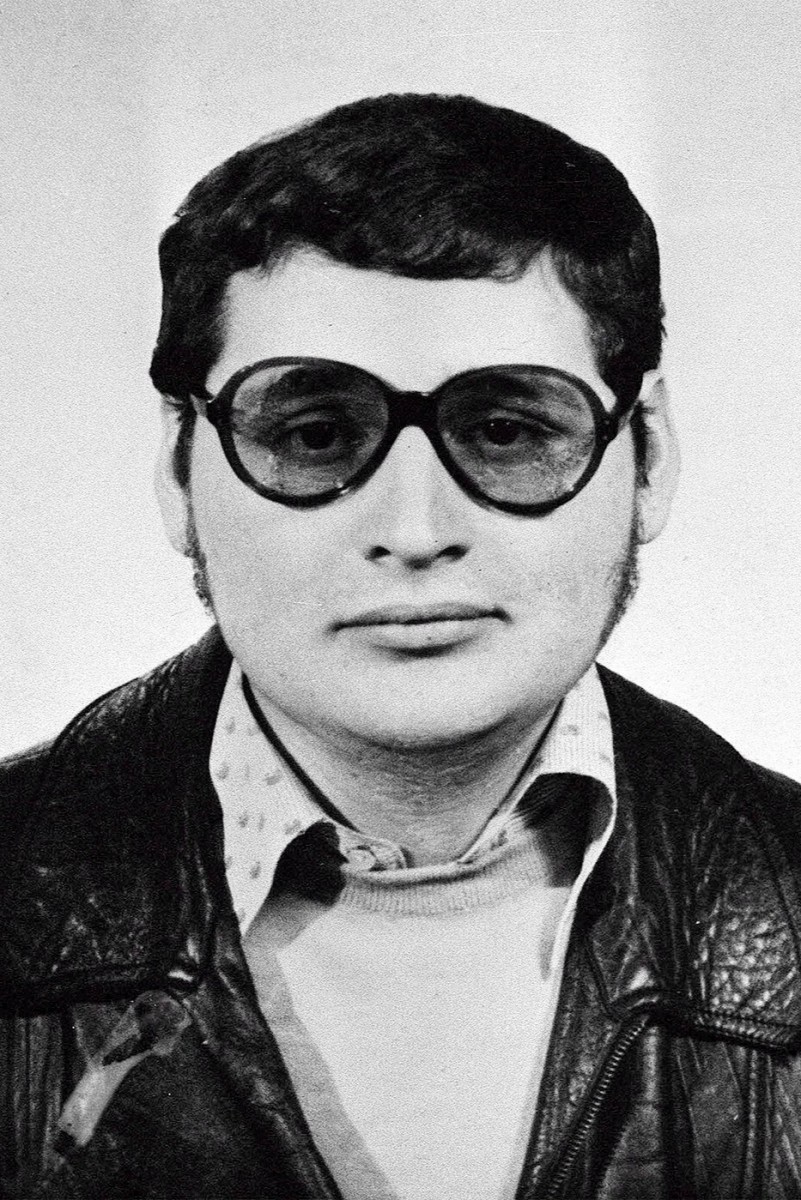 The group, which called itself the “Arm of the Arab Revolution” and attacked the OPEC headquarters in Vienna, was led by Venezuelan terrorist Ilich Ramirez Sanchez, better known as “Carlos the Jackal.” / Picture: © Wikimedia Commons / NBCNews.com / CC0 1.0 Universal (CC0 1.0) Public Domain Dedication
It is Sunday, December 21, 1975. Vienna is enjoying the calm before Christmas when six people get off the tram at Schottentor. What appears to be a group of students turns out to be the most dangerous terrorist commando of the era. Armed with submachine guns and explosives, they stormed the building of the Organization of Petroleum Exporting Countries (OPEC).
Their target: the world's most powerful oil ministers, who are meeting on the first floor to discuss global oil prices. Among them is the influential Saudi oil minister Ahmed Zaki Yamani.
An unprepared country
Until this attack, Austria had been considered a safe haven. While the Federal Republic of Germany was already in the stranglehold of the RAF (Red Army Faction), Vienna relied on the neutrality and mediating role of Chancellor Bruno Kreisky. However, the city's sense of security would soon be shattered.
The security measures were fatally flawed. Only one police officer, 60-year-old Anton Tichler, guarded the entrance. He was the first victim of the attack. An Iraqi security officer and a Libyan delegate were also killed in the hail of bullets.
“Carlos” and his accomplices
The group, which called itself the “Arm of the Arab Revolution,” was led by Venezuelan Ilich Ramírez Sánchez, known worldwide as “Carlos the Jackal.” The group was an explosive mixture of international left-wing extremists such as Gabriele Kröcher-Tiedemann (formerly of the “June 2nd Movement,” Germany), Hans-Joachim Klein (Revolutionary Cells, Germany), and three Palestinians who have not yet been identified with certainty.
Recent historical analyses confirm that Libyan revolutionary leader Muammar al-Gaddafi was the mastermind and financier behind the operation. The aim was to force the Arab states to take a more radical stance towards Israel, as reported by DerStandard.
The ultimatum and the “handshake of Vienna”
The terrorists barricaded themselves in with around 70 hostages. Their demands: an airplane and the reading of an anti-Israeli manifesto on Austrian radio. On the night of December 22, Kreisky gave in – the lives of the hostages took precedence over the state's hard line.
The departure from Schwechat Airport caused an international scandal, as reported by ORF. The then Minister of the Interior, Otto Rösch, bid farewell to “Carlos” with a handshake. The images went around the world and triggered fierce criticism of Austria's supposed leniency towards terrorism.
Millions in ransom money in the desert?
After a dramatic flight over Algiers and Tripoli, the hijackers released all the hostages and went into hiding in Libya, as reported by Der Spiegel. Rumors persisted for a long time that a ransom of between $5 million and $50 million had been paid for the release of Ministers Yamani (Saudi Arabia) and Amouzegar (Iran) – presumably by Saudi Arabia. “Carlos” is said to have diverted a large part of this money for private purposes, which led to a break with his Palestinian clients.
What became of it all?
“Carlos” was captured in Sudan in 1994 and is serving a life sentence in France. Hans-Joachim Klein renounced terrorism, lived underground for years, and was arrested in 1998. He died in 2022. Gabriele Kröcher-Tiedemann died of cancer in 1995.
The attack was a wake-up call for Austrian security. While, during the OPEC siege in 1975, Vienna opted not to intervene violently but instead paid ransom, allowing the terrorists to escape. In 1978, the decision was made to establish Cobra as a unit of the Ministry of the Interior in response to the Munich massacre at the 1972 Olympics. Its headquarters is located in Wiener Neustadt, with additional offices in Graz, Linz, Salzburg, and Innsbruck. The first operators of the GEK were trained by GSG-9 and Sayeret Matkal. As a result, the Cobra task force (then known as GEK) was later founded to respond to such scenarios. Bruno Kreisky later admitted: “We underestimated the danger.”