




Vienna Startup Festival 2026: Vienna UP Brings Together Europe’s Innovative Power
This week, the Austrian capital became a vibrant innovation hub. Vienna transformed into a citywide startup festival that brought together founders, investors, and technology experts from around the world. Vienna UP, organized by the Vienna Business Agency, once again demonstrated that the city has become a key hub for European innovation.
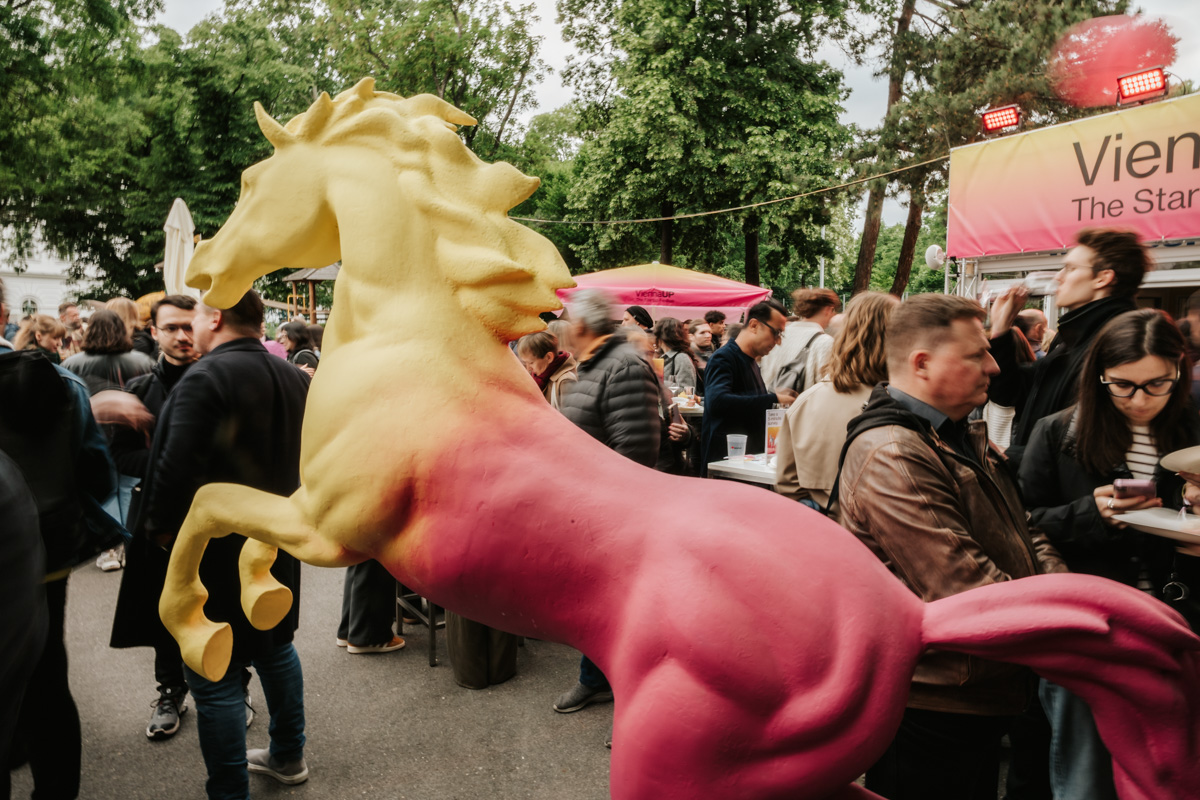 ViennaUP is a city-wide festival of entrepreneurship and innovation, created by the startup community for the world. / Picture: © ©WirtschaftsagenturWien_PhilippLipiarski
The past few days have shown that Vienna is more than just a historic metropolis with magnificent palaces and a rich coffee culture. From May 18 to 22, 2026, the entire city transformed into a vibrant ecosystem for entrepreneurship, technology, and social change. Vienna UP 2026, the Vienna Business Agency’s decentralized startup festival, was not simply a series of conferences in a convention center, but a citywide phenomenon that brought together founders, investors, researchers, and visionaries from every continent.
The Energy Transition and Europe’s Potential
The kickoff event on the first day was entirely dedicated to the energy transition. The focus was on the Energy Launchpad, an initiative aimed at positioning Europe as a leading player in the green transition. Christian Schaffner, Executive Director of the Energy Science Center (ESC) at ETH Zurich, and René Hofmann, Head of the Institute of Energy Systems and Thermodynamics at TU Wien, discussed the challenges openly.
“Getting the Energy Launchpad started was honestly easy,” Schaffner admitted. “Making it truly successful is harder.” The real problem lies not in coming up with ideas, but in scaling them up. “Getting startups to actually scale? That’s maybe a six, seven, eight. We’re working on bringing that number down.”
Hofmann added that curiosity is the driving force: “Curiosity is what drives researchers. It’s about looking at ideas from a different perspective.” The debate centered on the “scaling gap” in Europe. While the U.S. dominates with its hyperscalers in California, the DACH region (Germany, Austria, Switzerland) possesses comparable potential in terms of talent and infrastructure. But as Franz Zöchbauer, CEO of Verbund Ventures, critically noted: “We have all these ingredients, but we need to work more closely together.”
A key finding from the first day was the realization that the three pillars—world-class universities, established corporations, and available capital—often operate in isolation from one another in Europe. Initiatives such as the Energy Launchpad aim to break down these silos and foster genuine dialogue.
Sovereignty, AI, and Women’s Power
The second day was dominated by profound geopolitical and technological issues. Alexei Lazarov, founder of an AI platform, outlined a bleak but realistic outlook for Europe. He saw the continent at a “difficult crossroads” between the superpowers China, Russia, and the U.S.
“Europe is staying in the middle in this particular situation,” Lazarov said. For him, Europe’s technological sovereignty depends on four inseparable pillars:
- Funding: No innovation without capital.
- Computing and AI: The foundation for modern defense and the economy.
- Defense: A strong army needs strong software.
- Energy: Especially renewable energy, as it may be the only autonomous energy source for Europe.
At the same time, the role of women in the startup scene took center stage. During a panel discussion, it became clear that despite visible progress, structural barriers remain. Mariliis Mia Topp spoke about the difficult transition from academia to the startup scene, particularly the lack of access to networks and capital. Petra Cihlarova emphasized: “Female-led startups are visible but still underrepresented in key investment contexts.”
The consensus was that the solution lies not in isolated measures, but in creating “safe spaces for exchange, learning, and mutual support.” The aim was to view equality not as a buzzword, but as a structural process.
For aspiring founders, there was also practical advice from investors. Patrick Cesky of the aws Startup Fund reminded the audience of the “K.I.S.S.” principle (Keep It Simple, Stupid): “You only have a couple of minutes to make your idea click—not just for the specialists in the room, but for everyone in it.” Christoph Teufel from the moonlander Group urged: “Don’t waste time on embellishments. Tell the audience what your startup does, what you need, and what your long-term plan is.”
The Balkan Boom and the Human Side of AI
Day 3 brought a special atmosphere to the event rooms, particularly thanks to the Recursive CEE Forum. Here, founders from the Balkan region came together to discuss their visions on equal footing. Interviews with the participants revealed a mix of down-to-earth humor and enormous ambition.
Nikola Milanović of WellPet.ai, a platform that helps dog owners understand their pets’ emotions, summed it up: “One day we will be able to fully understand a dog’s messages. That could be scary for some people — but that’s the goal.” Tanja Savić from Negotiate Wind, an app for soccer transfer negotiations, also spoke about the fear of a lack of “product-market fit” that plagues many founders.
Another highlight was the discussion on the future of AI. While many saw AI as a “superhero,” expert Ana Simic urged caution at the Smart City Summit. “Less panic, less utopia, and significantly more systemic thinking about where AI can actually make a difference,” she urged. Her metaphor was striking: Is AI the villain, the hero, or just “a boring chair somewhere in the room”?
The message was clear: We need less hype and more pragmatic use cases that solve real problems.
LEGO, Expansion, and the “Boring Chair” Debate
On the fourth day, the creative side of the festival came to the fore at the InsideOut Summit at weXelerate Space. Instead of stiff suits and boring PowerPoint presentations, colorful LEGO bricks took center stage. In a unique networking session, participants used toys from their childhood to answer profound questions: “How would you solve one of the world’s biggest problems if you had a superpower?” or “Which part of your childhood stays with you today?”
This playful approach created an atmosphere in which people opened up more quickly and formed genuine connections.
At the same time, serious discussions took place regarding the expansion of startups into Vienna. The Vienna Business Agency presented itself as a reliable partner that helps international companies establish themselves in the city. “Relocating to a new city is never easy,” one expert admitted, but emphasized that the effort is worth it if you have the right support.
The debate on AI and climate change reached its peak on Day 4. The question of whether AI is part of the solution or part of the problem was hotly debated. The majority of experts advocated for a “grounded perspective”—a down-to-earth view that acknowledges the limits of the technology without denying its potential.
The Emotional Core: Humanity in the Tech Age
Despite all the technical discussions and strategic analyses, it was a moment that moved many visitors the most. Evelyne Faye, a breast cancer survivor, introduced her Mamma C. Doll. This plush doll is specifically designed to help parents explain cancer, chemotherapy, and their consequences to their young children. The doll has a tumor, a chemo port, and a removable wig.
“It may not sound as headline-worthy as AI-powered diagnostic technology or a longevity supplement,” wrote Dennis Miskic. “But it touched everyone in the room because it addresses the healthcare system from the most essential perspective: the human being.”
Johanna Reinedahl of AINovo, who developed an AI-powered exoskeleton solution for post-stroke rehabilitation, and Dr. Wanda Lakner, who spoke about the often-overlooked symptoms women experience in medical settings, also left a lasting impression. They demonstrated that technology is most effective when it puts people at the center.
A City That Learns and Grows
Vienna UP 2026 was more than just a conference. It was proof that Vienna is a vibrant, growing hub for innovation. Its decentralized structure, which involved the entire city, allowed conversations to take place not only in conference rooms, but also at street cafés, in coworking spaces, and on rooftop terraces.
The key takeaways from the week can be summarized as follows:
- Collaboration is key: The gap between science, industry, and capital must be closed.
- Curiosity drives innovation: Whether in the energy sector or in AI applications, questioning existing patterns is essential.
- Changing structures: Women and underrepresented groups need safe spaces and targeted support.
- Humanity remains central: Technology must serve people, not the other way around.
As Dennis Miskic noted at the end of his coverage: “Amid the buzzwords, the conversations were honest, the ideas were real, and the optimism was contagious.” Perhaps one or two visitors who were in Vienna this week will head home with a new startup idea. Who knows?