




Vienna's Leap into the Quantum Age: How the Danube City is Becoming Europe's Deep Tech Hub
Ever since Anton Zeilinger (2022) and Ferenc Krausz (2023) were awarded the Nobel Prize in Physics, Vienna has firmly established itself on the global physics map. But the capital city is no longer content to merely peer through the academic microscope: Vienna is preparing to translate the “Second Quantum Revolution”—the active control of quantum states such as superposition and entanglement—directly into the economy. An ambitious master plan, supported by the Vienna Business Agency and Municipal Department 23 (Economy, Labor, and Statistics), aims to establish the city as a strategic hub of European technological sovereignty.
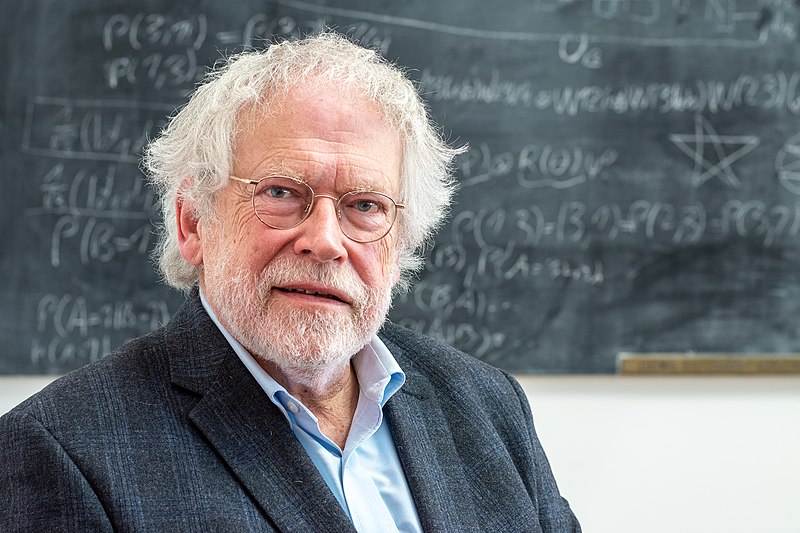 ERC grants have supported research in quantum optics, communication, and materials, with two Nobel Prizes in Physics awarded in this field. In 2022, Anton Zeilinger received the prize for his groundbreaking work in quantum entanglement. / Picture: © Wikimedia Commons, Jaqueline Godany, CC BY 4.0
The momentum is measurable. Data from the Austrian Research Promotion Agency (FFG) show the city’s overwhelming dominance: approximately 35% of all Austrian quantum research funding goes to Vienna. This dominance is even more pronounced in the national flagship program “Quantum Austria,” which has a total budget of 107 million euros. Here, no fewer than 36 of a total of 43 projects are being carried out entirely or partially by Viennese institutions.
The new centerpiece: Kick-off for the “Quantum Technology Center Vienna.”
To finally bridge the gap between excellent basic research and industrial value creation, the City of Vienna is now setting an urban planning and technological milestone. The Quantum Technology Center Vienna (QTCV) is being built on Litfaßstraße in Vienna’s 3rd district.
This major project, which will be located right next to the new Life Science Center Vienna, is intended to serve as a physical accelerator for the entire ecosystem.
Spanning approximately 15,600 square meters across six upper floors, the facility will feature state-of-the-art office and laboratory spaces as well as highly specialized cleanrooms. The official project launch is scheduled for 2026, with full completion and commissioning planned for 2033. Startups, established tech companies, and research institutions will work together under one roof on three key areas of application: quantum communication, quantum sensing, and quantum computing.
Specialization over the pressure to be an all-rounder: Vienna’s role in the global landscape
While global IT giants like IBM or Google are primarily investing billions in superconducting quantum computers, Vienna has carved out a crystal-clear, smart niche for itself in international comparisons of research hubs. While Delft (Netherlands) is considered a hub for the quantum internet and Munich focuses on industrial quantum demonstrators, Vienna excels in secure quantum networks, photonic integration, and the transfer of technology to critical infrastructure.
This profile is reflected in an agile, young business landscape. Contrary to the Europe-wide downward trend in deep-tech startups, Vienna saw a wave of dedicated quantum spin-offs between 2021 and 2025, including qtlabs, zerothird (formerly Quantum Industries), QUBO Technology, and Nutshell Quantum Safe. Over 20 million euros in private venture capital—including from renowned international industry funds such as Quantonation and Speedinvest—has already been invested in these Viennese pioneers.
Case Study: Vienna’s Flagship Projects in Detail
Four flagship projects in Vienna, which are already transforming real-world infrastructure, prove that quantum technology is no longer science fiction.
AQUClock, the ultra-precise atomic clock, is being developed by a consortium led by TU Wien. This optical atomic clock is designed to increase the precision of quantum measurements by a factor of 100. The goal is to create a time source that is completely independent of GPS to secure telecommunications networks, power grids, and financial exchanges.
Wien IT, the IT service provider of Wiener Stadtwerke, is already testing post-quantum cryptography (PQC). In this process, algorithms capable of withstanding even the computing power of future quantum computers are being integrated on a trial basis into the communication networks of the city’s critical infrastructure.
Together with the startup QT Labs, the Austrian Federal Railways (ÖBB) are testing quantum key distribution (QKD) over existing fiber-optic links between Vienna and Linz. Encryption using entangled photons is, according to the laws of physics, an absolutely tamper-proof and eavesdropping-proof reality.
QUBO Technology, the Viennese startup, leaped into orbit in 2025. A photonic quantum computer developed in Vienna in cooperation with the University of Vienna was launched aboard a small satellite to an altitude of 550 kilometers to test the robustness and scalability of photonic components in space.
Where the shoe pinches: Four areas of action for the future
Despite the promising starting point, experts warn against resting on one’s laurels. To avoid falling behind in the global race, the city has identified four critical areas for improvement in a co-creation lab: There is a lack of specialized space for spin-offs outside of universities—a gap that the planned QTCV is set to close starting in 2033. In addition, experts are calling for the targeted expansion of an urban fiber-optic network to serve as a “real-world laboratory” for quantum communication. While early-stage funding is well-funded, Austria lacks follow-on financing in the mid-double-digit million range. Here, international deep-tech investors and regional matching instruments must be more closely integrated.
The two specialized master’s programs at TU Wien (“Quantum Information Science & Technology”) and FH Technikum Wien (“Quantum Engineering”) produce around 70 top graduates annually. Quantitatively, this is insufficient for the booming market. There is a need for accelerated visa processes (relocation services) for international professionals and earlier STEM support in schools.
Given the bewildering array of EU initiatives (such as EuroQCI or Quantum Flagship), the region needs a central, institutional hub to build consortia and promote Vienna internationally. The Vienna Business Agency already serves as the primary strategic advisor in this regard and offers free support for establishing and financing such initiatives.