




Middle East Crisis on 70th Anniversary: Wave of Boycotts Shakes Eurovision 2026 in Vienna
What was supposed to be a glittering celebration of the 70th anniversary of the Eurovision Song Contest (ESC) at the Wiener Stadthalle is turning into the most serious diplomatic crisis in the history of the competition. While the slogan “United by Music” is emblazoned across the preparations for May 2026, the European broadcasting landscape is more deeply divided than ever before.
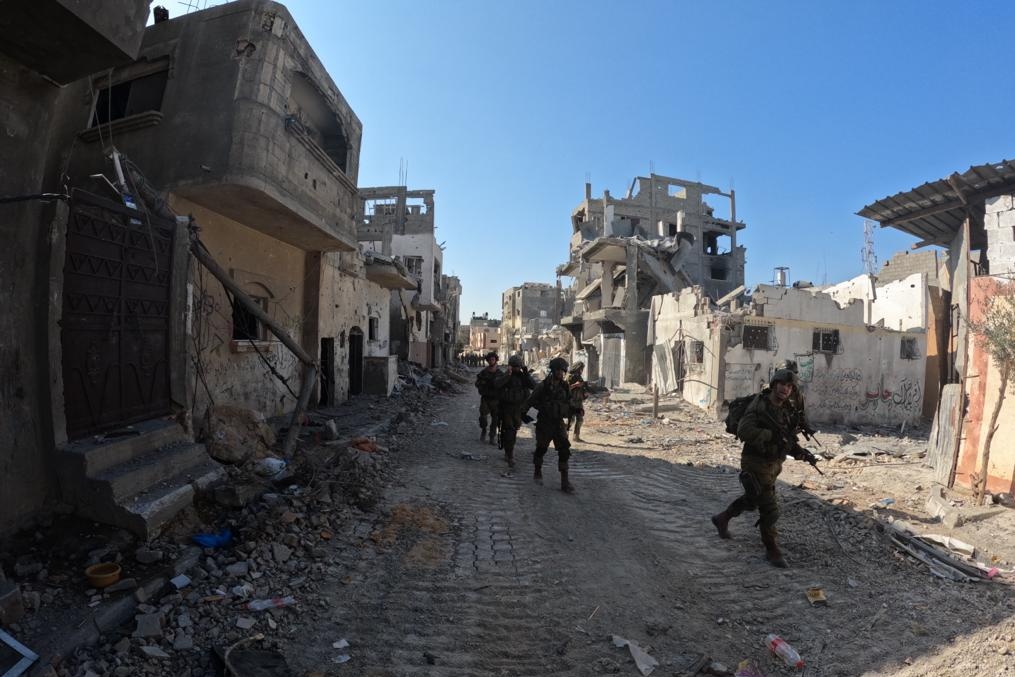 Some viewers and competing nations, who had demanded that Israel be excluded due to its military incursion in Gaza, have expressed disapproval of Israel's participation in the competition. / Picture: © Wikimedia Commons; IDF Spokesperson's Unit, CC BY-SA 3.0 (https://creativecommons.org/licenses/by-sa/3.0/deed.en)
After the European Broadcasting Union (EBU) officially confirmed in early December 2025 that Israel would be allowed to participate in the 2026 competition despite the ongoing conflict in Gaza, an unprecedented wave of withdrawals followed. Spain, Ireland, Slovenia, the Netherlands, and Iceland have officially declared that they will not travel to Vienna.
Spain's withdrawal is particularly significant, as it is one of the “Big Five” financiers, as reported by iTV News. Spanish Culture Minister Ernest Urtasun stated that Israel could not be “whitewashed” in view of the situation in Gaza. Irish broadcaster RTÉ called participation “unacceptable” under the current circumstances. Slovenian broadcasting chief Natalija Gorščak gave an emotional reason for the boycott: “On behalf of the 20,000 children who died in Gaza.”
Pressure in Italy: RAI employees call for boycott
Resistance is also growing in Italy, as reported by That Eurovision Site. The USB-RAI union, which represents employees of the public broadcaster, has launched a petition to persuade the country to withdraw. Although RAI has initially confirmed its participation for 2026, the union is calling for Italy to take a “moral leadership role.”
“Withdrawal would be more than a symbolic gesture; it would be a sign of human dignity and justice,” according to the USB coordination. The aim of the petition is to massively increase pressure on the RAI board. After Lucio Corsi's 5th-place finish last year, Italy is actually set to be a powerhouse in the ESC, but the internal debate threatens to overshadow its participation.
The EBU strategy: rules instead of politics
The EBU, under director Noel Curran, is trying to smooth the waters with technical reforms. Instead of excluding Israel, new rules have been adopted to limit the influence of governments on voting. The most important changes for 2026 include the return of expert juries in the semi-finals, a limit of 10 votes per app/payment method (previously 20), and measures against “disproportionate promotional campaigns” financed by government agencies.
These reforms were a direct response to the 2025 ESC in Basel, where Israel came second in the public vote, which critics attributed to massive government online advertising.
When identity becomes more important than entertainment
Experts see this development as a fundamental shift in cultural diplomacy, as reported by Modern Diplomacy. While the ESC has been marketed as “apolitical” for decades, the digital age and the activism that comes with it are demanding a new “moral consistency.”
From a constructivist perspective, broadcasters are acting not only in their economic interests, but also in accordance with their identity. For broadcasters such as RTÉ and AVROTROS, remaining in the competition carries a reputational risk. If “being apolitical” is perceived as selective – especially in comparison to Russia's exclusion in 2022 – the legitimacy of the EBU as an institution will collapse.
Outlook: A shrinking field of participants
Despite the boycotts, the EBU published a list of 35 participating countries on December 15, 2025. While heavyweights are missing, Bulgaria, Romania, and Moldova are returning after breaks. The competition in Vienna (May 12-16, 2026) will show whether music can still serve as a bridge amid these tensions or whether the “Eurovision family” is finally broken.