




“It's time for New Gods”: The Vienna Festival Week Will Celebrate Its 75th Anniversary as a Radical “Free Republic”
When the Vienna Festival begins on May 15, the city will not only be celebrating three-quarters of a century of festival history, but also a spiritual and political reinvention. This year's motto, “It's time for New Gods,” promises a “mythical celebration of criticism of God and longing for God.” Artistic director Milo Rau, who is heading the festival for the third time, has put together a program that blurs the boundaries between the sacred and the profane, between commemoration and radical contemporary art.
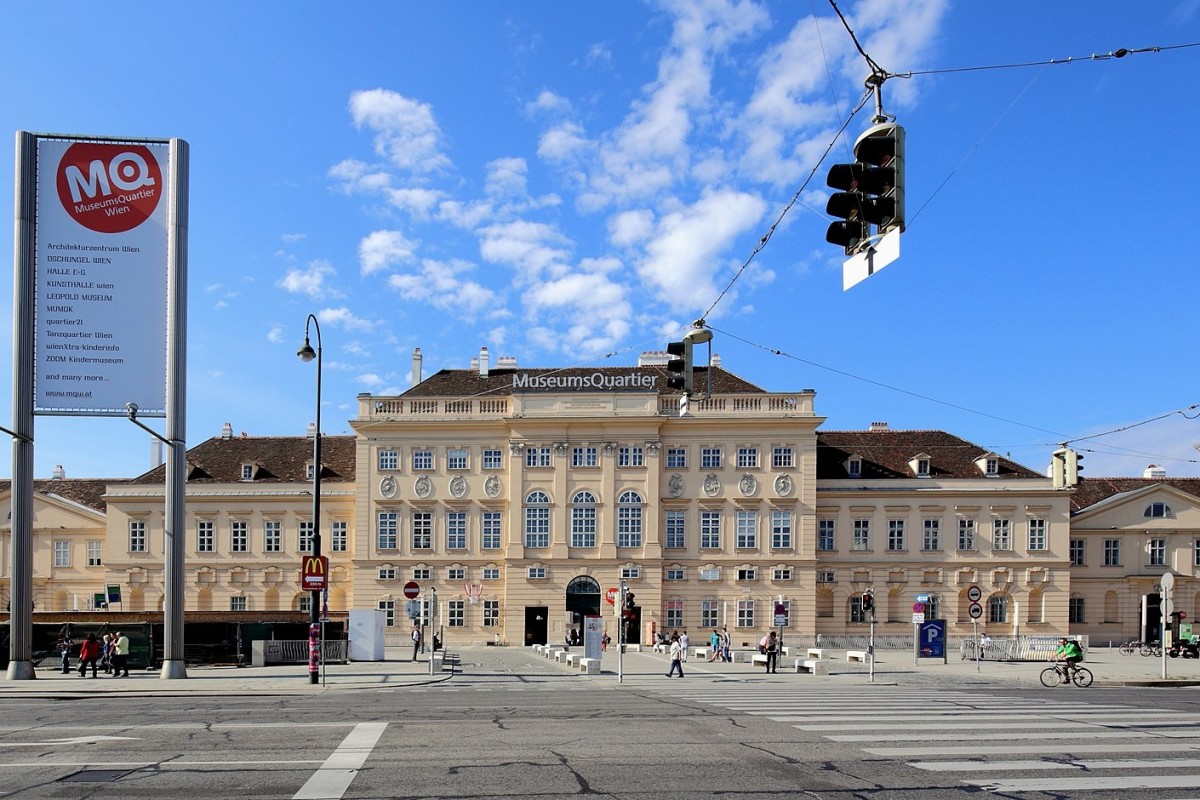 Milo Rau will begin the festival weeks before the official opening on May 15, presenting the collage “Das beste Stück aller Zeiten” (The Best Play Ever) in Hall E of the Museumsquartier, highlighting the “highs and lows of 75 years of festival weeks.” / Picture: © Wikimedia Commons; C.Stadler/Bwag, CC BY-SA 3.0 (https://creativecommons.org/licenses/by-sa/3.0/deed.en)
One of the major highlights will take place before the official opening: the “Godmother of Punk,” Patti Smith, will give a concert on May 21 that will bridge the gap to the occupation of the arena 50 years ago. The now 79-year-old icon will also enrich the grand opening on May 22, which this year will not take place on Rathausplatz, but symbolically on Heldenplatz. She will be accompanied by the Vienna Schmusechor choir and the Festival Week band “Gods Republic.”
But even before the official kick-off, Milo Rau looks back: with the revue “Das beste Stück aller Zeiten” (The Best Piece of All Time, from May 15 in Hall E), he presents a collage of the most glamorous and controversial moments from 75 years of Festival history.
Between prayer and provocation
The theme of religion runs like a thread through the venues. The “Glaubenstribunal” (Tribunal of Faith) at the Odeon (May 29-31), where experts and believers discuss the role of cult objects in global capitalism, is particularly exciting.
Artistically, the search for the divine is interpreted in many ways:
- In “Credere alle Maschere,” Romeo Castellucci questions our “playing God with death.”
- Florentina Holzinger, who is also performing at the Austrian pavilion in Venice, brings a radical performance to Vienna and Prinzendorf with her “Pfingstspiel” on May 23.
- Kennedy subjects Wagner's “Parsifal” to a “spiritual reinterpretation,” supported by the ORF Radio Symphony Orchestra.
The dead also have their say. The late Robert Wilson is posthumously represented at the Burgtheater with his last production, “The Tempest.” In addition, the MAK is dedicating a major solo exhibition to Christoph Schlingensief, who died in 2010, entitled “It's not my problem anymore!” Among other things, it recalls his legendary and highly political action “Please love Austria” from 2000.
The “Free Republic of Vienna”: Democratization of Art
Today more than ever, the Festwochen sees itself as a political actor. Since the proclamation of the “Free Republic of Vienna” in 2024, a “Council of the Republic”—consisting of 80 citizens—has been working on a new constitution for the institution. The first successes of this transformation are already visible: a newly appointed program advisory board and transparent guidelines for dealing with “cancel requests” have already been implemented.
To consolidate this internationality, the “In the Field” scholarship program, which brings artists from all over Central Europe to Vienna for networking, has also been extended.
Advance sales and outlook
While the full program will be officially presented via livestream on February 26, 2026, at 10:00 a.m., some highlights, such as Mattias Andersson's “Myths of Everyday Life” and the concert by the Chineke! Orchestra, are already available for booking.
With a mix of immersive experiences (such as Nesterval's “Donaugold”), intellectual speeches (Anne Applebaum on May 13 at Judenplatz), and radical performances, the festival seems to more than live up to its reputation as a “crossover festival with socio-political significance.”