




How Vienna Became a Hub for Russian Signals Intelligence Espionage?
While European capitals such as Brussels and The Hague have dismantled Russian intelligence networks, an unprecedented surveillance infrastructure is flourishing in the Austrian capital. New revelations show that the Russian Foreign Intelligence Service (SVR) has systematically built up Vienna into the most important hub for electronic intelligence (SIGINT) in Europe.
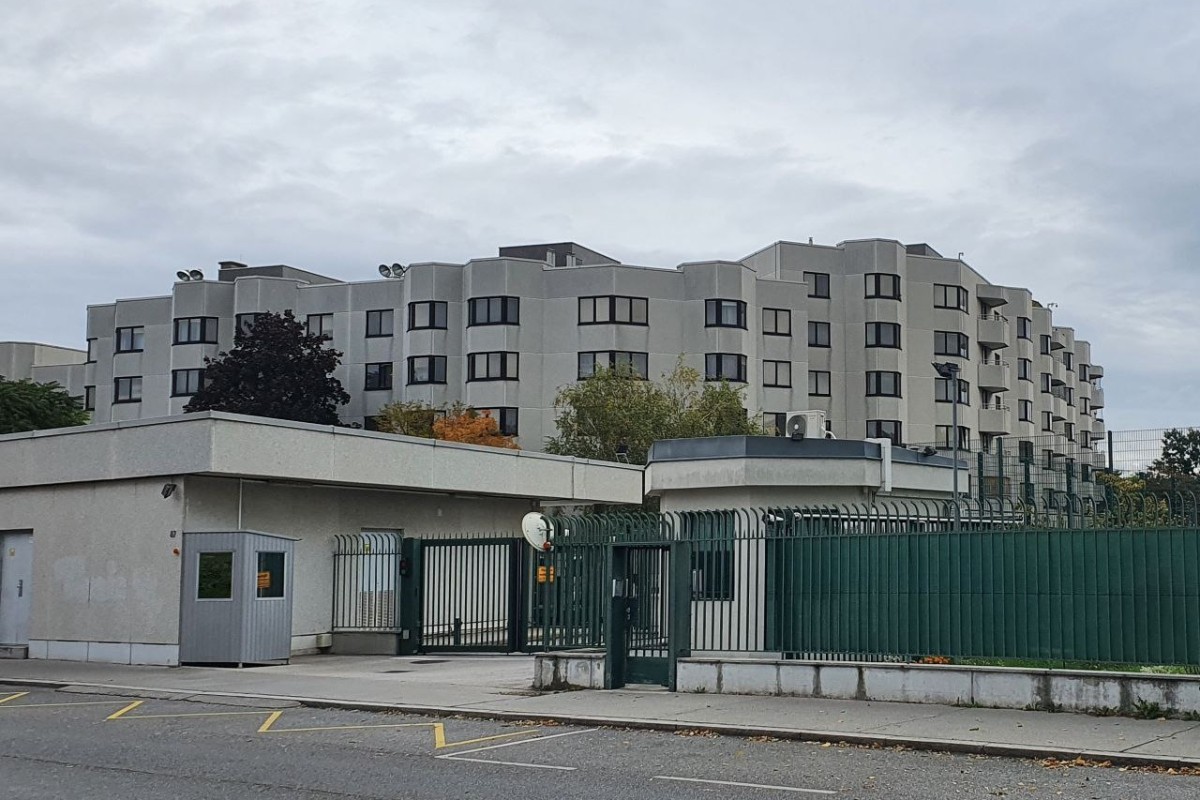 Extensive high-frequency electronic surveillance equipment, including approximately twelve satellite dishes, has been installed in Russian diplomatic missions. / Picture: © Wikimedia Commons / Aleksandrs Čaičics / CC BY-SA 4.0 (https://creativecommons.org/licenses/by-sa/4.0/deed.en)
Vienna has become a nightmare for Western intelligence agencies. The concentration of cutting-edge technology and a sheer mass of intelligence personnel operating under diplomatic cover makes Vienna the most important bastion of Russian power projection in the heart of Europe today.
A forest of metal is growing on the roofs of Russian diplomatic compounds in Vienna’s Donaustadt district and in the city center. What at first glance looks like ordinary communications equipment is, according to experts at the Robert Lansing Institute and Western intelligence agencies, part of a state-of-the-art eavesdropping network. Since the start of the Russian invasion of Ukraine in 2022, this infrastructure has been massively expanded.
Strategic Realignment Following Mass Expulsions
For a long time, Brussels was considered Russia’s “spy hub” for directly monitoring NATO and the EU. But after the expulsion of over 400 Russian diplomats from the EU in the spring of 2022, many networks there collapsed. Vienna filled this vacuum almost seamlessly.
Thanks to Austria’s traditionally reserved diplomatic policy and legal loopholes—espionage in Austria is often only a criminal offense if it is directed specifically against the Austrian state—the SVR (Sluzhba Vneshney Razvedki) was able to concentrate its capabilities here. “Vienna has become massively important to them… it is their hub in Europe,” the Moscow Times quotes a high-ranking European diplomat as saying.
The Technology: Mobile Dishes and Intercepted Signals
Particular focus is on the Russian mission to the United Nations in Donaustadt, a building complex already referred to internally as “Russencity.” According to satellite image analyses, there are eight large parabolic antennas on the embassy’s roof alone. At least one of them is configured to intercept signals that are explicitly not intended for Russian communications.
The system is highly adaptive because the antennas are movable and capable of targeting. Observers noted that they reoriented themselves during international events, such as the Munich Security Conference, to specifically intercept satellite connections. The interception radius is said to cover satellite transmissions, Wi-Fi signals, and digital data traffic within a radius of several kilometers. Within immediate range are the headquarters of the IAEA (International Atomic Energy Agency), the OSCE, and numerous UN agencies.
500 Diplomats – and One in Three Under Suspicion
Currently, around 500 Russian citizens with diplomatic status are accredited in Vienna. This is one of the largest Russian diplomatic presences worldwide. Western intelligence services estimate that up to one-third of these individuals—that is, over 150 people—actually work for the SVR, GRU, or FSB intelligence agencies.
This personnel not only ensures the technical maintenance of the antennas but also conducts classic human intelligence (HUMINT): recruitment attempts, maintaining contacts in the business community, and exerting political influence.
Austria Under Pressure: The Reputation of Neutrality Is Crumbling
The SVR’s activities are damaging Austria’s international reputation as a secure, neutral platform for global dialogue. The Foreign Ministry recently announced that it is in “close contact” with the Russian Embassy and is working with security authorities to “thin out the forest of antennas.”
Critics, however, question the effectiveness of these measures. Since the antennas are located on extraterritorial embassy grounds, the Austrian government’s hands are largely tied legally as long as there is no evidence of sabotage or a direct threat to the republic.
A new network: From Vienna to Belgrade
Vienna is now the brain and the ear of Russian operations in the EU, but it is not alone. The strategic axis has shifted: While Vienna is responsible for diplomatic and electronic intelligence, Belgrade has established itself as a logistical hub. Serbia, which has not imposed sanctions on Russia, offers the Kremlin the necessary freedom of movement for agents who coordinate operations across the entire Balkans from there.