




Historic Summit in New Delhi: Austria and India Forge an “Alliance for the Future”
It is a visit of symbolic significance and economic importance: Chancellor Christian Stocker has arrived in India on an official state visit, becoming the first Austrian head of government to do so in 42 years. Together with Prime Minister Narendra Modi, he sealed a strategic partnership that spans high technology, film production, and close military cooperation.
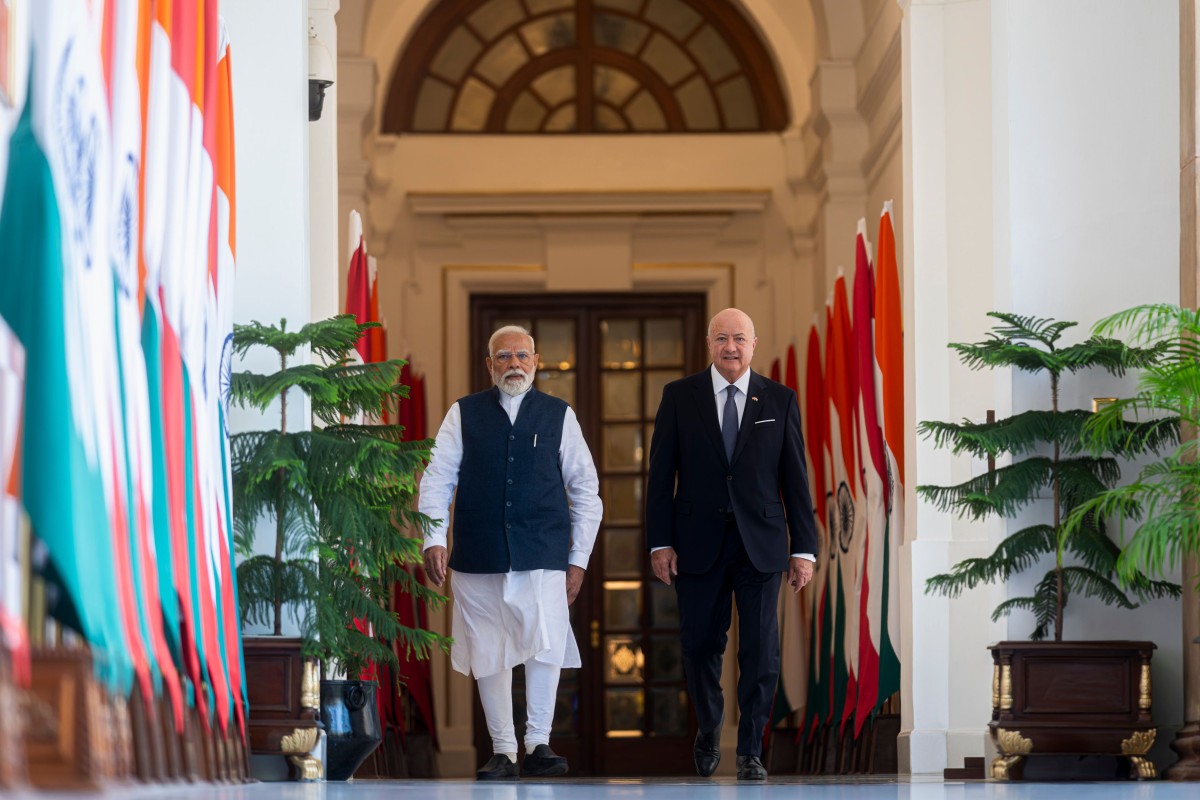 Austrian Federal Chancellor Christian Stocker (r.) held a working meeting with Indian Prime Minister Narendra Modi (l.) during his visit to India. / Picture: © BKA/Florian Schrötter
The reception in the Indian capital was marked by a sense of historical significance. Prime Minister Narendra Modi hailed it as a special gesture that Stocker had chosen India for his first trip outside Europe. “Stability, trust, and a reliable partnership are a strategic necessity in times of geopolitical upheaval,” Stocker emphasized. In light of shifting centers of power, India is an indispensable anchor for Austria.
Security and Counterterrorism: Close Cooperation Between Ministries
A central aspect of the trip is the increasing dynamics in the security sector. Despite India’s close ties to Russia, the subcontinent is opening up to European partnerships.
Indian Defense Minister Rajesh Kumar Singh and Austrian Secretary General Arnold Kammel signed a memorandum of understanding on military cooperation. Plans include joint training activities as well as joint ventures in the development and production of defense equipment. A spokesperson for the Ministry of Defense in Vienna described this as “a first step toward exploring concrete forms of cooperation.”
At the same time, the Austrian Ministry of the Interior and the Indian Ministry of External Affairs agreed to closer cooperation in the fight against terrorism. “Security does not end at the national border,” said Stocker. The goal is improved information exchange and preventive measures against radicalization.
Bollywood in the Alps and Skilled Workers for Industry
In addition to a hard security policy, cultural and economic bridges were also built. Minister of Economic Affairs Wolfgang Hattmannsdorfer signed a film agreement with his counterpart, Piyush Goyal. This is intended to position Austria more strongly as a filming location for the multi-billion-dollar Indian film industry (“Bollywood”) and facilitate joint productions.
Agreements on food safety and reducing bureaucracy were also concluded. Notably, Austria aims to attract Indian skilled workers to address its labor shortage.
Geopolitics: Reforms and Calls for Peace
Both heads of state used the occasion to send clear foreign policy signals. Modi called for an end to the military conflicts in Ukraine and the Middle East: “A military conflict cannot offer a solution.” At the same time, he called for reform of global institutions—a clear reference to India’s claim to a permanent seat on the UN Security Council. Austria, for its part, will be running for one of the non-permanent seats in June (2027/28).
Modi also expressed his admiration for “Austrian engineering.” He specifically cited tunnel construction projects in the Himalayas and subway infrastructure as examples of Austria’s technological success in India.