




Global Solidarity in New Delhi: Austria Focuses on “AI with a Human Face”
From digital vision to global reality: Austria signed the AI Leaders Declaration at the India AI Impact Summit 2026 in New Delhi. Secretary of State for Digitalization Alexander Pröll is thus positioning the Austrian Republic as a key player for ethical standards in an AI-driven global economy.
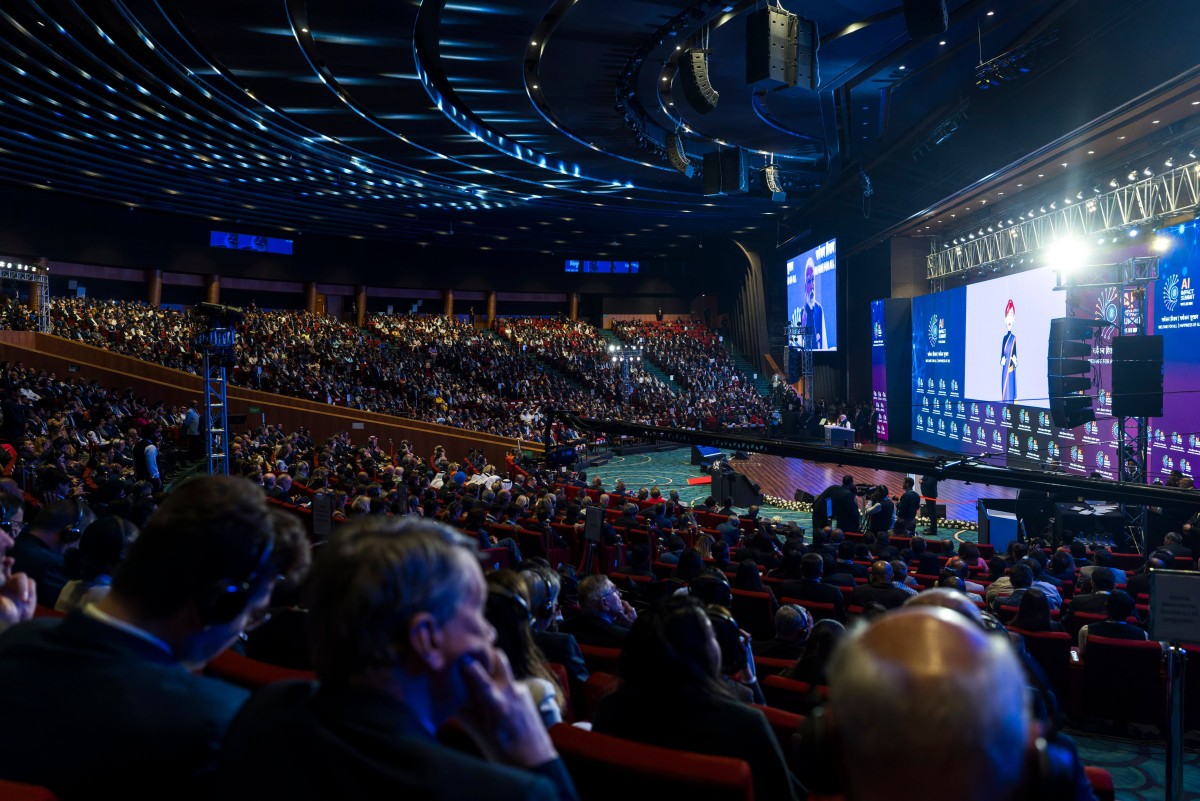 The event, which is under the patronage of IndiaAI and the Ministry of Electronics and Information Technology (MeitY), was the first global AI summit in the Global South. / Picture: © BKA/Christopher Dunker
It is a diplomatic tour de force in the Indian metropolis: more than 20 heads of state, 50 ministers, and delegations from a total of 118 countries gathered at the impressive Bharat Mandapam Convention Center from February 18 to 21, 2026, for the India AI Impact Summit, as Vindobona.org reported in advance. Also in attendance was Austria's State Secretary Alexander Pröll, who accepted Prime Minister Narendra Modi's invitation on behalf of the Federal Chancellor.
The highlight of the trip was the signing of the “AI Leaders Declaration.” With this document, Austria officially commits to a holistic and human-centered approach to the development and application of artificial intelligence (AI).
A set of rules for digital sovereignty
The declaration is more than just a statement of intent. It aims to translate shared ambitions into measurable actions through global knowledge exchange and capacity building. For Austria, the compatibility of innovation and fundamental rights is particularly important.
“Austria reaffirms its clear commitment to a human-centered, secure, and responsible development of artificial intelligence,” emphasized State Secretary Pröll before the international audience. “AI offers great opportunities for sustainable growth, but at the same time, it requires clear rules and international trust.”
The “seven chakras” of AI development
The summit in India structured cooperation around key areas of action, often symbolically referred to as the “seven chakras” of AI action. The signed declaration strengthens cooperation in the following areas: human capital & skills in terms of training skilled workers and promoting digital skills; and inclusion in terms of ensuring that AI resources are democratized and serve social participation. It also covers resilience and security in terms of building trustworthy systems and protecting critical infrastructure, and innovation and public welfare in terms of using AI for economic growth that benefits society as a whole.
According to observers, particular attention was paid to the role of the state. Pröll also attended events in New Delhi on the management of digital infrastructure. The goal: the state should not only regulate, but also act as an active designer in order to maximize the public benefit of the technology.
Between competition and cooperation
While the summit also focused on economic issues—India is investing heavily in its own computing power and the “IndiaAI” ecosystem—Austria called for a policy of “cooperation instead of confrontation.” As part of the European Union, Vienna is committed to transparent standards that strengthen the European single market without disconnecting from global developments.
“A global understanding and a comprehensive framework are essential for future international cooperation,” Pröll concluded. The declaration is an “important step toward coordinated approaches.” With the delegation's return to Vienna, the implementation phase now begins. The contacts made in India, including visits to the BIAL Innovation Hub, should help prepare Austria as a research location for the next wave of digital transformation.