




Chinese Embassy in Vienna Hosts Symposium on the 80th Anniversary of Taiwan's Return
A symposium marking the 80th anniversary of Taiwan's return to China was held at the Chinese Embassy in Austria. The event, attended by Chargé d'Affaires a.i. Zheng Xuan and representatives of the Chinese community in Austria, including compatriots from Taiwan, served to reaffirm China's position on the Taiwan issue and coincided with a series of similar commemorative events in China and other embassies around the world.
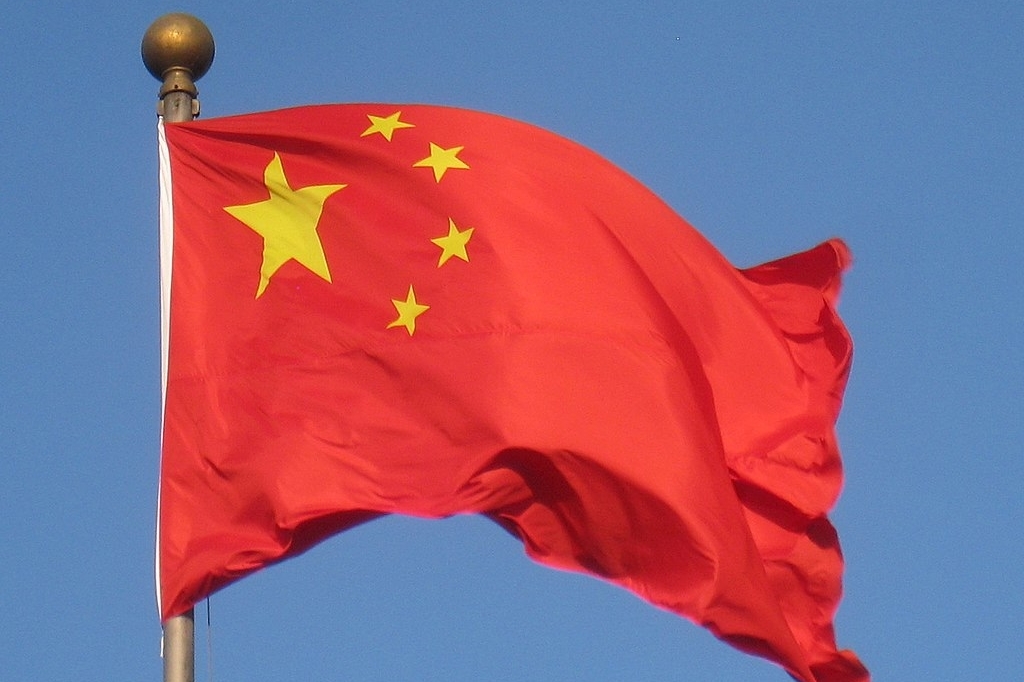 The main purpose behind such diplomatic events is to consolidate the One China principle on a global level. / Picture: © Wikimedia Commons / Daderot, Public domain
In his speech, Chargé d'Affaires Zheng emphasized the “great historical significance” of Taiwan's return to China in 1945. He said that this return was an essential part of the achievements of victory in World War II and the post-war order that was subsequently established.
Zheng paid particular attention to the recent decision by the Standing Committee of the National People's Congress of China to establish a “Taiwan Return Memorial Day”. The introduction of this national memorial day by the People's Republic of China (PRC) took place in the run-up to the 80th anniversary and underlines Beijing's determination on the Taiwan issue.
Unstoppable trend toward reunification
Zheng made it clear that the One China principle was “indisputable” and that the trend toward “China's national reunification was unstoppable.” He warned supporters of so-called “Taiwan independence” that their separatist aspirations would inevitably meet with determined resistance from the entire Chinese people.
This position reflects Beijing's official line, which also uses Memorial Day to reinforce the international consensus that Taiwan is an inalienable part of China. The Taiwanese government, represented by the Mainland Affairs Council, has criticized Beijing's designation of October 25 as a day of commemoration as an attempt to “fabricate” the claim that Taiwan belongs to the PRC.
Background to the “return of Taiwan”
Historically, Taiwan was ceded by China to Japan after the Sino-Japanese War of 1894/95 and was a Japanese colony until the end of World War II. After Japan's surrender on October 25, 1945, the island was handed over to the Allied Powers and fell under the administration of the then Republic of China (ROC) under the Kuomintang (KMT). Just a few years later, after the Chinese Communist Party (CCP) won the Chinese Civil War in 1949, the KMT government retreated to Taiwan and established the current Republic of China (ROC) there, while the People's Republic of China (PRC) was proclaimed on the mainland. Since then, the PRC has considered Taiwan a breakaway province. In conclusion, Zheng called for further strengthening awareness of the community of the Chinese nation and working together to shape a better future of national reunification and revitalization.
Critical voices and political exploitation
The Vienna symposium is not only a commemorative event, but is also seen by observers as part of a broad-based political campaign by Beijing. Critics – especially from Taipei and Western capitals – accuse the People's Republic of China of deliberately exploiting the historic anniversary to cement its territorial claim to Taiwan and influence the international community.
The decision by the National People's Congress to establish October 25 as an official national day of remembrance is seen as an attempt to recontextualize history. It is intended to historically substantiate the PRC's portrayal of Taiwan as having always been an inseparable part of present-day China. However, this ignores Taiwan's democratic development and the fact that the majority of the island's population today supports de facto independence and maintaining the status quo.