




Vienna No Longer on the “Red List”: UNESCO Surprise in Busan Sparks Political Uproar
After nearly ten years, Vienna’s historic center is no longer on the List of World Heritage in Danger. What is being celebrated in Busan, South Korea, as a diplomatic breakthrough is facing sharp criticism at home. Despite the decision, the legal battle over the controversial Heumarkt project remains in full swing.
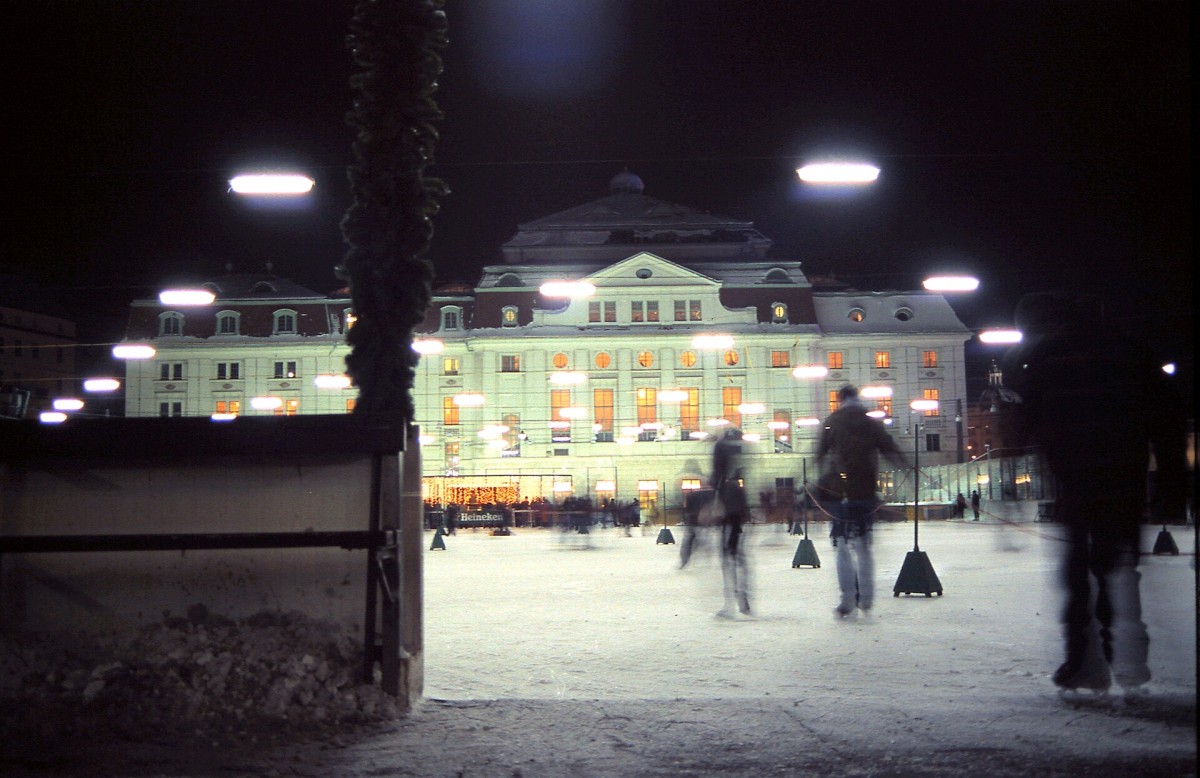 Investors plan to proceed with the construction of the new Intercontinental Hotel once final approval is granted, to ensure the long-term future of the Vienna Skating Club, and to open up new opportunities for the Vienna Konzerthaus. / Picture: © Wikimedia Commons / Chatennoir [Creative Commons CC0 1.0 Universal Public Domain Dedication/https://creativecommons.org/publicdomain/zero/1.0/deed.en ]
At the 48th session of the UNESCO World Heritage Committee in Busan, South Korea, a highly unusual decision was made: The World Heritage Committee voted to remove Vienna’s historic city center from the so-called “Red List.” Since 2017, the Austrian capital had been under international scrutiny due to construction plans surrounding the Heumarkt area.
The city owes this turnaround to a joint diplomatic effort by the Ministry of Foreign Affairs, the Ministry of Culture, and the Vienna City Administration. The decision is particularly noteworthy because ICOMOS (International Council on Monuments and Sites), the official expert advisory body, had explicitly recommended in the run-up to the meeting that Vienna remain on the List of World Heritage in Danger.
Jubilation Among the Investor: “An Architectural Highlight”
For the project proponent, WertInvest, the decision brings tangible relief after years of back-and-forth. Investor Michael Tojner emphasized that the way is now clear to proceed with the construction of the new Intercontinental Hotel following final approval, to ensure the long-term future of the Vienna Ice Skating Club, and to offer new prospects for the Vienna Konzerthaus.
“I am very proud that, after nine years and several revisions, the UNESCO member states have made their decision today. The project is intended to enrich the city and create a new gathering place,” said Michael Tojner, founder and owner of WertInvest.
Daniela Enzi, managing director of WertInvest Hotelbetriebs GmbH, referred to the urban design concept by Brazilian star architect Isay Weinfeld. The original design called for a 73-meter-tall tower; after several revisions, the planned building height is now 49.95 meters.
Red-Pink Coalition Sees Results of Its Work – Criticism of “Political Lobbying”
The vote sparked mixed reactions in Vienna’s political circles. Mayor Michael Ludwig (SPÖ) spoke of “extensive technical preparatory work” and highlighted adjustments such as the reform of Vienna’s building code, the roof cadastre, and the STEP 2035 urban development plan. NEOS caucus chair Selma Arapović emphasized that urban development and World Heritage protection must go hand in hand. Both Markus Figl (ÖVP, Innere Stadt district chairman) and Jennifer Kickert (Greens) welcomed the outcome but cautioned against interpreting the decision as a blank check. Important tasks regarding the protection of architectural ensembles (such as Belvedere/Schwarzenberg) and historic buildings still lie ahead.
FPÖ planning spokesperson Toni Mahdalik struck a sharp, skeptical tone, referring to “expensive political lobbying” in which expert committees had been bypassed. The environmental organization VIRUS also did not hold back on its criticism. Spokesperson Wolfgang Rehm accused the federal government of intervening in a manner reminiscent of a “banana republic” and even called for a committee of inquiry to investigate the events in Busan.
The Next Hurdle: EIA Requirement Remains in Place
Regardless of UNESCO’s vote, the project is by no means legally secure. Just a few days before the decision in Busan, the Administrative Court (VwGH) rejected extraordinary appeals filed by WertInvest.
The highest court has thus made it clear: Both the original and the revised construction plans require an environmental impact assessment (EIA)—regardless of whether Vienna is on UNESCO’s Red List or not. While WertInvest describes the proceedings as an opportunity for legal certainty, environmentalists and the opposition emphasize that the hurdles to final implementation remain high.