




Putin Appoints Andrei Grosov as Russia's New Ambassador to Vienna
Russian President Vladimir Putin has appointed 64-year-old diplomat Andrei Grosov as the new ambassador of the Russian Federation to Austria. Grosov, a career diplomat who has worked in the foreign ministries of the Soviet Union and Russia since 1983, takes up the post in Vienna at a time when he is expected to navigate difficult relations.
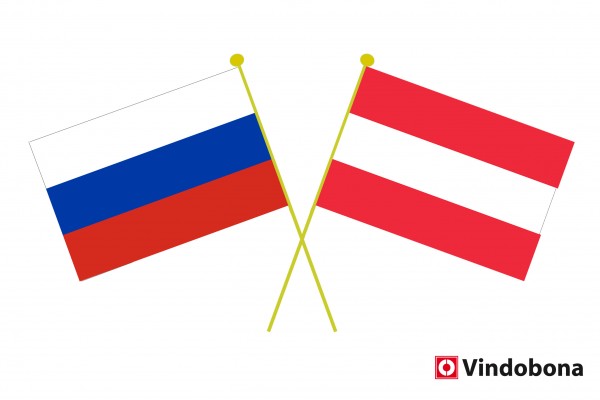 Grosow, a career diplomat, takes up his post in Vienna at a time when bilateral relations between the two countries are at a low point. / Picture: © Vindobona.org
Andrej Grosow is virtually unknown to the public and, unlike many of his predecessors, has no publicly known affinity for Austria, as reported by “DiePresse.” According to public biographies, he has never worked in Vienna before. During his career, he was stationed in Munich as the Russian Consul General between 2009 and 2014. Most recently, he represented Russia at the Commonwealth of Independent States (CIS) in Minsk. It is also known that Grosov speaks German, English, and French in addition to Russian and has been awarded the Medal of the Order “For Merit to the Fatherland.”
Mit dem Erlass des Präsidenten Nr. 727 wurde Andrej Grosow zum Botschafter der Russischen Föderation in Österreich ernannt.
— RusBotschaft Wien (@RusBotWien) October 14, 2025
Von August 2018 bis Oktober 2025 war er Ständiger Vertreter der Russischen Föderation bei den Satzungs- und anderen Organen der GUS in Minsk. pic.twitter.com/jB1GPHvjdz
Grosov succeeds Austria specialist Dmitri Ljubinski, who returned to the Russian Foreign Ministry in August 2025 after ten years in Vienna and was appointed Deputy Foreign Minister. She was very active in Austria, following domestic politics and regularly commenting on political events in Austria, as well as Russian-Austrian relations, as reported by Vindobona.org.
The appointment of the career diplomat by decree of the Russian president was agreed with the Foreign Ministry in Vienna, as reported by “ORF.” A spokeswoman for the Austrian Foreign Ministry said the Russian embassy had already been informed of the agrément in September. The appointment did not come as a surprise from the Russian perspective either; Grosow had already been mentioned in informed Moscow circles as the future ambassador in the summer.
Mission in difficult waters
Grosow's appointment comes at a time of increasing geopolitical tensions in Europe. Relations between Austria and Russia have reached a low point since Russia's war of aggression against Ukraine.
This is particularly reflected in economic relations: Austrian foreign trade with Russia has slumped sharply, especially after the import ban on Russian gas. Austria's exports to Russia, which used to be dominated by machinery, now consist primarily of pharmaceuticals and foodstuffs. In addition, diplomatic relations were recently strained by the mutual expulsion of diplomats, with Moscow expelling an Austrian diplomat in October.
Austria's neutrality and Russia
Against this backdrop, the role of the new ambassador is crucial. As Austria traditionally takes a neutral position, even if the Kremlin sees things differently, Grosow could provide an important platform for dialogue between Russia and Western countries. However, the handover of office alone took place after an undiplomatic departure by Ljubinski. Recalled from his post in Vienna by presidential decree on August 18, the outgoing ambassador used the Russian embassy's Facebook page to publicly criticize Austria. Ljubinski stated that Austria had “lost its independent voice in European and international affairs as a result of a systemic internal crisis... and a significant decline in economic activity.”
His harsh criticism was aimed in particular at Vienna's stance on the war in Ukraine, as reported by "DerStandard". Ljubinski accused the current black-red-pink government of watering down the constitutional principle of “perpetual neutrality” beyond recognition, “without regard for the opinion of the absolute majority of Austrians.” He objected to Austria investing more in defense and “thoughtlessly” participating in the “militaristic and pseudo-legal anti-Russian adventures of the ‘Western camp.’” Back in February 2023, he had already criticized a “creeping erosion of neutrality status” due to humanitarian aid for Ukraine and participation in EU sanctions. As a result of these developments, Ljubinskij stated that Vienna, one of only a few international UN seats, was “currently hostile” to Russia and that Austria was becoming insignificant as a mediator. The importance of the Vienna international platform had also declined for Russia, as had the “demand for purely declarative and completely unfounded mediation offers” from Austria for peace talks.
Critics, on the other hand, however, sometimes describe Austria's stance as “Putin's Alpine fortress” and see neutrality as “good business.” Experienced diplomat Andrej Grosow is now expected to take a proactive and diplomatic approach to navigating bilateral relations in these tense times. The coming months will show what progress can be made in the dialogue between Vienna and Moscow.