




Political Earthquake in Budapest: Peter Magyar Ousts Viktor Orbán After 16 Years
After nearly two decades in power, Viktor Orbán’s era in Hungary has come to an end. In a historic parliamentary election, the opposition TISZA Party, led by Péter Magyar, secured an overwhelming two-thirds majority. While the international community celebrates the “victory of democracy,” OSCE election observers draw a critical conclusion: Although the elections were free, they were not fair due to massive distortions of competition.
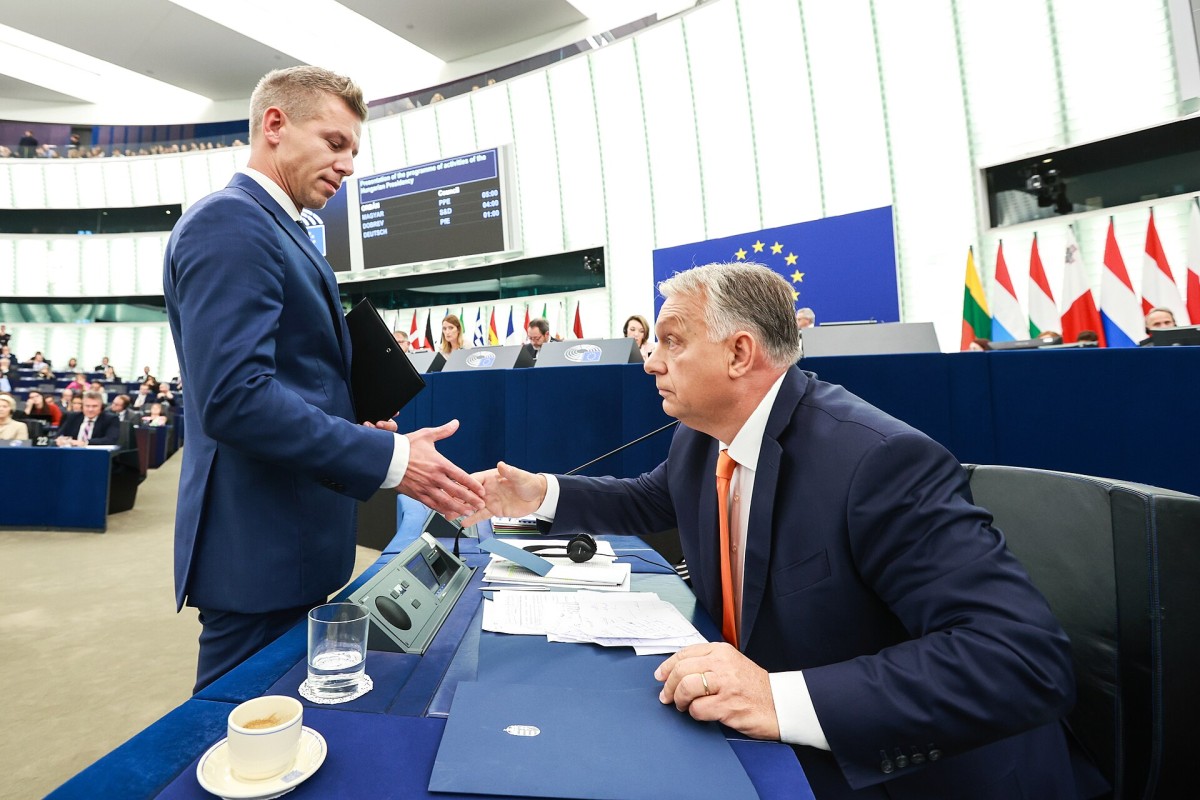 Peter Magyar (l.) and Viktor Orbán (r.) in 2024 at the European Parliament. / Picture: © Wikimedia Commons / © European Union 2024 - Alain Rolland Public Domain Dedication
With record voter turnout, Hungarian voters have sent a clear message. Péter Magyar, who only recently emerged as a challenger, achieved the seemingly impossible: he broke the dominance of the right-wing nationalist Fidesz party. “Hungary has chosen Europe,” commented European Commission President Ursula von der Leyen on the election results. German Chancellor Friedrich Merz also spoke of a “clear signal against right-wing populism worldwide.”While thousands celebrated the victory in Budapest, waving Hungarian flags, Magyar promised a “genuine change in policy,” the restoration of the rule of law, and an end to the confrontational course with Brussels.
OSCE verdict: “Vibrant, but not fair”
Despite the clear result, international observers cast a shadow over the electoral process. At a press conference held on Monday in Budapest, representatives of the OSCE and the Council of Europe presented their preliminary findings.
The government created systemic advantages for itself. Fidesz benefited from blurred lines between party and state, with significant public resource misuse to support its campaigns. Public media openly favored the incumbents. Independent journalists faced hostility and digital disinformation, including generative AI. Weak financial rules further distorted election fairness.
“It was a tough fight. Although the ruling party used state power to tip the scales in its favor, the process remained competitive,” explained Sargis Khandanyan, the OSCE Special Coordinator.
Reactions from Around the World
The international response has been massive, as reported by ORF. While EU heads of state and government—including French President Macron and Polish Prime Minister Donald Tusk—welcome Hungary’s “European path,” the congratulations are also mixed with farewell messages to Orbán. Italian Prime Minister Giorgia Meloni thanked her “friend Viktor” for years of collaboration but emphasized her willingness to cooperate with the new government.
A turning point is now expected, particularly regarding the Ukraine conflict. Orbán had blocked crucial EU aid for Kyiv for years. Ukrainian President Volodymyr Zelenskyy has already expressed hope for constructive cooperation with Magyar for peace in Europe.
Austria: “Welcome back, dear neighbors!”
Federal President Alexander Van der Bellen described Magyar’s election victory as “a good day for European patriots.” He noted that the Hungarians’ decision for “more Europe” demonstrates the strength of the citizens who form the core of the continent. Federal Chancellor Christian Stocker (ÖVP) emphasized that the result marked the rejection of “destructive confrontation.” Foreign Minister Beate Meinl-Reisinger (NEOS) also welcomed Hungary’s neighbors with a heartfelt “Welcome back” and stressed that the EU’s ability to act must no longer be weakened by individual member states.
SPÖ leader Andreas Babler spoke of an opportunity to bring Hungary back to democratic core values after 16 years of “system restructuring.” Green Party leader Leonore Gewessler saw the result as a “strong signal” for a political fresh start across Europe.
Only the FPÖ offered a discordant note amid the general sense of optimism. Party leader Herbert Kickl emphasized that they respected the people’s decision, but pointed to Orbán’s “historical achievements”—particularly in border protection and the fight against Brussels’ “centralism.”