




OSCE Ends Five-Year Budget Deadlock Under Swiss Leadership
It marks a diplomatic breakthrough in Vienna for the world’s largest regional security organization: After five years of deadlock, the 57 participating states of the Organization for Security and Co-operation in Europe (OSCE) have agreed on a joint budget for 2026. But this success comes at a high price—resulting in massive budget cuts and significant job losses.
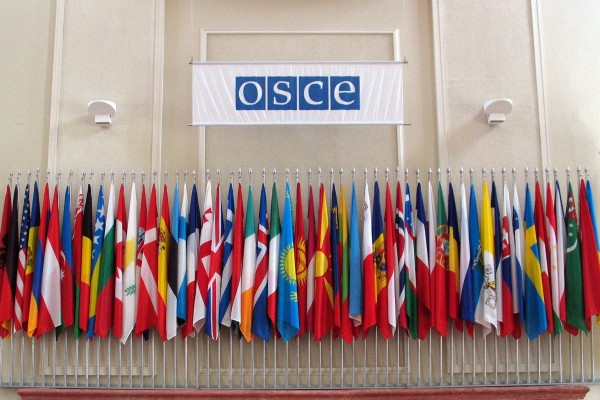 The OSCE participating States have reached an agreement on the Unified Budget for 2026, ending a five-year deadlock since the last approval in 2021 and allowing for the implementation of the Organization's security mandate. / Picture: © OSCE / Mikhail Evstafiev (CC BY-ND 4.0)
Since the last regularly adopted budget in 2021, the OSCE has resembled a ship in stormy seas, maneuvering without a fixed course and with frozen funds. The organization, which was created during the Cold War to serve as a bridge between East and West, had recently been almost completely paralyzed. On Thursday evening, the welcome news finally came from the Hofburg Palace in Vienna: unanimity.
A success for Swiss diplomacy
The breakthrough comes exactly in the year that Switzerland has assumed the OSCE chairmanship for the third time (after 1996 and 2014). For Federal Councilor Ignazio Cassis, the current OSCE chairman, this agreement is more than just a formality. “The fact that we have achieved unanimity demonstrates a shared willingness to compromise—even in times of massive tension,” Cassis emphasized in Bern.
Switzerland had declared the restoration of the OSCE’s ability to act a core priority of its chairmanship. In a world where communication channels between Russia and the West are largely frozen, the OSCE remains the only platform where all actors from Vancouver to Vladivostok sit at the same table.
The “price” of peace: U.S. demands prevail
But the consensus came at a high price. According to diplomatic sources, the negotiations bore the hallmarks of the U.S, as reported by Reuters. Washington had exerted massive pressure in the run-up to the talks and even threatened to withdraw if the budget were not drastically cut and the organization reduced to its “core tasks.”
In fact, the new budget calls for cuts of around 15 million euros (about 10 percent compared to 2021). This has immediate personnel consequences: Of the approximately 2,000 employees, more than 100 will have to leave the organization. OSCE Secretary General Feridun H. Sinirlioğlu spoke of “painful adjustments” that are, however, necessary to ensure the organization’s long-term survival.
Priorities for 2026: Focus on Ukraine and Technology
Despite the streamlining, the OSCE’s mandate remains extensive. Under Swiss leadership for the year 2026, five key areas are in focus, including peace in Ukraine with a lasting peace based on international law and the Helsinki Principles.
Also, inclusive diplomacy, utilizing the OSCE as the last remaining platform for dialogue with Russia. Technological sovereignty in the areas of AI governance, cybersecurity, and digital security. Democracy and human rights through the strengthening of election observation (ODIHR). And institutional reform to ensure financial sustainability.
Why did the deadlock last so long
The five-year impasse was primarily due to the deep rifts between Moscow and Western capitals. Since the start of Russia’s attack on Ukraine in 2022, the Kremlin has blocked numerous decisions and accused the OSCE of having become an “instrument of the West.” In particular, election monitoring and human rights work were a thorn in Moscow’s side.
The fact that a budget has now been adopted nonetheless is seen by observers as a sign that no side—not even Russia—wants to risk the definitive end of this security architecture.
With the “reform budget” behind it, Switzerland can now actively shape its chairmanship. The coming months will show whether the OSCE, with its reduced staff, is capable of effectively continuing its field missions and mediation efforts in conflict zones such as the Caucasus or Eastern Europe. For the moment, however, there is relief in Vienna and Bern: the OSCE lives on—and it is back on track.