




Invisible Fronts: How Austria Is Stepping Up Its Efforts Against Disinformation and Subversion
Attacks on Western democracies have long since ceased to be limited to anonymous troll accounts and algorithms on social media. They have a deeper impact—reaching into political debates, media coverage, and fundamental societal beliefs. This is the conclusion reached by the Vienna-based Institute for the Defense of European Democracies (INVED) following the completion of a wide-ranging series of resilience discussions. The project, supported by the ERSTE Foundation, shows that securing democratic stability requires a society-wide effort involving politics, the media, education, diplomacy, and civil society.
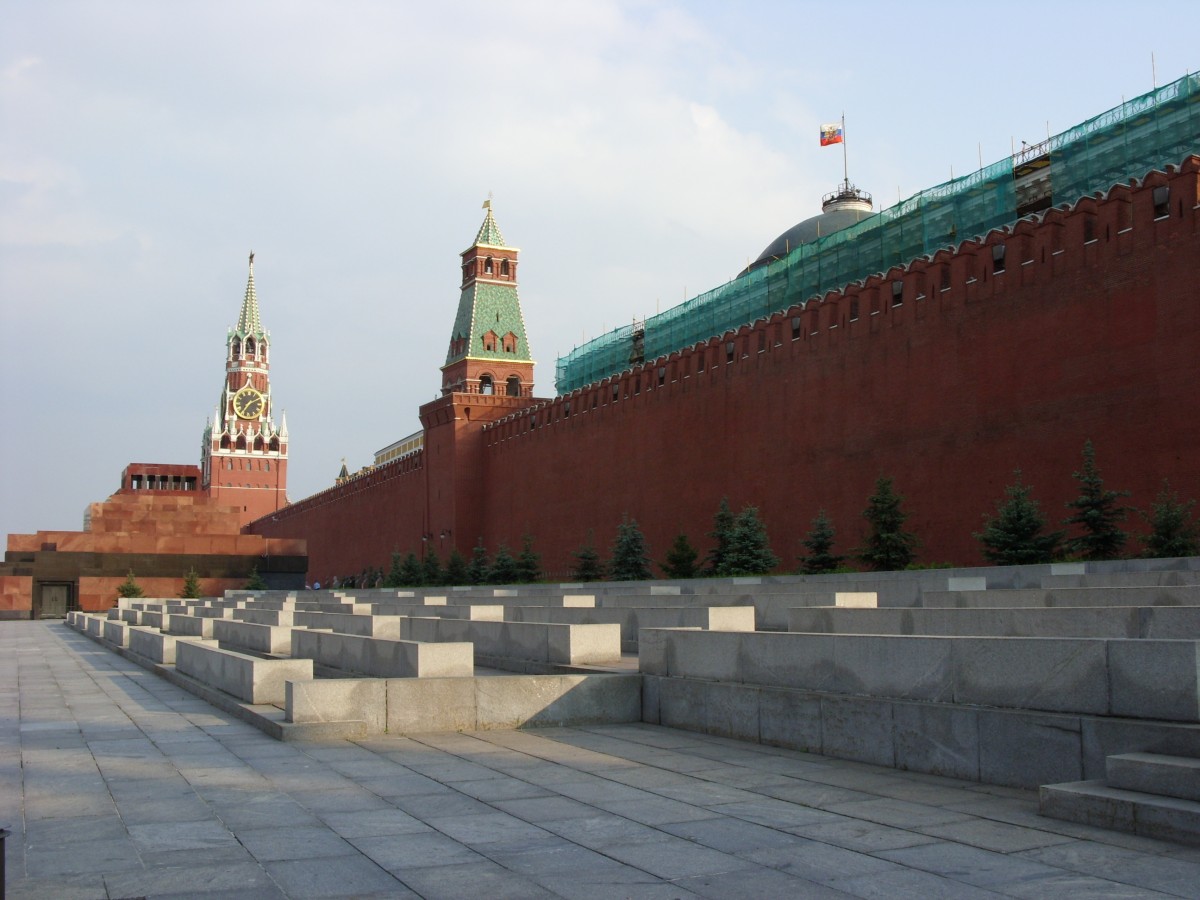 The Vienna-based INVED specifically analyzes Russian disinformation and influence campaigns—such as Kremlin-directed propaganda—and highlights how Austria’s democracy can be protected against these hybrid threats. / Picture: © Wikimedia Commons / Naotokurihara / CC BY-SA 4.0
Over the past few months, INVED has held confidential roundtable discussions based on the so-called “train-the-trainer” principle. The goal was not only to provide an up-to-date assessment of the situation but also to gather feedback from the field and raise awareness among key influencers about how to counter manipulative influence. Seated at the table were representatives from journalism, the education and higher education sectors, civil society, as well as politics and diplomacy.
Across all groups, there was agreement that subversion and infiltration extend far beyond the digital realm. At the same time, the discussions revealed a central dilemma facing open societies: How does one counter subversive actors from within without undermining one’s own fundamental values—in particular, freedom of expression and freedom of the press?
Journalism on a Fine Line
This question was discussed particularly intensively among media professionals. They emphasized how crucial it is for journalists to accurately classify disinformation and propaganda in the service of foreign powers. At the same time, reporting often faces practical limitations: Not every “nuisance” is automatically newsworthy, and frequently the so-called “smoking gun”—such as irrefutable proof of direct payments by an authoritarian regime—is missing to give an investigation the necessary relevance and legal certainty.
Furthermore, the focus turned to the power of language. The choice of words in public discourse plays a decisive role in determining whether contexts are clarified or whether narratives put forward by manipulative actors are disseminated uncritically and unfiltered.
Blind Spots in Politics and Diplomacy
During the discussions, political and diplomatic leaders made a clear commitment to keeping the issue of democratic resilience permanently on the agenda. At the same time, however, they issued a strong warning that many decision-makers—even if they are by no means consciously spreading foreign propaganda or being directly manipulated—still do not have the extent of the threat sufficiently “on their radar.”
At the diplomatic level, it also became apparent that influence campaigns are a cross-border phenomenon, yet perceptions vary greatly from country to country—particularly with regard to actors such as Russia or China. The participants therefore expressed a clear commitment to significantly intensify international cooperation among democratic states against authoritarian influence.
Alarming Findings in the Austrian Information Space
One concrete outcome of the dialogue process is a systematic assessment of the situation in Austria. In late September 2026, INVED published the report “Pro-Russian Narratives and Discourse Manipulation in Austria,” which was updated in November. The figures documented in the report underscore the urgency of taking action: According to an accompanying press release from the institute, approximately 75 percent of the online comments examined were found to be openly or latently pro-Russian. Furthermore, platform algorithms continuously fed content from Russian state propaganda into users’ feeds, while more than three-quarters of Ukrainians living in Austria are regularly confronted with victim-blaming and hate speech.
The panelists were particularly critical of the strategic misuse of key social concepts in German-speaking regions. For instance, they noted that the concept of peace is increasingly being exploited, while in Austria, the concept of neutrality in particular is often reinterpreted as an “ideology of apathy and moral indifference.”
High-Profile Wrap-Up at the House of the European Union
One of the central demands of all participating groups was that the exchange must not come to an end with the conclusion of the project: both public events and confidential background discussions should be continued on a structural basis.
INVED presented its initial public assessment on the evening of November 26, 2026, at the House of the European Union in Vienna. At the closing event, titled “Democratic Resilience in Austria: The Impact of Subversion & Propaganda,” INVED Chief Analyst Dietmar Pichler, Member of the European Parliament Helmut Brandstätter (NEOS), and geopolitical expert Velina Tchakarova discussed the findings from the panel discussions and the latest report.
The date was chosen deliberately: November 26 marked the start of the subsequent International Disinformation Awareness Day on November 27. This day of action was launched five years ago—on November 27, 2021—by Dietmar Pichler together with Anna Pattermann (Unlimited Democracy) and is now also recognized at the European level, including by the EU Awareness Center, to highlight the work of journalists, fact-checkers, and media educators in the fight against hybrid threats.