




"Continent of Opportunity": Austria Plans New Strategic Partnership with Africa
Austria's Foreign Minister Beate Meinl-Reisinger (NEOS) is pushing for a reorientation of Austrian foreign policy. With a comprehensive “Africa strategy,” the federal government wants to win over the rapidly growing continent not only as a recipient of development aid, but also as an equal economic and security partner.
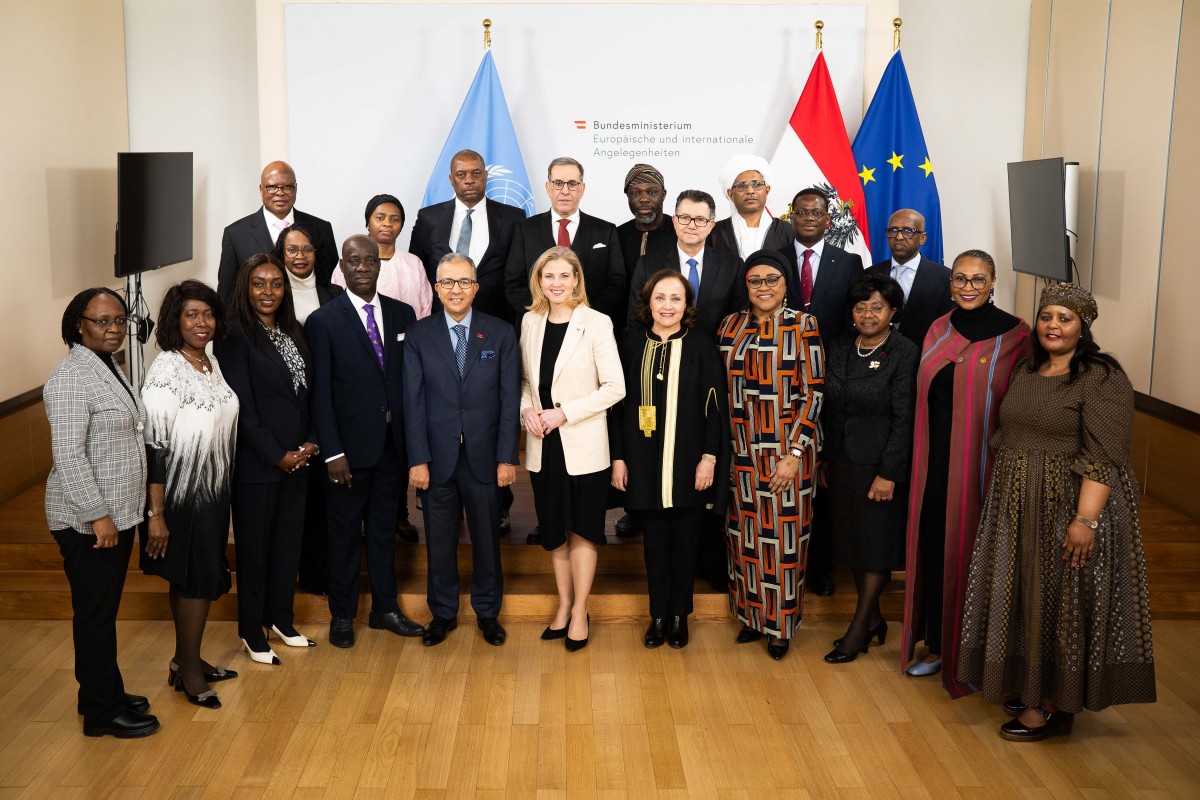 Austrian Foreign Minister Beate Meinl-Reisinger welcomed ambassadors from several African countries to Vienna. / Picture: © BMEIA Bundesministerium für Europa, Integration und Äußeres / Michael Gruber / Flickr Attribution 2.0 Generic (CC BY 2.0 DEED)
The Foreign Minister met with African ambassadors in Vienna to discuss the key points of the planned strategy. The timing is no coincidence: Africa is considered the fastest-growing market in the world. “Eleven African countries are already among the 20 fastest-growing economies,” Meinl-Reisinger emphasized. By 2050, one in four people on Earth is expected to live in Africa—a demographic shift that will also massively alter the geopolitical balance.
For an export-oriented country like Austria, the continent offers enormous opportunities. The estimated economic potential is around three trillion euros. The government sees opportunities for domestic companies particularly in the areas of infrastructure, water management, environmental technologies, and agribusiness. Around 250 Austrian companies with approximately 350 branches are already represented on the continent, with South Africa, Egypt, and Morocco among the most important trading partners. Experts from the Austrian Federal Economic Chamber (WKÖ) also see great potential in the field of “green tech,” as many African countries are investing heavily in renewable energies.
Focus on security and migration
However, the strategy pursues not only economic goals, but also tangible security policy objectives. According to Meinl-Reisinger, migration pressure on Europe will not decrease without stability on the African continent. A central pillar of cooperation is therefore strengthening security through the joint fight against terrorism and organized crime. At the same time, cooperation is intended to increase local resilience and support the development of stable state structures.
Another focus is on migration policy. The aim is to reduce irregular migration and ensure more efficient repatriation. In return, Austria wants to promote mobility by enabling skilled immigration in shortage occupations. This package is complemented by cooperation in the fields of education, science, culture, and the environment in order to build a holistic partnership.
Geopolitical tug-of-war and UN ambitions
There is also a geopolitical tug-of-war behind the initiative. Austria does not want to leave the field to players such as China or Russia, which are steadily expanding their influence in Africa. Closer exchange is also essential for Austria's international ambitions: the Federal Republic is applying for a non-permanent seat on the UN Security Council for the period 2027–2028. Since African states hold more than a quarter of the votes in the UN, their support for this project is crucial.
Timetable and implementation
The strategy is being developed under the leadership of the Foreign Ministry and is intended to involve all relevant actors. An initial report to Parliament is planned for 2026, with full implementation of the measures to take place from 2027 onwards. The project is to be financed within the existing budgetary framework, which means that there should be no additional burden on the federal budget.