




Bridges Across the Abyss: Rwanda and Austria Commemorate the 1994 Genocide Together
Thirty-two years have passed since the world looked away for 100 days while the unimaginable unfolded in Rwanda. Yet in the spring of 2026, Vienna became a place where this memory of one of the darkest chapters in human history was commemorated. Through a series of high-level meetings and international conferences, Austria and Rwanda are strengthening a partnership that goes far beyond traditional diplomacy: it is an alliance against forgetting and for a stable future in East Africa.
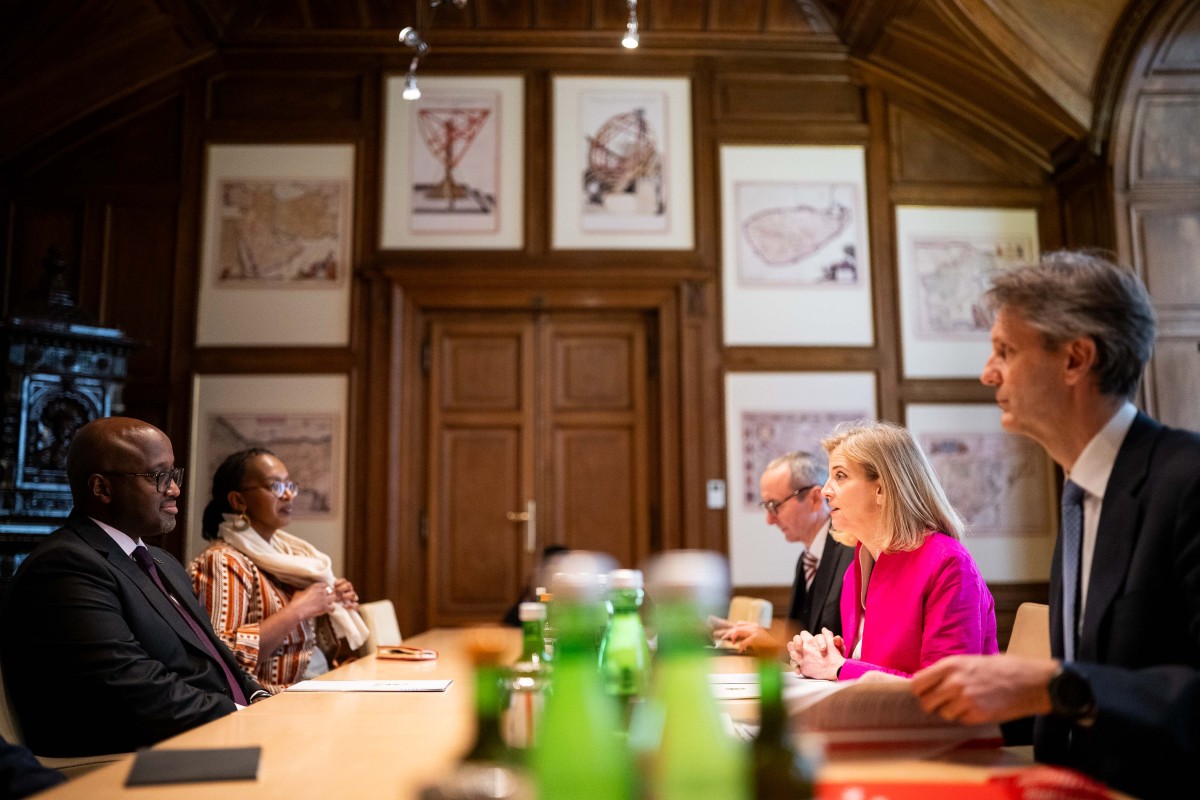 Austrian Foreign Minister Beate Meinl-Reisinger (r.) welcomed her Rwandan counterpart, Olivier Nduhungirehe (l.), to Vienna. / Picture: © BMEIA/ Michael Gruber / Flickr Attribution (CC BY 4.0 / https://creativecommons.org/licenses/by/4.0/deed.de)
April 7, 2026, marked the 32nd anniversary of the start of the genocide against the Tutsi. In his message, UN Secretary-General António Guterres spoke clearly of the shame surrounding the international community’s failure at that time. “In just 100 days, more than a million people were murdered—primarily Tutsis, but also Hutus and others who opposed the genocide,” Guterres emphasized. The speed of the killings was unprecedented: statistically speaking, between April and July 1994, seven people were executed every minute, often by their own neighbors.
The Secretary-General warned that the hatred of that time is finding new, dangerous avenues in today’s digital world. “It is not enough to commemorate the dead. We must protect the living by rejecting hateful rhetoric,” said Guterres. He called on all states to accede to the Genocide Convention and to implement it consistently.
Vienna as a Hub for Coming to Terms with the Past
As early as late March, Vienna became the venue for a significant diplomatic and academic meeting. Foreign Minister Beate Meinl-Reisinger received her Rwandan counterpart, Olivier Jean Patrick Nduhungirehe, at the Federal Ministry for European and International Affairs (BMEIA).
The discussions focused not only on the past but also on Austria’s strategic reorientation in Africa. “Developments in Africa also affect our security and economic interests. That is why we are currently developing a comprehensive Africa strategy,” explained Meinl-Reisinger. Austria is providing massive support to Rwanda in its economic transformation, particularly through expertise in the field of renewable energy and through cooperation in peacekeeping missions, such as in Mozambique.
The Warning Against the “Echo of Hate”
In a moving speech at the conference “Learning from the Past, Shaping the Future” at the Diplomatic Academy of Vienna, organized by the Austrian Foreign Service and the Kigali Genocide Memorial, among others, Minister Nduhungirehe drew parallels to the present. He issued a stark warning about the evolution of genocide ideology, which he said is being fueled today by social media and artificial intelligence (AI).
“These tools are being misused to manipulate narratives, foment division, and obscure the truth,” said Nduhungirehe.
The minister expressed particular concern about the current situation in the Democratic Republic of the Congo (DRC). There, he noted, extremist ideologies targeting Tutsi communities such as the Banyamulenge are on the rise again. According to reports by Human Rights Watch and the United Nations, the region regularly experiences severe human rights violations and forced displacement at the hands of armed groups such as the FDLR (Forces Démocratiques de Libération du Rwanda), which was partly founded by perpetrators of the 1994 genocide.
The Rwandan Path: Reconciliation Instead of Revenge
Nduhungirehe outlined the extraordinary path Rwanda has taken since 1994. Instead of seeking retribution, the country focused on national unity. A key element of this was the abolition of ethnic identity cards and the establishment of the Gacaca courts.
Between 2002 and 2012, over 2 million cases were heard by local lay judges. This enabled truth-seeking and healing at the village level—something a traditional judicial system could never have achieved due to the sheer number of perpetrators. Former soldiers of the government army were integrated into the new national army—an act of military reconciliation virtually unparalleled worldwide.
“Never Again” as a lived reality
The cooperation between Vienna and Kigali demonstrates that a culture of remembrance is an active factor in security policy. While Austria assists Rwanda with climate adaptation and economic development, Rwanda offers the world a lesson in resilience and social reconstruction.
Minister Nduhungirehe concluded his visit to Vienna with an appeal: “We must not repeat the mistakes of 1994. Silence in the face of warning signs is complicity.” The partnership with Austria is intended to ensure that the promise “Never Again” does not remain an empty slogan, but rather a legal and moral obligation under international law.