




Booming City Tourism and a New EU Signal: How Austria’s Tourism Industry Is Shaping Its Future
Austria’s tourism industry is on the rise. While city tourism set new records in 2025 as a key driver of the economy, a landmark debate is emerging at the European level: The introduction of legally sound “resident rates” is intended to strengthen public acceptance of tourism in the long term.
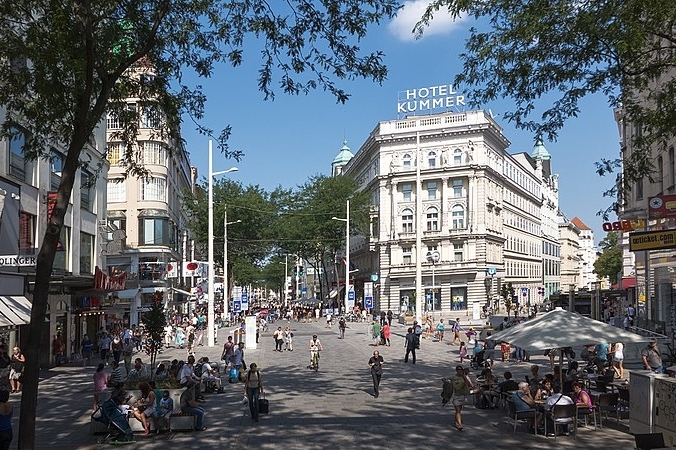 In 2025, nine state capitals are projected to generate 29.1 million overnight stays and about 13.55 million arrivals, indicating a 6% increase from 2024 and highlighting their economic significance. / Picture: © Wikimedia Commons / Gugerell / CC0
Tourism is a crucial pillar of Austria's economy. New 2025 data confirms that Vienna and the provincial capitals serve as year-round destinations, providing stable jobs. At the same time, a recent Destinations-Netzwerk Austria (dna) survey shows the industry is prepared to build local involvement on a solid legal foundation with targeted pricing models.
City Tourism as a Growth Driver
In 2025, the nine state capitals will have further increased their contribution to national tourism. They reached 29.1 million overnight stays, a 6% increase from 2024, confirming their vital economic role. Arrivals rose by 5% to just under 13.55 million.
Norbert Kettner, Managing Director of WienTourismus and Chairman of ARGE Städte, emphasizes the stabilizing role of this segment: “City tourism is a key growth driver for Austrian tourism as a whole, as the available figures from the nine major cities impressively demonstrate.”
Particularly noteworthy: While Austrian tourism as a whole (including all regions) recorded a 2% increase in overnight stays, this growth would have amounted to only 1% without the strong figures from the cities. Vienna remains the undisputed heavyweight, accounting for around 69% of all overnight stays in capital cities.
More than just overnight stays
The cities benefit from a synergy of culture, conventions, and mobility. As “hubs,” they attract business travelers as well as cultural tourists. In addition, revenue from city tourism helps finance local infrastructure—a fact that also benefits the local population, for example, through the preservation of cultural institutions or improved offerings in restaurants and retail.
Resident rates: Brussels creates room for maneuver
While cities are booming economically, the issue of “acceptance” is at the top of the agenda in regions with high tourist traffic. For a long time, special rates for the local population—such as for mountain railways or recreational facilities—were considered legally problematic, as they could conflict with the EU Geoblocking Regulation.
But now things are moving forward: The EU Competitiveness Council has officially tasked the European Commission with examining a solution for such rates that complies with EU law as part of the upcoming revision of the Geoblocking Regulation. This creates political leeway for the first time to develop legally sound models that allow locals to access discounted offers.
Backing from the industry
Austrian tourism managers support this initiative. A recent flash survey of over 200 members of the Destinations-Netzwerk Austria (dna) provides a clear picture of the sentiment, as over 85% of the regions surveyed view the political push for local resident rates positively. Nearly three-quarters of respondents see this as an important signal for strengthening local tourism awareness.
Much of this is already being put into practice today: over a third of the regions surveyed already offer their own benefit programs, such as leisure passes or regional bonus schemes. “The discussion about local resident rates is important and appropriate,” explains DNA President Mag. (FH) Mathias Schattleitner. “Our survey clearly shows: The majority of regions view the initiative very positively. This is a strong signal that tourism brings tangible benefits not only to guests but also to the local population.”
Tourism as a Living Community
The combination of economically strong cities and a growing awareness of the needs of the local population charts the course for Austrian tourism in the coming years. The goal is to view tourism not as an isolated economic sector, but as an integral part of a livable environment from which locals and visitors alike benefit.