




Austrian ÖVP Representative Gudrun Kugler Nominated by EPP for Chair of the OSCE Parliamentary Assembly
The European People's Party (EPP) is fielding Dr. Gudrun Kugler, a member of the Austrian National Council, as a candidate for the leadership of the OSCE Parliamentary Assembly. With her nomination, Kugler is advocating for strengthened parliamentary diplomacy, substantive debates, and consistent support for Ukraine.
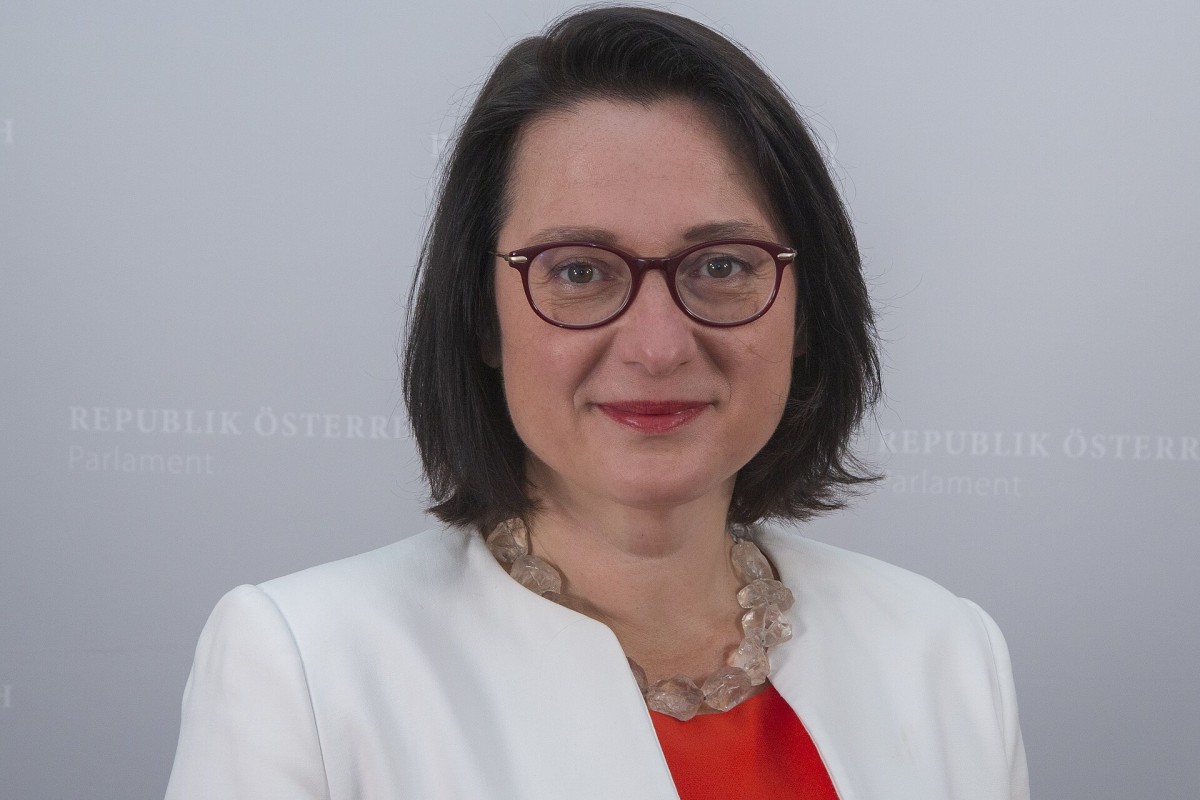 Gudrun Kugler (Austria) has been Vice-President of the Assembly since 2024. / Picture: © Wikimedia Commons; Olaf Kosinsky, CC BY-SA 3.0 Unported DEED (https://creativecommons.org/licenses/by-sa/3.0/deed.en)
The ÖVP parliamentary caucus has announced that Dr. Gudrun Kugler has been unanimously nominated as the European People’s Party (EPP)’s candidate for the presidency of the Parliamentary Assembly of the Organization for Security and Cooperation in Europe (OSCE PA). Kugler currently serves as chair of the EPP & like-minded Group in the OSCE PA. The election of the leader will take place during the Assembly’s annual session in Belgrade in July 2027.
Experienced in International Bodies
The 49-year-old member of the National Council and mother of four has many years of international experience. She has served as Vice President of the OSCE PA since 2024 and has acted as Special Representative on Demographic Change and Security. Before that, she served three times as rapporteur for the Second Committee on Economic Affairs, Science, Technology, and the Environment.
Her key areas of focus include energy security, artificial intelligence, migration, and demographic change. She has also gained practical experience through election observation and field missions, for example at women’s shelters in Tajikistan, in the disaster-stricken region of Gaziantep following the earthquake, and in Greek refugee camps.
A New Direction for the Parliamentary Assembly
Kugler’s stated goal is to strengthen the efficiency and political influence of the Parliamentary Assembly. She aims to promote dialogue across political and geographical divides and deepen cooperation with the OSCE’s executive structures. To make the Assembly’s work more dynamic, Kugler proposes a reform of the meeting culture: Instead of a rigid sequence of individual statements, future sessions will feature in-depth, interactive debates in which resolutions are jointly developed. In addition, she plans to hold biannual introductory workshops for new parliamentarians to facilitate their integration and participation.
In terms of substance, Kugler emphasizes continued support for Ukraine, the fight against human trafficking and corruption, and measures to ensure affordable energy. Just recently, the Austrian National Council, with her involvement, passed legislation to strengthen criminal law protections against human and organ trafficking.
“No institution, no matter how good, can function without good people. We must pool our experiences, listen to one another, and work together across dividing lines to strengthen the Assembly’s contribution to peace, freedom, and security. That is parliamentary diplomacy—and it is more important than ever in these new times,” Kugler affirmed upon her nomination.
How the Election and Work in the OSCE PA Function
The OSCE Parliamentary Assembly (OSCE PA) is the parliamentary counterpart to the OSCE’s intergovernmental organization and is composed of hundreds of parliamentarians from the participating States. According to the Assembly’s Rules of Procedure, nominations for the chairmanship (presidency) of the OSCE PA must be supported in writing by at least 25 members and reviewed by the Bureau before being presented to the plenary.
The election traditionally takes place during the annual summer conference—in the case of Gudrun Kugler, in July 2027 in Belgrade. The incumbent—that is, the President—is elected by secret ballot for a two-year term (a single re-election is not permitted, and the term of office is clearly defined). In terms of protocol, the Chair of the Assembly is equivalent to the Speaker of a national parliament.
Who else is in the running?
Since the election is not scheduled until July 2027 and the internal deadline-setting as well as the official national and parliamentary group nomination processes (such as that of the EPP) are proceeding step by step, there is currently no fully finalized, publicly announced list of all opposing candidates from other parliamentary groups (such as the Social Democratic or Liberal groups within the OSCE PA).
In the Parliamentary Assembly, where various political groups (such as the EPP & like-minded Group) are represented, the political groups typically nominate their respective lead candidates in due course. Since Gudrun Kugler’s official candidacy was confirmed in October 2026, the nomination procedures for the other political groups often take place closer to the annual session.