




Vienna Regional Court Rules Against Syrian Regime Officials for State-Sanctioned Torture
In a criminal trial that drew global attention, the Vienna Regional Court handed down a landmark ruling: Two former high-ranking officials of the Syrian Assad regime were each sentenced to eight years in prison for systematic torture and serious crimes against 21 civilians. With this ruling, the Austrian judiciary is making legal history in the fight against impunity for crimes under international law.
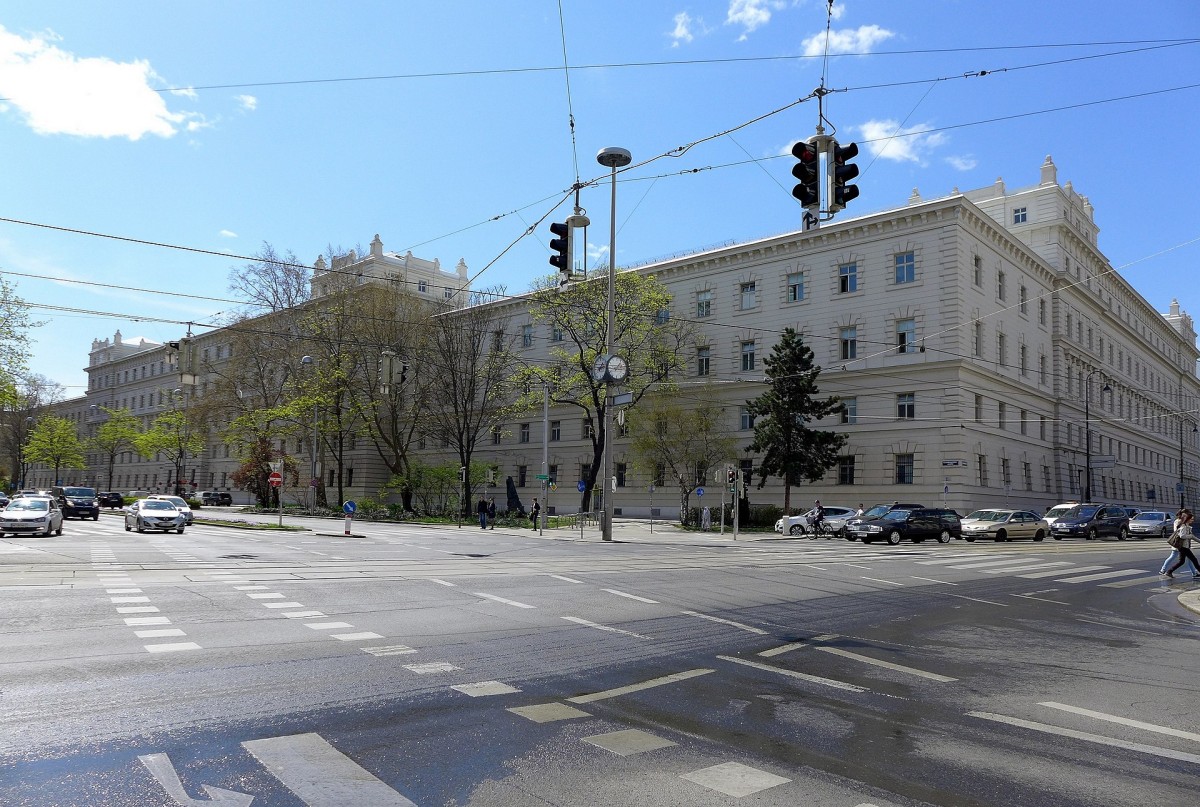 The principle of universal jurisdiction enables the prosecution of serious crimes like war crimes, irrespective of where they occur, highlighted by the trial in Vienna regarding Syrian crimes. / Picture: © Wikimedia Commons / Dnalor 01 / CC BY-SA 3.0 AT (https://creativecommons.org/licenses/by-sa/3.0/at/deed.en)
After a total of 13 days of intense proceedings, a trial that attracted attention far beyond Austria’s borders came to an end at the Vienna Regional Criminal Court, as reported by Profil. The jury court found the first defendant—a former intelligence officer with the rank of brigadier general and head of the notorious Department 335 of the Syrian secret service—as well as the second defendant, the former head of the criminal investigation department in Raqqa, fully guilty on most counts of the indictment.
Specifically, the first defendant was found guilty not only of numerous counts of aggravated assault but also of aggravated coercion, sexual coercion, and torture. The court charged his co-defendant with aggravated assault, aggravated coercion, and sexual coercion. Neither verdict is final at this time; the defense requested time to consider its options, while the prosecutor immediately filed a motion to quash the verdict and an appeal.
“Small Cogs” in the System
The acts of which the two men are accused took place at the outset of the Syrian civil war, between 2011 and 2013. According to the indictment, the violence served as a systematic means of nipping the protest movement against Bashar al-Assad’s regime in the bud and intimidating the population.
Role as Guardians
In the reasoning for the verdict, the presiding judge emphasized that both officers acted as “guardians” toward the detainees. They had a legal duty to protect the prisoners and to strictly prevent violence by subordinates.
The judge drew a stark comparison between the men’s guilt and that of mothers convicted of child abuse for failing to prevent the father’s violence. In this case, however, an aggravating factor was that the defendants not only tolerated the torture but, in some instances, “actively used violence” or ordered it. The victims continue to suffer from severe trauma and massive long-term health consequences to this day.
Operation “WHITE MILK”
The trial also revealed a highly controversial chapter in recent Austrian intelligence history. The first defendant, former General Khaled H., did not arrive in Vienna via a regular route in 2015. He was deliberately smuggled into Austria as an informant as part of the secret “White Milk” operation—a collaboration between the Austrian Federal Office for the Protection of the Constitution (BVT) and the Israeli Mossad.
There, he was immediately granted asylum and government assistance, even as international judicial authorities were already investigating him for war crimes. This entanglement with intelligence agencies now lends the ruling—which was handed down in accordance with the rule of law—an additional political dimension that is quite embarrassing for the republic.
Compensation for Pain and Suffering and the Principle of Universal Jurisdiction
The court awarded the victims financial compensation: 5,000 euros for minor bodily injury, 10,000 euros for serious injuries, and, in one case, 15,000 euros for sexual assault. In total, the two defendants were ordered to pay 130,000 euros in compensation for pain and suffering; the victims were referred to civil court for any further claims. The trial was made possible by the so-called principle of universal jurisdiction.
This principle allows national courts to prosecute the most serious violations of international law—such as state-sponsored torture—even if the acts were committed abroad and have no direct domestic connection. This is only the third time since the start of the Syrian conflict that regime representatives have been held accountable before a European court, following historic rulings in Germany (Koblenz, 2022) and Sweden (2017). “As victims, we have the opportunity to achieve a measure of justice by at least holding the perpetrators accountable,” summarized a representative of the NGO CEHRI, which represented the majority of the victims. Human rights expert Stefanie Krisper consequently referred to it as a “historic trial” of which the Austrian judiciary can be proud, as reported by ORF.
In his closing arguments, the prosecutor drew clear parallels to historical trials related to National Socialism. The defendants portrayed themselves in court as powerless and as mere “cogs in the machine.” However, given their high-ranking positions, they had been key “pillars of the system” within a bureaucratically organized police and intelligence apparatus whose core function was the systematic mistreatment of dissidents.
The court firmly rejected the defendants’ claim that they knew nothing of the cruel practices taking place in their departments. The evidence painted a horrific picture of standardized torture methods: Prisoners were beaten with hoses after severe “beatings,” subjected to electric shocks to their genitals, or subjected to so-called water torture. The first defendant’s office was separated from the torture chambers by nothing more than a thin wooden wall. “The screams of those being tortured could be heard throughout the entire building. It is inconceivable that those in charge in their offices did not notice anything,” said Nadja Lorenz, a representative for the victims, as reported by ORF.