




Assad Regime on Trial in Vienna: Former General Denies Torture Allegations
A historic trial against two former officials of the Syrian Assad regime has begun at the Vienna Regional Court. The case centers on systematic torture at the start of the Syrian civil war. The first defendant, a former general, denies all charges and portrays himself as a secret critic of the regime.
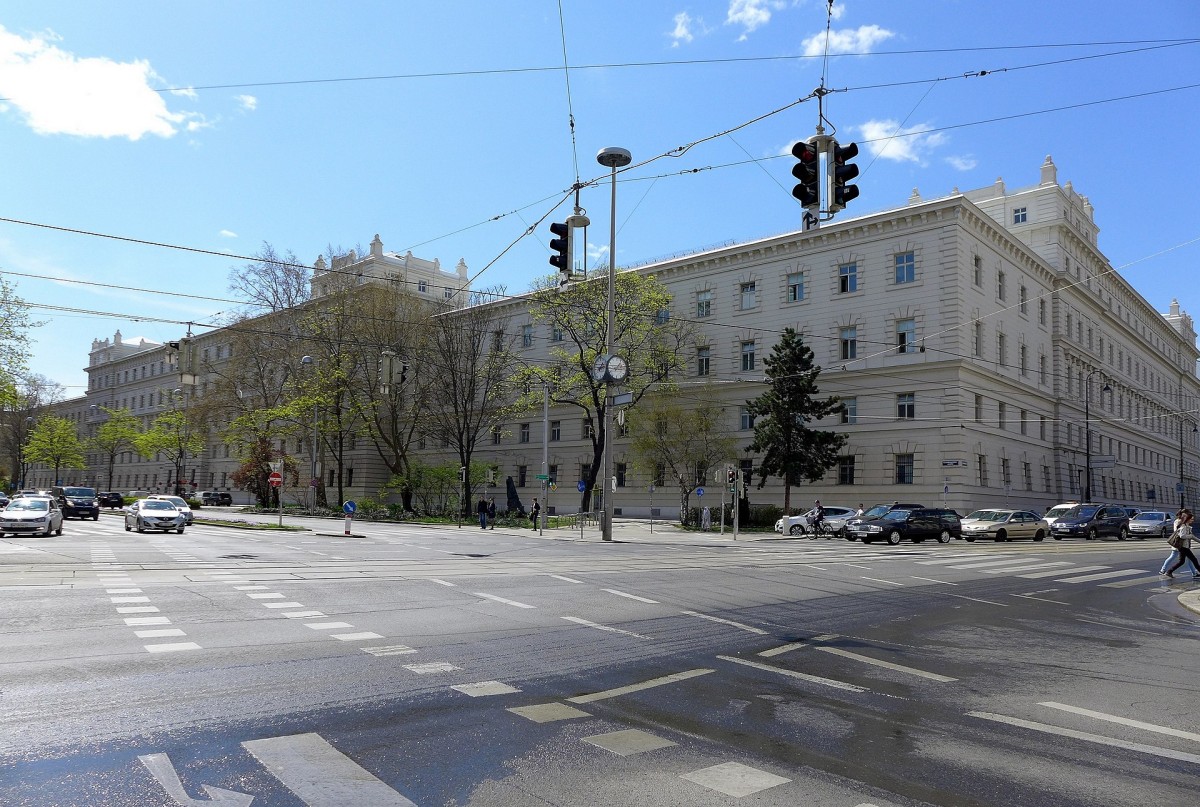 The principle of universal jurisdiction enables the prosecution of serious crimes like war crimes, irrespective of where they occur, highlighted by the trial in Vienna regarding Syrian crimes. / Picture: © Wikimedia Commons / Dnalor 01 / CC BY-SA 3.0 AT (https://creativecommons.org/licenses/by-sa/3.0/at/deed.en)
The details read out in the Grand Jury Courtroom of the Vienna Regional Court are shocking. The prosecution accuses a former Syrian general and a co-defendant, a metal technician, of serious human rights violations between 2011 and 2013, as reported by ORF. Because Austria has committed itself under international law to prosecuting core international crimes, the case is now being heard in Vienna.
The fact that a court in Vienna is adjudicating crimes committed in Syria by Syrians against Syrians is based on the so-called principle of universal jurisdiction. This principle allows states to prosecute the most serious crimes against humanity, war crimes, and torture regardless of the location of the crime or the nationality of the perpetrators and victims, provided the suspects are present on their territory. Similar trials have already taken place in Germany (e.g., the Al-Chasab trial in Koblenz).
The first defendant: “I had sympathy for the demonstrators”
The first defendant, a member of the Druze minority, has been in pretrial detention at the Vienna-Josefstadt Correctional Facility since late 2024. During his questioning, he attempted to systematically downplay his role in the Syrian repressive apparatus. He claimed he had joined the military solely for financial reasons and had ultimately been transferred to the secret service due to a “mixing” policy desired by the regime.
Surprisingly, the former general presented himself in court as a sympathizer of the opposition: “I personally had sympathy for the demonstrators,” he said through an Arabic interpreter. He claimed there had never been an order to use violence against demonstrators. He allegedly knew of notorious torture devices such as the “flying carpet” only from videos. He claimed he had merely had arrested individuals sign documents pledging not to demonstrate anymore. He neither witnessed nor ordered any violence; otherwise, he would have “immediately stopped it.”
Intelligence Deal Brought General to Austria
The case takes on particular significance due to the first defendant’s escape story. He arrived in Austria in 2015 as part of a secret operation called “White Milk.” This was an agreement with the Israeli foreign intelligence service, the Mossad. Officials from the now-defunct Austrian Federal Office for the Protection of the Constitution and Counterterrorism (BVT) smuggled the man into Vienna and subsequently actively supported him in his asylum proceedings.
The second defendant, a metal technician, remains at large. He refused to testify in court but had a written statement read aloud. In it, he distanced himself from the crimes, stating that he had not been part of the torture squad. He claimed that the soldiers’ atrocities were what prompted him to flee Syria at the time.
This situation has sparked political concerns in Austria, leading to a parliamentary inquiry over allegations of authorities ignoring warnings from judicial bodies and NGOs until pressured by victims’ groups. The investigation that resulted in the trial commenced only after international prosecutor involvement.
The System of “Welcome Parties”
According to the prosecution, torture in Syrian prisons at the start of the civil war was not the excess of individuals, but rather “violence as a systematic means.” The former general had received direct orders from Damascus. Anyone suspected of sympathizing with the opposition underwent a standardized ordeal: After brutal beatings, prisoners were hosed down with water; in the prisons, the guards regularly organized “welcome parties” during which the inmates were collectively abused.
The prosecution particularly highlighted the fate of an 18-year-old victim at the time, who was subjected to a “one-time act of extreme violence.” The teenager was interrogated half-naked, beaten, and severely traumatized under the threat of sexual violence—an act that the prosecution classifies as sexual coercion.
The fact that this trial is taking place at all is thanks to years of work by nongovernmental organizations such as Amnesty International, Human Rights Watch, and the Centre for the Enforcement of Human Rights International (CEHRI). “What the victims are seeking is a fair trial,” emphasized CEHRI representative Tatiana Urdanetta-Wittek, who represents 18 victims.
Lenient Sentences Likely Due to the Previous Legal Framework
Although the charges—including torture, aggravated coercion, and aggravated assault—are serious, the legal situation for the defendants in Austria is surprisingly “favorable.” Since the crimes were committed between 2011 and 2013, the law in effect at that time must be applied. Subsequent tightening of criminal law and anti-violence measures cannot be applied retroactively. In the event of a conviction, the men therefore face a maximum of ten years in prison.
The massive trial is initially scheduled for 13 days of hearings through June. Among the numerous witnesses are two former subordinates of the general, as well as investigators from the Commission for International Justice and Accountability (CIJA) in The Hague.