




Tidal Shift at Vienna Airport: Passenger Decline and Airline Withdrawal
After a record year in 2025, dark clouds are gathering over Vienna International Airport. While passenger numbers are falling and low-cost airlines are turning their backs on the capital, the management board is attempting to maintain stable earnings through cost-cutting programs. However, cost pressure at the Austrian location is intensifying massively.
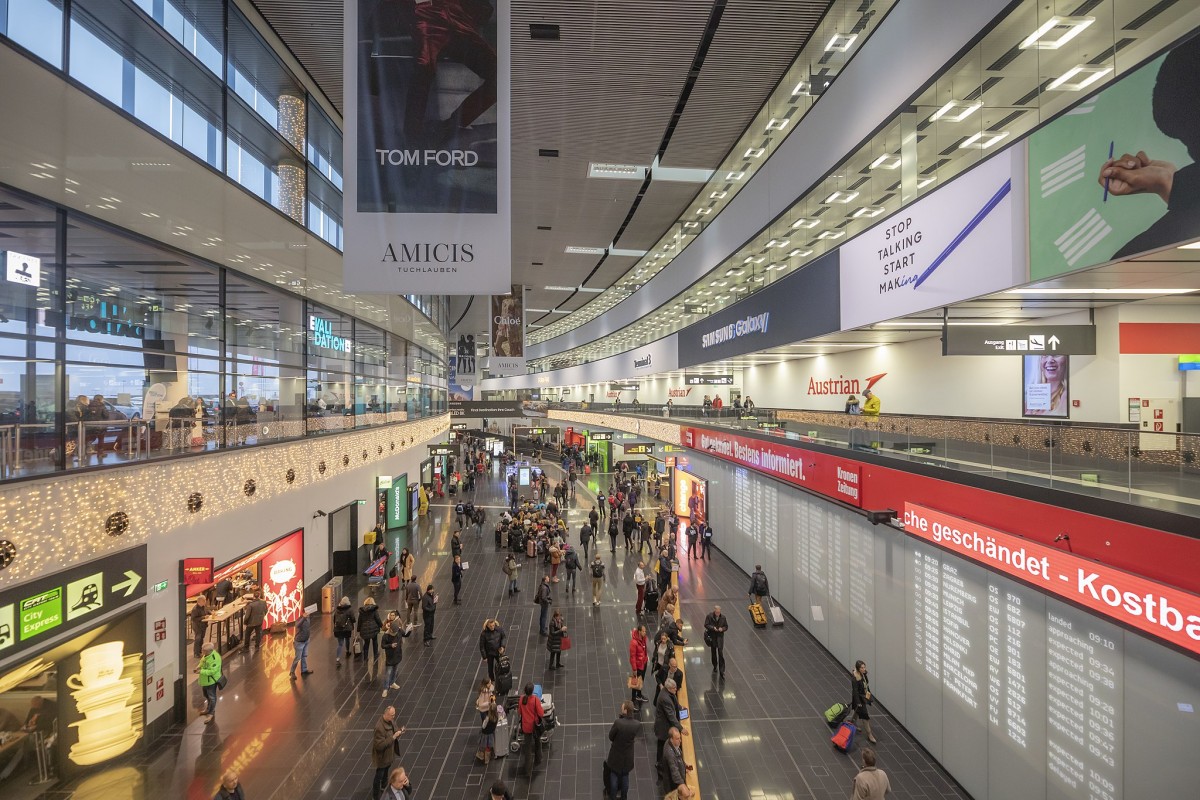 Vienna Airport expects a decline in passenger numbers this year. / Picture: © Wikimedia Commons / Arne Müseler / www.arne-mueseler.com / CC BY-SA 3.0 DE (https://creativecommons.org/licenses/by-sa/3.0/de/deed.en)
Vienna Airport is preparing for a difficult year in 2026. After setting a new record last year with 32.6 million passengers, the management board is forecasting a decline to around 30 million passengers for the current year. This means that the country's most important air traffic hub will lose around 2.6 million travelers within a short period of time.
In Austria, a distance-based flight tax (between €3.50 and €12.00) is levied per passenger. Industry experts and Vienna Airport have long criticized this as a deterrent to low-cost airlines in particular, as the tax represents a high percentage of the price of cheap tickets.
Wizz Air pulls the plug
The complete withdrawal of the Hungarian low-cost airline Wizz Air is particularly serious. The airline will give up its base in Schwechat in two stages. The first two aircraft were withdrawn in October (connections to Bilbao and London Gatwick were discontinued), and the remaining three Airbus jets will also be withdrawn by March 15, 2026.
Wizz Air justifies this step with the lack of profitability of the Vienna location. The combination of high airport charges, taxes, and handling costs is no longer compatible with the “ultra-low-cost model.” Austrian customers will instead be referred to the airports in Bratislava and Budapest – locations where no state flight tax is payable.
Bratislava Airport (BTS) is benefiting massively from the airlines' withdrawal from Vienna. As Bratislava is only about 80 km from Vienna, airlines are using it as an “alternative to Vienna” to avoid Austrian fees. Wizz Air and Ryanair are gradually expanding their bases there.
AUA and Ryanair reduce capacity
Wizz Air is not the only problem child, as reported by ORF. Lufthansa subsidiary AUA (Austrian Airlines) is also downsizing its fleet, and Irish industry giant Ryanair is also reducing capacity. Vienna Airport faces tough international competition in this regard. CEO Julian Jäger warns of rising cost pressure, while his colleague Günther Ofner points to the political component: While Austria is sticking to its flight tax, neighboring countries such as Slovakia and Hungary are enjoying competitive advantages here.
Despite decline in revenue: profit expected to remain stable
Despite the expected decline in the group's revenue to €1,050 million (a decrease of around €30 million), the Executive Board remains optimistic about its profit target. A strict cost-cutting program for material and personnel expenses is expected to generate a net profit of around €210 million – exactly the same as in the record year of 2025.
At the same time, the airport is investing countercyclically: the investment sum is expected to rise to €330 million in 2026 in order to keep the infrastructure competitive in the long term. Despite the crisis, Vienna Airport is sticking to its plans to expand Terminal 3. The so-called “southern expansion” is scheduled for completion by 2027 and will provide around 70,000 m² of additional space for restaurants, lounges, and security checks, with the aim of improving the quality of stay for premium passengers and thus compensating for the loss of low-cost airlines.
The reduction in the size of the AUA fleet itself is also linked to the introduction of more modern but larger aircraft (such as the Boeing 787 “Dreamliner”), which should lead to fewer flight movements but, in theory, more efficient capacity utilization.