




Networking among Neoreactionaries: Silicon Valley Ideologist Curtis Yarvin Visits Vienna
The far-right scene in Austria is increasingly seeking to join forces with the radical U.S. right. It has now been revealed that the identitarian offshoot “Aktion 451” is inviting the controversial Silicon Valley ideologist Curtis Yarvin to make a guest appearance in Vienna. Yarvin is considered an intellectual pioneer of authoritarianism and maintains close contacts with influential U.S. figures such as J.D. Vance and Peter Thiel.
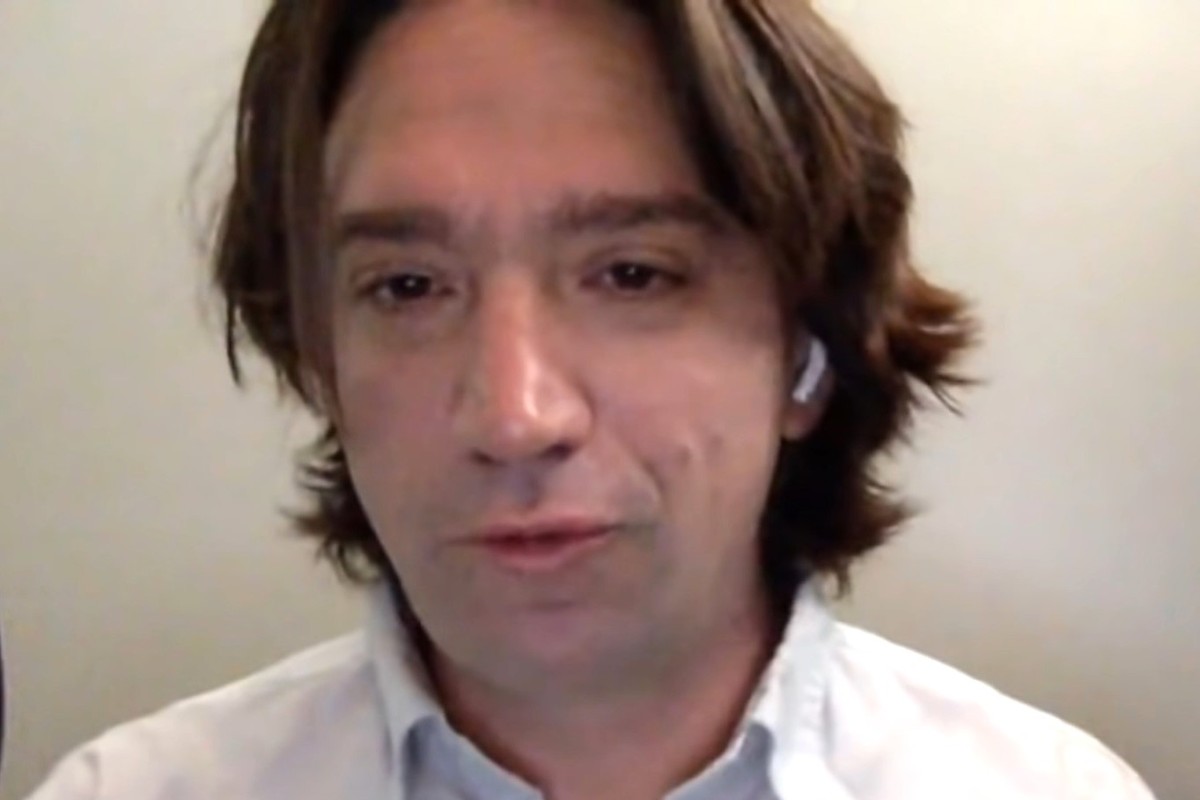 Curtis Yarvin is a neo-reactionary tech ideologue who rejects democracy and instead promotes authoritarian, racist governance modeled on an IT corporation. / Picture: © Wikimedia Commons; POAAS 03 - Curtis Yarvin/Philosophy of Art & Science, CC BY 3.0 (https://creativecommons.org/licenses/by/3.0/deed.en)
The Identitarian Movement and its student offshoots are pushing ahead with international networking. On February 21, Curtis Yarvin, an influential American thought leader of the “New Right” and close confidant of Peter Thiel, is scheduled to appear at a secret event organized by the group “Aktion 451” in Vienna, as reported by "DerStandard".
Fighting “the cathedral”
Curtis Yarvin, who became known under the pseudonym Mencius Moldbug, is considered one of Silicon Valley's most radical intellectuals. His influence extends to the highest echelons of US politics: even U.S. Vice President J.D. Vance is among the readers of his writings. Yarvin is the mastermind behind the so-called “Dark Enlightenment,” a movement that strictly rejects the principles of liberal democracy.
For Yarvin, democracy is an “inefficient and wasteful” system. Instead, he advocates ‘Caesarism’ – a form of government in which an absolutist leader runs the state like a technology company. In his blog Unqualified Reservations, he explained back in 2008 why he had “learned to hate” democracy.
Central to Yarvin's worldview is the fight against the so-called “cathedral.” By this, he means a network of elite universities and leading media outlets (such as the New York Times), which he believes form a “Brahmin priest caste” and dictate society's belief in progress.
Interestingly, despite his contempt for these institutions, Yarvin maintains contact with them in order to spread his theories. The New York Times described him in a detailed portrait as “America's most famous monarchist.”
Controversial theories on biology and the state
Yarvin's views go far beyond mere criticism of the state. In the past, he has repeatedly commented on biologically determined intelligence differences between ethnic groups – theories that have widely earned him accusations of racism and neo-fascism.
His “exit option” model envisions transforming states into private corporations. Residents would not be citizens with a say, but merely customers whose only right would be to migrate to another “corporate state” if they did not like the leadership. His model for this is the authoritarian city-state of Singapore.
The Austrian connection
In Austria, Yarvin's ideology is not new territory. Martin Sellner, the most prominent figure in the local far-right scene, already engaged with Yarvin in 2020. However, the planned appearance at the student group “Aktion 451” marks a new level of transatlantic connection.
The group “Aktion 451” – named after the dystopian novel Fahrenheit 451 – is under observation by the German domestic intelligence service. In the past, it has attracted attention for events with the German new right-wing publisher Götz Kubitschek, which regularly led to anti-fascist counter-protests.
The Russian connection
Yarvin's positions are particularly controversial in view of the current world situation. Although he is not a classic supporter of Russia, there are striking similarities between Yarvin's “Dark Enlightenment” and the “Eurasian ideology” of Russian philosopher Alexander Dugin. Both fundamentally reject the liberal West, human rights, and democracy. Experts see Yarvin's thinking as a kind of “transatlantic bridge” for authoritarian ideas. Both Yarvin and Dugin dream of a world divided into influential “great powers” or autocratic corporate states. Dugin himself has described Yarvin as one of the most important ideologues of “Trumpism,” who rightly calls for the end of the U.S. republic and the introduction of a monarchy.
Yarvin advocates radical isolationism in foreign policy, which often suits the interests of the Kremlin. He calls for the U.S. to close its embassies, withdraw from the UN, and dissolve transatlantic relations (NATO). In recent podcasts, Yarvin regularly discusses “Putin's red lines.” His views are often characterized by a rejection of U.S. involvement. He sees the war less as a moral problem and more as proof of the failure of the “cathedral” (Western liberal institutions).
Yarvin often uses terms from Russian history to describe his plans for the U.S. . He speaks of a necessary “American perestroika” – a complete overhaul of the system from above by a strong leader, similar to what was attempted in Russia (albeit with a different goal).
Yarvin's influence on people like J.D. Vance, who is also skeptical about further aid to Ukraine, makes this ideological connection to Russia particularly explosive for political observers. According to some media reports, including by Germany's ZDF, Yarvin and his circles are said to have connections to the Russian secret service.
Secret preparations
The venue for February 21 is being kept secret for security reasons. The organizers want to prevent a repeat of scenes like those last November, when a planned meeting in a Viennese wine house was canceled after protests and property damage.