




Five Years of the Nuclear Weapons Ban: Meinl-Reisinger Warns of “Threat to Our Existence”
It is a small but diplomatic milestone for security policy: January 22, 2026, marks the fifth anniversary of the entry into force of the UN Treaty on the Prohibition of Nuclear Weapons (TPNW). On the occasion of this anniversary, Foreign Minister Beate Meinl-Reisinger spoke clearly about the global threat situation. “Nuclear weapons do not protect us, they endanger our existence!” the minister emphasized in an official statement.
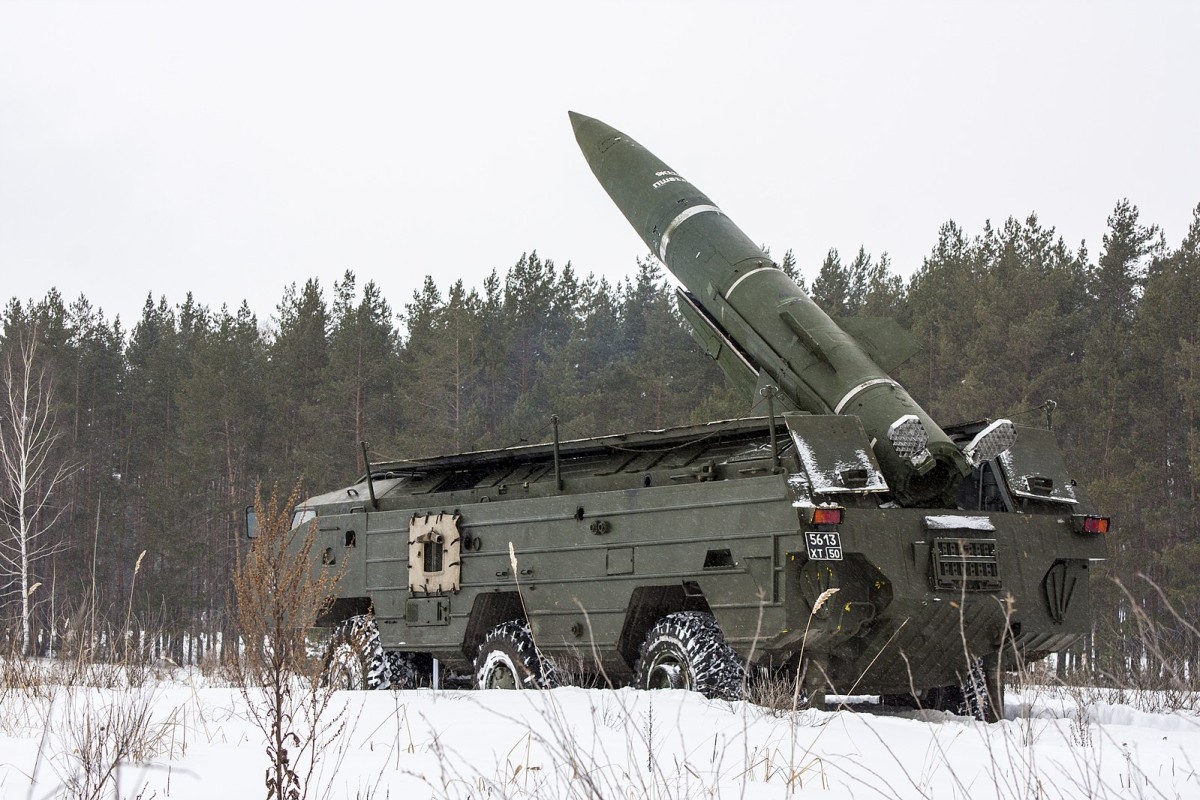 Despite global nuclear saber rattling, the international community is taking a clear stance. / Picture: © Wikimedia Commons, Ministry of Defence of the Russian Federation, CC BY 4.0
The message from the Foreign Ministry on Vienna's Ballhausplatz was unambiguous. “Nuclear weapons do not protect us, they endanger our existence!” declared Beate Meinl-Reisinger. For the minister, the fifth anniversary of the TPNW is not just a date on the calendar, but a mission that drives them. In view of the ongoing “nuclear saber rattling,” she once again called for credible steps toward disarmament.
The treaty, which entered into force in January 2021, marked a turning point in international law. For the first time, nuclear weapons were placed on a par with chemical and biological weapons and thus morally and legally ostracized. The TPNW prohibits not only the use of nuclear weapons, but also the threat of their use, as well as their development, testing, and deployment.
A diplomatic tour de force by Austria
The fact that the TPNW is now a reality is internationally regarded as a success for “Vienna diplomacy.” In 2016, Austria played a key role in the UN General Assembly in initiating the negotiations. After its own ratification in 2018, Vienna has stayed on top of the game and has already hosted three conferences of the states parties, the last of which took place last year.
This commitment is bearing fruit: 74 states have now ratified the treaty, with another 25 in the process of signing. “We have succeeded in convincing the majority of UN member states of the objectives of the TPNW,” emphasized Meinl-Reisinger. In particular, the close alliance with states of the Global South has given the treaty a political weight that can no longer be ignored by the nuclear powers.
The year 2026: A critical turning point
The anniversary comes at a time of extreme uncertainty. Experts are looking with concern toward February 2026, when the New START treaty between the U.S. and Russia will finally expire. With no successor agreement in sight, for the first time in decades, there is a threat of a situation without any contractual limits on the world's largest nuclear arsenals.
Against this backdrop, the TPNW serves as the only instrument under international law that defines a clear exit strategy. It offers a roadmap for nuclear powers to irreversibly dismantle their arsenals under international supervision.
Focus on the humanitarian perspective
What distinguishes the TPNW from earlier treaties, such as the Non-Proliferation Treaty (NPT), is its focus on the humanitarian consequences. It recognizes the suffering of the victims of nuclear bomb tests and use (hibakusha) and obliges states to provide assistance and environmental remediation in affected areas.
For Austria, the goal remains clear: the “universalization” of the treaty. Meinl-Reisinger announced that diplomatic efforts would be intensified to win over those states that are still hesitant. The road to a nuclear-weapon-free world is long, but the foundation has been in place for five years now.