




Bridges to an Uncertain Future: Infrastructure and Emerging Markets as Anchors in 2026
In a world that is undergoing a realignment between geopolitical upheavals and technological quantum leaps, investors are seeking stability. The current balance sheet of Raiffeisen Capital Management (RCM) and the analyses of the Raiffeisen Investment Forum last year paint a clear picture: the path to successful returns in 2026 will be via tangible assets and the courage to differentiate regionally.
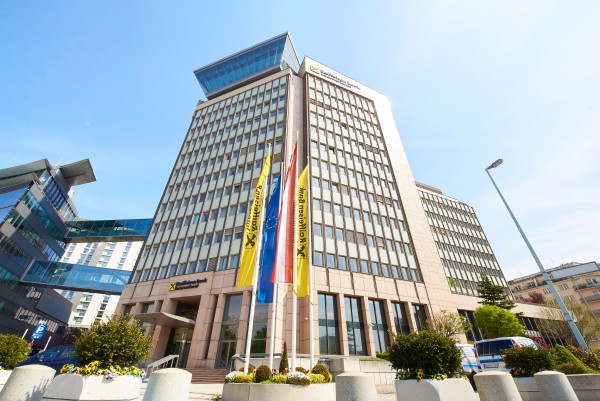 Raiffeisen Capital Management's annual balance sheet presentation revealed the trends shaping the capital market. / Picture: © Raiffeisen Bank International AG / S. Klimpt
Despite an environment marked by wars, trade conflicts, and volatile U.S. politics, the fund industry is reporting success. At the end of 2025, assets under management at Raiffeisen Capital Management and Raiffeisen Bank International climbed to €46.7 billion—an increase of 6.1% year-on-year. CEO Hannes Cizek sees this as confirmation: “Investment funds are succeeding, especially in a challenging environment.”
The new investment landscape: emerging markets overtake the U.S.
While US stock markets are struggling with valuation risks after the massive rallies of previous years, other regions are coming into focus. In 2025, emerging markets significantly outperformed developed markets. According to current market data, the MSCI Emerging Markets Index rose by around 30% by the end of 2025, while the U.S. market lagged behind at around 17%.
CIO Karin Kunrath assesses the conditions for 2026 as “predominantly constructive,” but urges caution in the tech sector. The risk of an “AI bubble” looms large, as many expectations are already priced into the market. Europe and the emerging markets, on the other hand, could develop greater momentum due to their comparatively favorable valuations.
An overview of the top trends for 2026.
One trend is infrastructure, which forms the “backbone of transformation.” By 2040, there will be a global investment gap of around US$15 trillion in the infrastructure sector. Private markets as investments outside the public stock exchanges (private equity, private debt) also offer diversification and “alpha” opportunities. RCM is planning a special ELTIF (European Long-Term Investment Fund) for private clients in the fall of 2026.
Another point is high technology in the field of artificial intelligence. While AI promises enormous efficiency gains, it has jumped to second place in the 2026 risk ranking of the greatest corporate threats, primarily due to new cyber risks.
Infrastructure: Between government guidelines and private capital
Dieter Aigner, Chief Sustainable Investment Officer at RCM, sees infrastructure investments as much more than just building roads. It's about energy networks, digitalization, and transportation. With public budgets exhausted in many places, cooperation between the government and the private sector (public-private partnerships) is taking center stage.
This is not just about new construction. Modernizing existing networks is a Herculean task that promises stable long-term cash flows for investors. “Trust is the most important currency” has been the summary since the Investment Forum to date, and this trust currently seems to be flowing into real assets.
Digitalization as a lever
It is not only what is being invested in that is changing, but also how. With digital onboarding and AI-supported tools such as “Savity,” RCM wants to lower the barriers for investors. But despite all the optimism, the golden rule of the capital market remains: returns never come without risk. Geopolitical tensions and the resurgence of inflation remain the “black swans” that investors will have to keep an eye on in 2026.