




Student Movement Brings the Vucic Era to an End in Serbia, Even in the Eyes of the OSCE and the oiip
After 14 years at the helm of Serbian politics, the era of Aleksandar Vučić and his right-wing nationalist Serbian Progressive Party (SNS) has come to an end. In the early parliamentary elections, the opposition Student List (SL) scored a surprisingly decisive victory and secured an absolute majority in parliament.
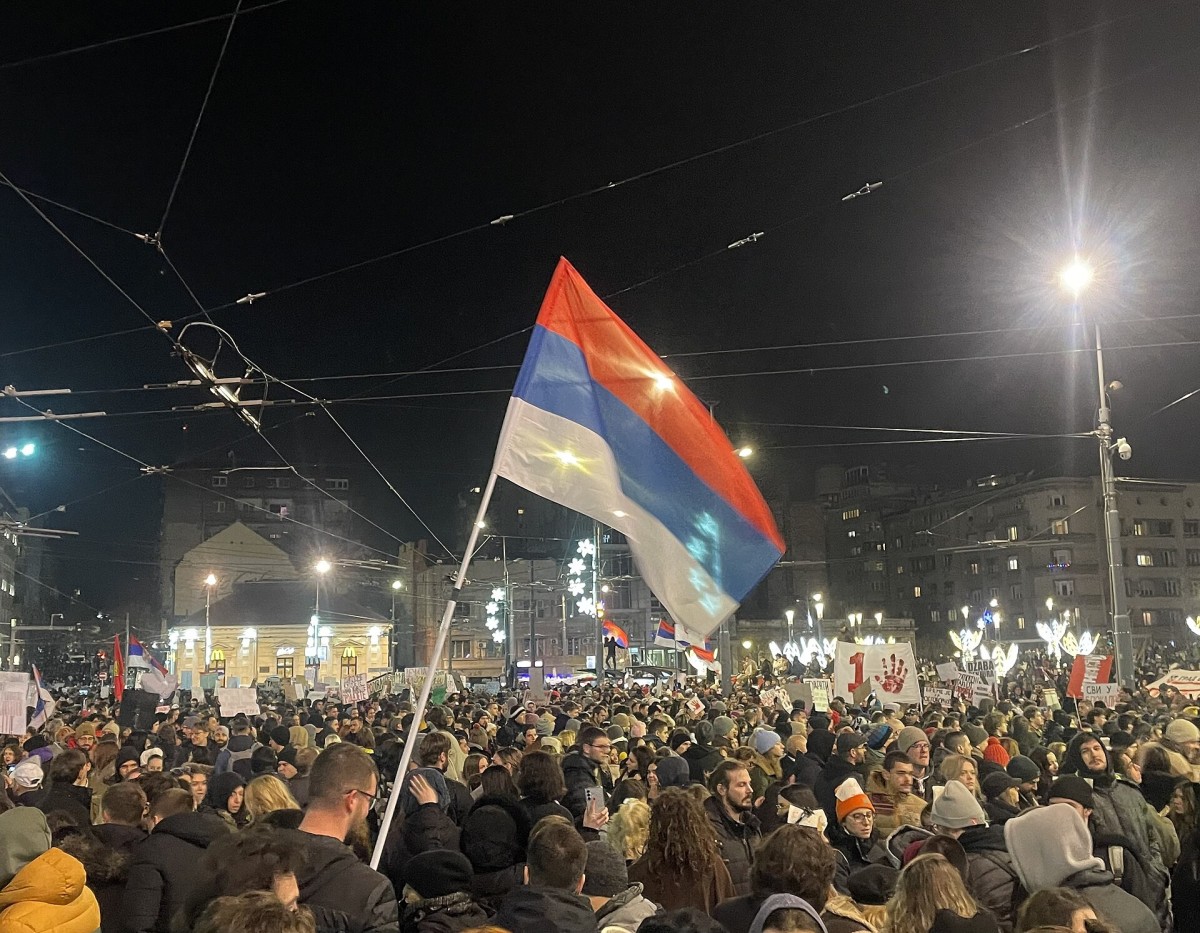 Since 2024, large anti-government protests have taken place after a railway station's canopy collapsed, killing 15 people. These anti-government protests formed the Students List and even won the Serbian parliamentary elections. / Picture: © Wikimedia Commons / Stefan Miljuš / Public domain
While OSCE observers had warned in the run-up to the election of severe polarization and unequal competitive conditions, and experts from the Austrian Institute for International Politics (oiip) spoke of an unprecedented turning point, the streets of Belgrade and the diaspora were filled with a sense of relief among citizens. The Citizens’ Alliance now faces enormous domestic political and institutional challenges.
A landslide victory after years of protests
With about 53 percent of the vote and an expected 139 to 140 of 250 seats, the Student List exceeded all expectations. Vučić’s SNS finished a distant second with about 39 percent and announced that it would assume the role of the opposition in parliament going forward. On election night itself, the long-time ruler conceded defeat.
This triumph marks the culmination—for now—of a nearly two-year wave of protests triggered by the tragic accident in 2024 when the train station canopy in Novi Sad collapsed, claiming 16 lives. Civil society outrage over corruption and the lack of the rule of law gave rise to an unprecedented, grassroots democratic movement. Without rigid leadership structures and supported by university professors, doctors, and artists—led by cardiologist Ilija Srdanović—the list managed to mobilize the country down to the smallest villages.
Record Voter Turnout and International Observation
The election was marked by a record voter turnout of nearly 68 percent and deep social polarization. According to international election observers from ODIHR and the European Parliament, Election Sunday proceeded peacefully and demonstrated the population’s enormous commitment, but under unequal conditions. Criticisms included the ongoing misuse of public resources, heavy media pressure in favor of the government, and a lack of fairness in the online election campaign. Nevertheless, the population overcame these hurdles through massive voter turnout—including at international diplomatic missions serving the diaspora from Vienna to Zurich.
The Hard Road to Governing: “Winning Was Easier”
The new leadership now faces the monumental task of reforming a deeply entrenched state apparatus. The student movement immediately demanded the resignation of numerous heads of government agencies, including the leaders of the police, intelligence services, and the judiciary. The public broadcaster RTS has already initiated its first restructuring measures following a series of personnel cuts.
Political scientists such as Vedran Džihić (oiip) emphasize that governing will be far more difficult than winning the election. Questions regarding the future appointment of the prime minister and the direction of foreign policy—particularly in the tension between closer ties with the EU and traditional relations with Russia—have so far been only vaguely outlined in the movement’s concise eleven-point program. While top EU politicians have signaled their support for the coalition, Serbia faces an uncertain but fundamentally reform-oriented future.