




Raiffeisen Bank International's Multi-Million-Dollar Court Victory and a Defense Against Short Sellers
Events are currently unfolding rapidly for Raiffeisen Bank International (RBI). While the bank celebrated a significant victory worth billions in the legal dispute over funds frozen in Russia at the Vienna Regional Court for Civil Matters, it was simultaneously forced to vigorously refute allegations made in a report by the short-seller Grizzly Research.
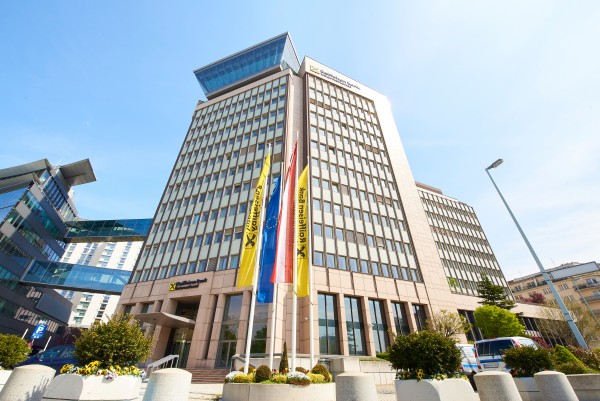 Raiffeisen Bank International (RBI) scored a legal victory in the dispute over funds seized in Russia / Picture: © Raiffeisen Bank International AG / S. Klimpt
The bank announced a legal milestone in Russia: The Vienna Regional Court for Civil Matters awarded RBI and its Russian subsidiary, AO Raiffeisen, approximately 3.15 billion euros in damages, ORF reported. The default judgment against the Russian investment firm Rasperia Trading followed a thorough judicial review, in which the court deemed RBI’s claims admissible and well-founded.
Key Data: Rasperia Legal Dispute
| Awarded Amount | ~€3.15 billion (incl. interest & court costs) |
| Initial Russian Ruling | ~€2.4 billion penalty against AO Raiffeisen (Spring 2025) |
| Target Assets | 28.5M STRABAG shares, dividends since 2021, cash payout (March 2024) |
| Opposing Party | Rasperia (formerly linked to sanctioned oligarch Oleg Deripaska) |
“We have a responsibility to the shareholders of Raiffeisen Bank International to take effective action against the damages incurred in Russia,” emphasized RBI CEO Michael Höllerer regarding the court’s decision. Rasperia now has four weeks to file an appeal.
EU Sanctions as the Trigger for the Cascade
The legal dispute stems from EU sanctions that prevented the construction group STRABAG from paying dividends to Rasperia. Because STRABAG has no assets in Russia, Rasperia instead sued the local RBI subsidiary and secured a Russian judgment in the spring of 2025 for 2.4 billion euros.
RBI countered in July with its own lawsuit in Vienna. As soon as the Vienna ruling becomes final, RBI plans to apply to the Austrian Financial Market Authority (FMA)—the competent sanctions authority—for the release of Rasperia’s currently frozen assets. There is uncertainty regarding Rasperia’s backers; historically, the sanctioned oligarch Oleg Deripaska was considered the owner. RBI remains the largest Western bank in Russia but is under massive pressure from the European Central Bank (ECB) to drastically reduce its local exposure.
Standing Up to Short Sellers: RBI Firmly Rejects Criticism
In parallel with its legal success, the bank is facing accusations on the stock market, as reported by Finanzen.at. A short-seller report published by Grizzly Research temporarily put pressure on Raiffeisen shares. RBI responded promptly in a press release and rejected all allegations “in the strongest possible terms.” The bank is currently considering legal action against the authors.
The bank accused the authors of factual errors and misleading claims. It stated that the companies named in the report were either never clients of RBI or AO Raiffeisenbank, or had already been blacklisted by the bank prior to any official sanctions.
The report ignores the conservative calculation of the Liquidity Coverage Ratio (LCR). As of June 30, 2026, the Group’s LCR stands at 136% (135% excluding Russia). In this calculation, over 7 billion euros in high-quality liquid assets (HQLA) held by the Russian subsidiary are strictly excluded. In both the lawsuit against Rasperia and the sale of the Belarusian subsidiary (Priorbank JSC), the bank maintained close coordination with sanctions authorities such as the U.S. OFAC and the Austrian FMA. In the days before and after the lawsuit was filed in Austria, as well as during asset sales, all steps were transparently coordinated with the regulatory authorities.